DÉFENSE ZONE

The French Foreign Legion is organised around eleven formations. Some are combat units integrated into the combined-arms brigades of the land operational forces. Others are based outside mainland France and come under the armed forces in joint zones. Finally, a core of units with specific roles handles command, recruitment, selection, training and administration. The whole is coordinated from Aubagne and spread across mainland France, Corsica and the overseas territories, which explains the diversity of terrains, tempos and regimental cultures.
To place this map within an overall view of the institution, you can read this very comprehensive article on everything you need to know about the French Foreign Legion.
French Foreign Legion Command (COMLE)
Created in 1984, the French Foreign Legion Command is the institution’s steering body. It relies on a small staff of around eighty officers and NCOs, responsible for coordinating a force of some 9,000 legionnaires from a very large number of nationalities. The COMLE is part of a long-standing tradition of centralisation: from the earliest years, an administrative system made it possible to track recruitment, finances and the organisation of units, turning flows of men from very different backgrounds into a coherent military system.
In its modern form, the COMLE notably oversees the human resources division, which manages careers, and the history and heritage division, which keeps archives and registers, including those linked to the founding traditions. Finally, it organises key annual events, foremost among them the 30 April ceremony.
French Foreign Legion Recruitment Group (GRLE)
Created in 2007, the GRLE is the French Army unit responsible for recruiting volunteers who wish to join the French Foreign Legion. Based at Fort de Nogent, in the Paris region, it reports directly to the COMLE. Its primary mission is to promote voluntary service to an international audience, inform candidates and set the selection process in motion.
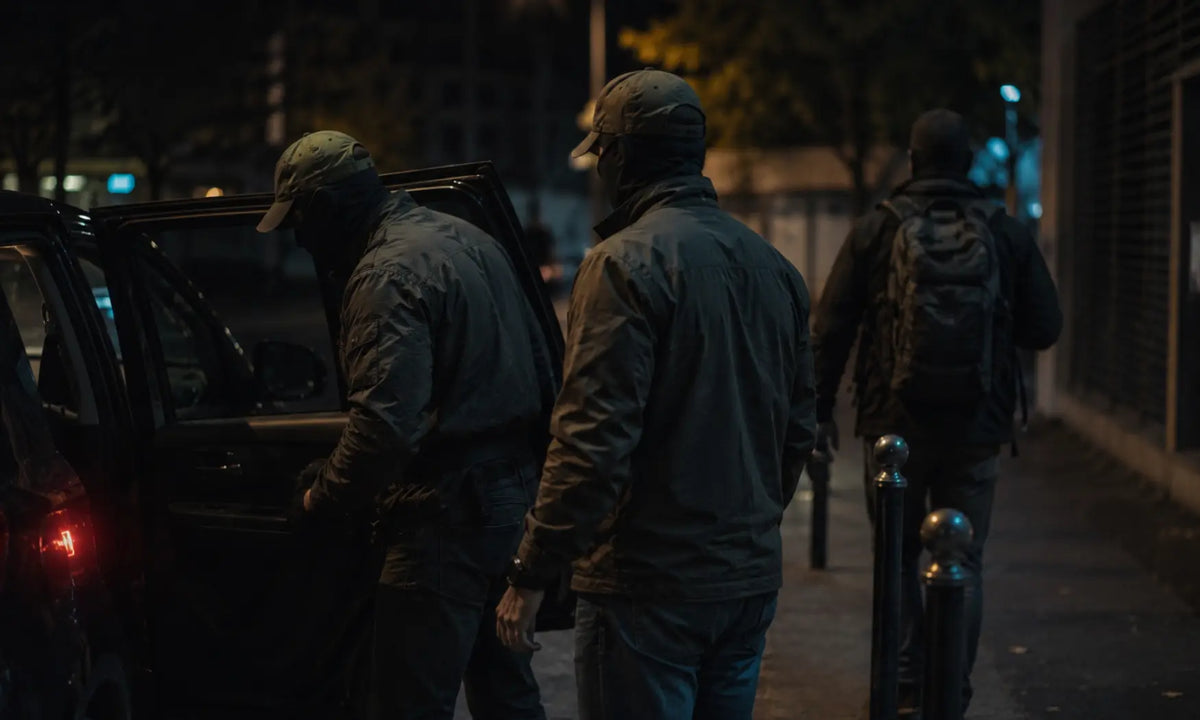
Operationally, the GRLE relies on a network of French Foreign Legion information points (PILE), open around the clock, in several French cities. The system is designed to absorb a large flow of candidates, steer them towards pre-selection, then direct them to the North and South pre-selection structures. Successful candidates then continue the process at the Selection and Enlistment Centre (CSI) in Aubagne, where in-depth assessments take place before the enlistment contract is signed.
To find out more, read our article on how to join the French Foreign Legion.

1st Foreign Regiment (1er RE), the parent unit in Aubagne
Founded in 1841, the 1st Foreign Regiment is the Legion’s oldest regiment. Stationed since 1962 at Quartier Viénot in Aubagne, after its transfer from Sidi Bel Abbès, it embodies the “mother house”: a regiment whose role is less well known to the general public, but absolutely central to the day-to-day running of the institution.
The 1er RE carries out administrative missions and ensures overall coherence, running functions that are essential to the other regiments. It is directly involved in recruitment and selection through the Aubagne structures, where applicants undergo their assessments. It also provides logistical support to other units, helping activities, movements and missions run smoothly.
Its internal organisation reflects this role: the command and regimental services company brings together the essential support functions; the personnel administration company takes charge of recruits arriving in Aubagne and legionnaires in transit, managing the administrative aspects of their careers; the Legion services company runs several key institutions, notably the band, the museum and the in-house magazine “Képi blanc” (White kepi). The 1er RE is also the guardian of traditions and houses the Legion Museum, a tool for preservation and transmission.
4th Foreign Regiment (4e RE), training in Castelnaudary
The 4e RE is the heart of initial training. Formed in 1920, disbanded and then re-formed, it moved to Castelnaudary in 1976, at Quartier Danjou. With around 600 legionnaires, a large proportion of them instructors, it trains a large number of recruits every year over a cycle of around four months. This training combines military instruction, accelerated French learning and the transmission of traditions.
The 4e RE stands out in particular for its use of training farms in the countryside. This choice of environment follows a simple logic: isolate, structure, repeat and speed up integration. Far from being folklore, the method aims to build a group quickly, impose routines and anchor the fundamentals of soldiering.
The regiment is structured around specialised units: a command and services company, volunteer recruit companies that deliver recruit training, a cadre training company and a specialist training company, making it possible to train both young recruits and profiles intended for technical needs.
2nd Foreign Infantry Regiment (2e REI), combat infantry in Nîmes
Created in 1841 and stationed in Nîmes since 1983, the 2e REI is one of the Legion’s historic regiments. Its modern identity is that of an infantry regiment able to handle a broad spectrum of missions, from protecting the national territory to deploying on overseas operations, including in high-intensity settings. It is also part of a modernisation drive, notably through the SCORPION programme and the arrival of recent equipment.
Its internal structure reflects the organisation of a modern regiment. The command and logistics company brings together the functions essential to command and operational support, from signals to transport, maintenance and medical support. The 2e REI comprises several combat companies and a support company that concentrates specific capabilities: a dismounted combat support platoon, a direct support platoon equipped with anti-tank capabilities and crew-served weapons, and a sniper platoon. This architecture illustrates a central logic: the infantry holds the ground, but relies on precise support building blocks to last and manoeuvre.
Further reading: our interview with General Youchtchenko, commander of the French Foreign Legion and the Legion’s Equatorial Forest Training Centre in French Guiana.
The regiment also maintains a visible tradition, notably through its mascot, a mule, which recalls the heritage of the mounted companies and the unit’s long history.
3rd Foreign Infantry Regiment (3e REI): French Guiana, the equatorial forest and sovereignty
Created in 1920, heir to a particularly rich past and to marching units, the 3e REI is stationed in Kourou, French Guiana, and specialises in equatorial forest combat. The regiment operates in a unique context: French Guiana is not just an overseas territory, it is a strategic area where sovereignty, borders, security issues and the protection of major facilities intersect.
The 3e REI carries out several essential missions. It takes part in the external protection of the Guiana Space Centre during launches, as part of a dedicated mission. It contributes to border surveillance and operates in hard-to-reach areas. It takes part in the fight against illegal immigration and illegal gold mining, notably through the Harpie mission. It can also be called on for assistance and support operations in the event of a crisis in the region.
Finally, the regiment relies on a major outreach and training tool: the Equatorial Forest Training Centre (CEFE), created in 1987, which trains rotating French units, military school classes and foreign troops in jungle combat techniques. The centre is a strong marker: it makes the Legion an international reference in a very specific field, battle hardening in equatorial environments.

13th Demi-Brigade of the French Foreign Legion (13e DBLE): heritage and deployment
Created in 1940, the 13e DBLE is one of the Legion’s iconic units. Its history is marked by major engagements in Europe, Africa and the Middle East, then in Indochina and Algeria. After a long period in Djibouti, followed by a spell in the United Arab Emirates, the unit has been based on the Larzac plateau since 2016.
Today the 13e DBLE is part of a light armoured brigade, with an organisation that allows it to be deployed and employed on a variety of missions. It has around 1,300 legionnaires, organised into combat companies, a command and logistics company and a support company. Its motto and decorations reflect continuity: the heritage is proudly claimed, but the purpose remains operational.
2nd Foreign Parachute Regiment (2e REP): airborne culture in Corsica
Created in the late 1940s, the 2e REP is the French Foreign Legion’s only parachute regiment. Stationed at Camp Raffalli near Calvi, it has distinguished itself in difficult engagements since Indochina and remains associated with rapid intervention and deployment capabilities.
Its internal structure highlights a key point for understanding the unit: the regiment is not monolithic; it is organised into companies whose specialisations reflect distinct operating environments. One focuses on urban combat and crowd control; another develops mountain expertise, reinforced by local roots and training infrastructure; another is geared towards the maritime environment, with amphibious capabilities; one company is oriented towards forest warfare and deep operations; another is dedicated to arid and desert terrain. A support company brings together fire support and precision capabilities, while the command, logistics and maintenance companies provide sustained support. This internal diversity explains why the 2e REP is often seen as the epitome of high standards: versatility is worked on there, but it rests on organised specialities.

5th Foreign Regiment (5e RE): Mayotte and the Indian Ocean
The 5e RE is stationed in Dzaoudzi, Mayotte, as part of France’s military presence in the Indian Ocean. Long organised as a detachment, it was turned into a regiment from 2024 as part of a change of format aimed at strengthening the Legion’s capabilities and visibility in this strategic area.
The regiment carries out missions linked to security, protection and sovereignty, in an island environment where the maritime dimension, amphibious operations and tropical constraints matter a great deal. It takes part in control missions, the protection of French interests and regional cooperation. It can also provide detachments to maintain a permanent presence on islets and archipelagos, for sovereignty purposes.
1st Foreign Cavalry Regiment (1er REC): reconnaissance and armour
Created in the early 1920s, the 1er REC is the French Foreign Legion’s only cavalry regiment. Based since 2014 at Camp Carpiagne, near Marseille, it embodies the “contact reconnaissance” and “armoured manoeuvre” dimension within the institution.
The regiment is organised around a command and logistics squadron, several armoured squadrons and squadrons focused on reconnaissance and intervention. Its equipment reflects the modernisation of capabilities: the Legion’s cavalry relies on wheeled armoured vehicles, with firepower and mobility designed to scout, protect, support and strike. It all fits into a combined-arms logic: the cavalry does not “fight the war alone”; it opens the way, gathers intelligence, secures and supports, for the benefit of the infantry and the overall manoeuvre.
1st Foreign Engineer Regiment (1er REG): combat engineering and specialised capabilities
The 1er REG is a combat engineer unit, created in the 1980s and integrated into a light armoured brigade. Based in Laudun-l’Ardoise, it carries out key missions in land operations: mobility support, counter-mobility, deployment support and possible participation in close combat. Engineers are a force multiplier: they make possible gap crossing, route clearance, terrain organisation, protection and security.
The regiment includes several combat engineer companies, structured to provide platoons that can be deployed as close as possible to combat units. It also has a support company bringing together specialised skills: explosive ordnance disposal, operational search, crossing equipment, engineer divers, terrain organisation and obstacles. This density of technical skills explains the particular role of the 1er REG: it is not just “support”, but a capability that determines manoeuvre and security.
2nd Foreign Engineer Regiment (2e REG): mountains, extreme cold and assault engineering
Created in 1999 and based in Saint-Christol d’Albion, the 2e REG specialises in assault engineering in mountain environments and harsh climatic conditions. Part of the mountain brigade, it develops skills that go beyond pure technique: it is about creating mobility and protection in terrain where the environment itself becomes an operational constraint.
Made up of around 925 personnel and organised into several companies, the regiment also stands out for its pioneer groups, carriers of a specific engineer tradition within the Legion. Its history is also marked by the legacy of Legion engineer formations engaged in past conflicts, which feeds its own identity. Its deployments, notably on overseas operations, have led to citations and decorations that reflect the intensity of certain missions and the place of engineers in modern deployments.
To find out even more about each component of the French Foreign Legion, we recommend this book (also available in English).

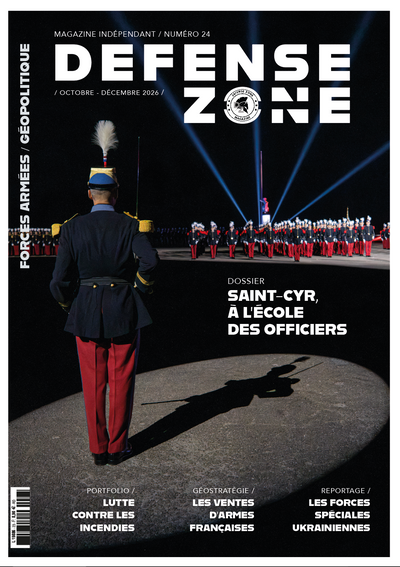
Going further with Défense Zone: books, magazine, posters
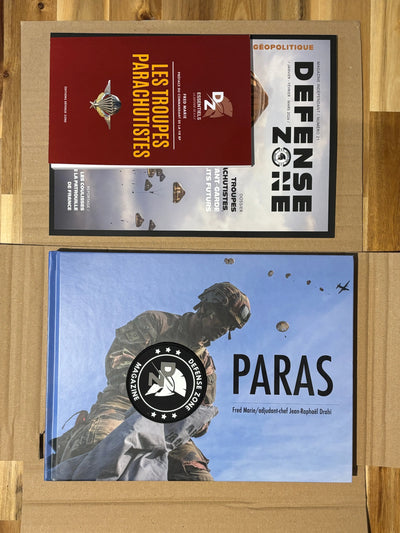
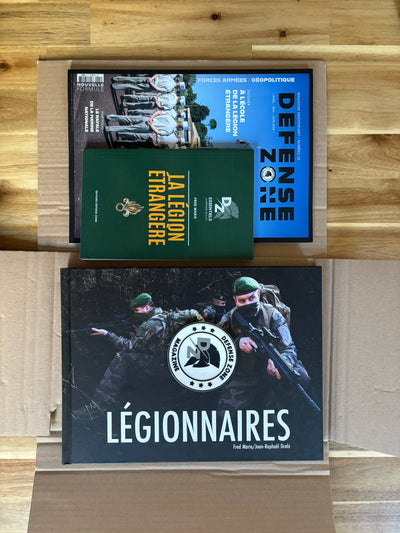
For a more in-depth, organised and accessible read, take a look at our collection of books on the French Foreign Legion, which brings together titles designed to help you understand the institution, its traditions and its contemporary realities.
One of them, a fine photo book entitled “Légionnaires”, is aimed at those looking for visual immersion, from recruitment to theatres of operations, with a reportage approach.
Decorate, collect, give
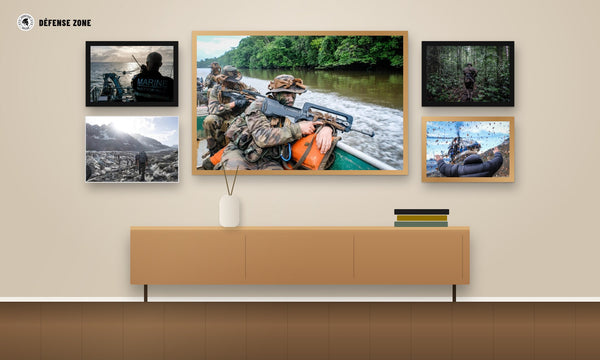
Finally, our posters and prints dedicated to the French Foreign Legion meet a specific purpose: keeping a powerful image, documenting a world, giving a gift linked to a passion.