DÉFENSE ZONE

The French Foreign Legion holds a special place in the French Army. It fascinates, it attracts, it sometimes worries, and for nearly two centuries it has fuelled a powerful imagery, often fed by clichés.
Behind the myth, one reality remains: a structured, demanding, modern military institution, made up of volunteers from all over the world, trained in France, led according to strict military standards, and committed to operational missions in the same way as the other units of the French army.
This article offers a complete and readable overview: definition, history, recruitment, selection, training, regiments, missions, pay, careers, traditions and the most frequently asked questions. The aim is simple: to help readers understand what the French Foreign Legion is today, without excessive romanticism or caricature, with concrete reference points.
What the French Foreign Legion is today
The French Foreign Legion is a force of the French Army made up mainly of foreign volunteers serving France under contract. It stands out for its centralised recruitment, a selection process reputed to be demanding, an accelerated integration model (notably through learning French), and a collective identity strongly shaped by its traditions.
It is neither an independent organisation nor a private force. It is fully part of the French armed forces, with a chain of command, disciplinary rules, a doctrine and missions defined by the State.
Key points to remember
The Legion is defined less by a nationality than by a framework: voluntary enlistment, selection, a contract, initial training, then a posting to a regiment. In practice, it relies on units with diverse specialities (infantry, parachuting, engineering, armoured cavalry, overseas), which explains the variety of possible career paths and regimental cultures.

History and heritage: from 1831 to the modern Legion
Creation and initial role
The French Foreign Legion was created in 1831. From the outset, the idea was a force made up of foreign volunteers integrated into a French military framework, with leadership and discipline designed to turn men of very diverse origins into a coherent, operational unit.
Camerone, a founding story
Among the essential references, Camerone holds a central place. This battle has become a founding story, a marker of identity and a major ceremony. Camerone is less an object of nostalgia than a tool for cohesion: it recalls the mission, discipline, brotherhood in arms and the idea of collective endurance, values claimed as fundamental.
To find out more, read our article on the history of the French Foreign Legion.
An institution that adapts
The Legion is not set in stone. It evolves with the times and with conflicts, adapting its methods, operational priorities, training and the way it recruits. The diversity of nationalities also varies over time, according to migration flows, crises and geopolitical contexts.
Traditions, symbols and cohesion
The French Foreign Legion is known for its traditions. They are not merely “folklore”. In a multinational force, ritual plays a practical role: it creates common ground, sets reference points, passes on a culture and establishes continuity.

The white kepi: a symbol of integration
The white kepi embodies entry into the legionnaire community, after the initial training period. It marks a transition: from a learning phase to a phase of belonging. It also reflects daily standards, notably in dress, discipline and team spirit.
Museum, memory, transmission
The memory of the Legion is not abstract. It is passed on through places, objects, stories, ceremonies and internal teaching. The Legion museum in Aubagne plays this role of preservation and transmission, both for legionnaires and for the public.
Music and outreach
The Legion’s band contributes to ceremonies, outreach and collective identity. It is an interesting way in for a wider readership, at the crossroads of culture, military tradition and public representation.
To find out more, read our article on the band of the French Foreign Legion.
Organisation: command, recruitment and overall logic
The French Foreign Legion is organised as a structured force: a command, a recruitment system and specialised regiments. This architecture is fundamental to understanding the reality on the ground: you don’t “join” an idea, you join a system.
Recruitment, a centralised mechanism
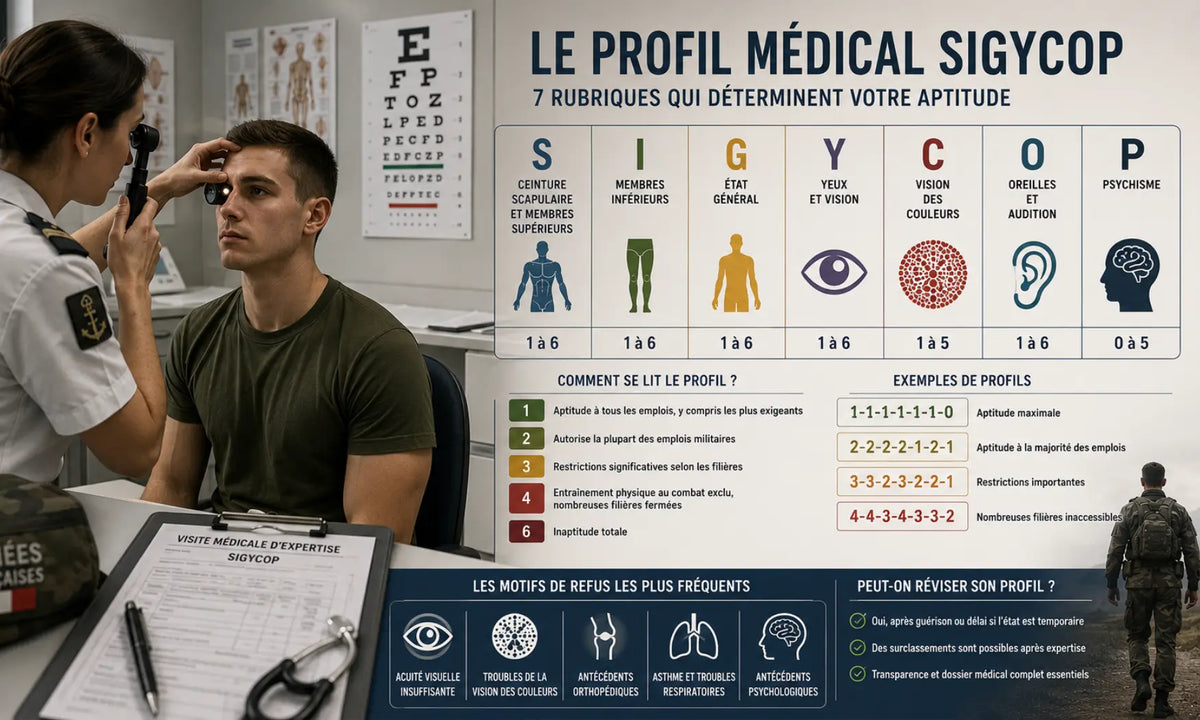
Recruitment relies on a system of contact points, pre-selection and selection. The aim is to quickly assess physical, medical and psychological fitness, and the ability to fit into a disciplined framework.
It is important to distinguish three realities:
- The desire to enlist.
- The objective ability to pass selection.
- The ability to last over time after enlistment.
To find out more, read our article on how to join the French Foreign Legion: a complete guide to recruitment.

Regiments and units: who does what, where, and why it matters
The French Foreign Legion is not just one regiment. It brings together several units, each with its own speciality, culture, constraints and operational tempo. Understanding this map gives a better grasp of the possible career paths.
The 4th Foreign Regiment: training in Castelnaudary
The 4th Foreign Regiment (4e RE), based in Castelnaudary, is the compulsory stage of initial training. This is where the common foundation is built: discipline, endurance, military basics, learning French, community life. This phase often determines what comes next.
To find out more, read our article on behind the scenes of French Foreign Legion training.
The 2nd Foreign Infantry Regiment: the heart of land combat
The 2nd Foreign Infantry Regiment (2e REI) is an infantry regiment, built around direct engagement, preparation for demanding scenarios and a culture of endurance. It is a good starting point for understanding the Legion “in combat” and the reality of command, from platoon level up to the commanding officer.
Further reading: our interview with General Youchtchenko, commander of the French Foreign Legion and the French forces stationed in Djibouti.
To find out more about the 2e REI, read this article.
And here is some further reading on a specialised unit, the dismounted combat support platoon of the 2e REI.

The 2nd Foreign Parachute Regiment: airborne standards
The 2nd Foreign Parachute Regiment (2e REP) is a parachute regiment known for its high standards, notably in physical fitness, battle hardening and mastery of the basics. It is the subject of many fantasies, but first and foremost it reflects one reality: you don’t “aim” for a prestigious badge, you build the ability to hold out under pressure.
Also discover the account of a parachute instructor in the 2e REP
The 3rd Foreign Infantry Regiment: French Guiana, the jungle, endurance
The 3rd Foreign Infantry Regiment (3e REI), based in French Guiana, holds a special place within the French Foreign Legion because of the environment in which it operates. The regiment works in a demanding equatorial setting, characterised by constant heat, high humidity, dense vegetation and major logistical constraints.
This location gives its legionnaires rare expertise in jungle combat and survival, skills sought after both for overseas operations (and operational missions such as Operation Harpie against illegal gold mining) and for training French and foreign units.
At the heart of this set-up is the Equatorial Forest Training Centre (CEFE), a specialised facility that trains soldiers in movement, combat and survival techniques in a tropical environment. The courses it runs cover a wide spectrum: adapting to the climate, managing effort over time, navigating in dense terrain, crossing obstacles, living autonomously and conducting operations in an environment where isolation and fatigue are decisive factors.
Every year, the centre hosts soldiers from many units, both French and foreign, confirming its role as an international reference in jungle battle hardening.

The other units: engineers, cavalry, overseas
The Legion also includes engineer and cavalry regiments, and overseas detachments. They contribute to its overall versatility: gap crossing, counter-mobility, route clearance, combat support and presence in strategic areas.
To find out more, here is a very comprehensive article on the regiments of the French Foreign Legion.

Recruitment and selection: what is really assessed
Selection aims to check the ability to become a soldier within a strict framework, and to last. The tests do not just measure athletic performance. They measure the ability to take hardship, to obey, to learn and to fit in.
The stages, in simple terms
The process generally consists of:
- A first contact through an information point.
- Pre-selection.
- In-depth selection (physical tests, medical examinations, assessments, interviews).
- Enlistment, then departure for training.
What selection looks for, beyond athletic ability:
- Tolerance of frustration.
- Acceptance of the rules.
- The ability to live in a group.
- Personal consistency in motivation.
Physical tests: thresholds, progress, common sense
Requirements vary over time and depending on the profile, but one principle remains: a candidate must arrive in reasonable shape, then progress. The Legion does not expect a perfect athlete; it expects a candidate able to settle into a rhythm, endure repetition and build up their strength.
To find out more, read our article: “French Foreign Legion physical tests: expected level and preparation”.
Initial training: learning fast, learning together
Initial training has a clear purpose: to turn a selected candidate into a soldier able to join an operational regiment. The setting is collective, progress is gradual, and the focus is on the fundamentals.
Discipline: building reflexes
Discipline is not mere decoration. It underpins the reliability of the group: punctuality, dress, order, cleanliness, attention to detail. In a world where mistakes can be costly, learning through repetition aims to make actions safer and behaviour more predictable.
French, an operational tool
In a multinational force, language becomes a necessity. Understanding an order, finding your way, reporting back, carrying out a safety procedure: learning French is inseparable from military training.

Missions and deployments: from home missions to overseas theatres
The French Foreign Legion is designed to be deployable. Its units take part in the missions of the French army: presence, deterrence, stabilisation, protection and overseas deployments.
Overseas operations: a defining reality
Overseas deployments shape careers, both through material hardship and human responsibility. They require preparation, strong cohesion and adaptability. The terrain often imposes basic living conditions, lasting fatigue and constant vigilance.
To find out more about Operation Sangaris.
French Guiana: a terrain apart
French Guiana is a laboratory of endurance. Missions there combine a harsh environment, duration, autonomy and logistical constraints. It is a powerful editorial angle, because it connects the institution with the concrete realities on the ground.

Pay, career, nationality: what can be said clearly
Pay and allowances: a variable reality
The question of pay is one of the most searched for. The answer is never a single figure, because pay depends on several variables: rank, length of service, speciality, posting, missions, allowances, family situation and the context of the deployment.
For the reader, the essential point lies elsewhere: the Legion is a demanding way of life, with accommodation, an organisation and a structure for advancement. Pay is part of a wider package linked to military status.
To find out more, go here: “French Foreign Legion pay: how much a legionnaire earns, allowances and progression”.
Career: advancement possible, selection constant
Advancement exists: promotion through the ranks, responsibilities, specialities, continuous training. But it rests on a constant logic: performance, discipline, endurance and the ability to fit lastingly into the regimental culture.
French nationality: a framework, not a promise
The question of nationality comes up often. It must be approached with caution: there is a legal framework, conditions and particular situations. The Legion is not presented as an “automatic door”. It is a military commitment, which may have certain administrative consequences under certain conditions.
Myths and realities: clarifying without oversimplifying
The French Foreign Legion crystallises many stories. Some are historically grounded, others are shortcuts.
“You can start again from scratch”
The Legion attracts men who want to break with their past, impose a framework on themselves or rebuild their lives. But “starting from scratch” does not mean erasing all reality: selection exists, security checks exist, and the institution operates within a State framework.
“It’s easy to get in”
Fascination sometimes creates the illusion of an open door. In reality, selection is structured and failure is common. Beyond getting in, the main difficulty is often lasting: keeping up the pace, accepting the rules, enduring fatigue, staying stable.
“It’s an institution frozen in time”
The traditions are strong, but missions, methods and constraints change. The Legion is not exempt from operational transformations or from the army’s modernisation requirements.

FAQ: frequently asked questions about the French Foreign Legion
Can you enlist without speaking French?
Yes, learning French is part of integration. However, rapid progress is expected, because language determines safety, understanding of orders and daily life.
Do you need a qualification?
Selection is not just about academic level. The foundation sought is above all military: discipline, resilience, the ability to learn, to live in a group, to sustain an effort and to accept a framework.
Can you choose your regiment?
Postings depend on needs and internal criteria. Preferences can be expressed, but they are not a guarantee. The logic is that of an organisation that assigns people according to abilities and needs.
What fitness level should you aim for?
There are thresholds, but what matters is consistency: arriving in reasonable shape, progressing, enduring repetition and staying mentally strong. Endurance and regularity count as much as one-off performance.
How long does selection take?
The length varies depending on the situation, but it is a structured process, including tests, examinations and interviews, before initial training.
Can you leave the French Foreign Legion?
There is a contractual framework. The reality is that joining is a commitment, and leaving follows rules. It is a subject to be dealt with factually in a dedicated article.
To find out more: “Leaving the French Foreign Legion: contract, procedures, realities”.
Does the Legion guarantee French nationality?
No, it would be wrong to present naturalisation as automatic. There are conditions and a legal framework, and each situation must be understood in its administrative and military reality.

Going further with Défense Zone: books, magazine, posters
For a more in-depth, organised and accessible read, take a look at our collection of books on the French Foreign Legion, which brings together titles designed to help you understand the institution, its traditions and its contemporary realities.
One of them, a fine photo book entitled “Légionnaires”, is aimed at those looking for visual immersion, from recruitment to theatres of operations, with a reportage approach.
Decorate, collect, give
Finally, our posters and prints dedicated to the French Foreign Legion meet a specific purpose: keeping a powerful image, documenting a world, giving a gift linked to a passion.