DÉFENSE ZONE
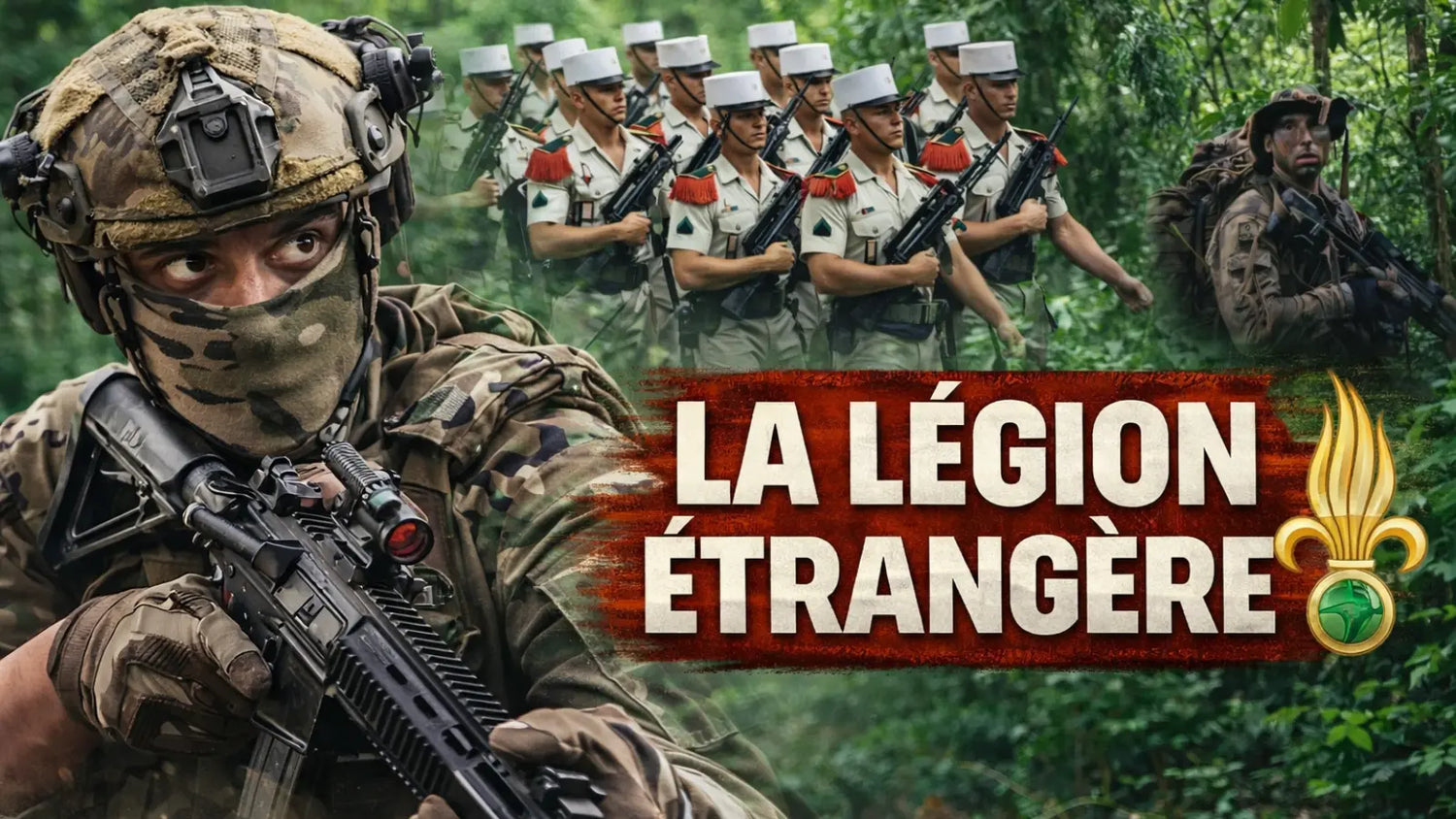
It is a peculiarity that has intrigued observers for nearly two centuries. While most armies recruit exclusively from among their own citizens, France has a unit made up almost entirely of foreigners: the French Foreign Legion.
Men from all over the world, with very different backgrounds, who nevertheless wear the same uniform and serve under the French flag. A unique reality, and one that is often little known.
An institution born of a political choice
The Foreign Legion was created in 1831, during the reign of Louis-Philippe I. At the time, France was home to many foreigners: former soldiers, political refugees, adventurers. Rather than scatter them, the authorities decided to bring them together in a dedicated unit.
Very quickly, the Legion was committed to Algeria, then to France’s major campaigns. From the Battle of Camerone in 1863 to contemporary conflicts, it gradually established itself as a unit capable of operating in the most demanding environments.
Turning foreigners into French soldiers
Recruitment is one of the Legion’s most distinctive features. Every year, thousands of candidates come forward, but only a minority are accepted. Selection is demanding: physical tests, psychological assessments, interviews.
Yet the main challenge is not recruitment. It is transformation. At the 4th Foreign Regiment (4e RE) in Castelnaudary, recruits learn French, military rules and the traditions of the Legion. Above all, they learn to become a team.
Men with no initial connection have to function together. Cohesion rests on discipline, effort and one central principle: all are equal under the white kepi.
A force fully committed to operations
Today, the Foreign Legion is a fully integrated part of the French military. Its regiments cover several fields: infantry, cavalry, engineering. It is regularly deployed on overseas operations. In environments such as the Sahel, marked by extreme climatic conditions and elusive adversaries, it brings an essential capability: endurance.
Its diversity is also an asset. Legionnaires come from varied backgrounds, speak several languages and can sometimes better grasp certain local contexts.
Why this model still exists
At first glance, the Legion might look like a legacy of the past. Yet it remains fully relevant today. First, it offers an immediately available operational capability: trained, deployable units used to overseas engagements. It also relies on strong cohesion, built through effort and over time.
Finally, it allows France to recruit beyond its own territory, a significant advantage at a time when armed forces must maintain their numbers. But beyond the operational aspect, the Legion embodies a particular idea of commitment: serving a country that is not one’s own.
A strategic exception
For nearly two centuries, the French Foreign Legion has held a place of its own. It is both a historical legacy and a modern military tool. It shows that military power does not rest solely on material resources, but also on the ability to integrate, train and deploy men from different backgrounds.