DÉFENSE ZONE

The amphibious helicopter carrier (PHA), formerly known as the projection and command ship (BPC), is a French Navy vessel. Versatile, the PHA can be deployed at short notice to form an amphibious force with a detachment from the amphibious flotilla and elements of the French Army and the French Air and Space Force.
The PHA is dedicated to crisis management operations, the transport of troops and equipment, and the evacuation of nationals.
History
The study for a multipurpose intervention ship (BIP) was officially launched in 1997. It aimed to replace the Ouragan and Foudre class landing ship docks, withdrawn from service in 2007 and 2011.

At the time, the Navy wanted a stronger amphibious intervention capability so that it could, among other things, take part in the multinational engagements described in the European Amphibious Initiative.
The two areas on which “la Royale” (the French Navy) wanted to focus its project were improving its capacity to carry rotary-wing aircraft and to accommodate French Army troops and combat vehicles, from troop carriers to artillery guns and armoured vehicles.
The Minister of Defence at the time, Alain Richard, approved the launch of the programme to build two ships on 8 December 2000. The contract was notified on 30 July 2001 for the Mistral and the Tonnerre, and on 10 April 2009 for the Dixmude.
Construction
The naval shipbuilding directorate (DCNS, now Naval Group) was the prime contractor for the first two ships. It carried out on average 50% of the work (labour and value) with its main subcontractor, Chantiers de l’Atlantique. The Dixmude, for its part, was built by Chantiers de l’Atlantique for the platform and DCNS for the weapon systems.
The first steel for the Mistral was cut on 9 July 2002 in Brest; that of the Tonnerre followed five months later. After the forward and aft sections of the two ships were assembled, the Mistral was launched on 6 October 2004 and the Tonnerre on 26 July 2005. A fact rare enough to be worth highlighting: the construction schedule was met for both ships.
Characteristics of the amphibious helicopter carrier
- Length: 199 m
- Beam: 32 m
- Draught: 6.2 m
- Displacement: 21,500 tonnes
- Speed: 19 knots, i.e. 35 km/h
- Crew: 200 sailors
- Embarked forces: between 400 and 900 soldiers + an embarked staff
The PHA’s aviation capabilities
With its 6,400 m2 flight deck, the PHA has 6 helicopter landing spots. The size of the deck allows aircraft to be operated simultaneously. Allied helicopters can land on it, but for the so-called “super-heavy” types (Super Stallion or Chinook), only spot No. 1 has enough room to land safely.
The French Navy has already carried out trials with vertical take-off and landing aircraft, but as the deck coating was not designed for this configuration, it would appear to be too fragile for intensive use.

The 1,800 m2 hangar can house 16 helicopters. The machines reach the flight deck via two lifts capable of raising 13 tonnes. The aft lift allows a helicopter to be raised with its rotor blades deployed, which shortens preparation time before take-off.
During Operation Harmattan, the PHA Mistral carried 20 helicopters.
For aircraft deck landings, the PHAs have an approach radar and, as on an aircraft carrier, an optical system with a glide slope and descent indicator and a horizontal reference bar.
Amphibious capabilities
The amphibious characteristics of an amphibious helicopter carrier come down to four main points.
Its capacity to accommodate combat troops, and therefore to carry the volume of forces needed to secure a strategic advantage if they have to land in a sensitive or combat zone.
Its capacity to accommodate the vehicles of the troops to be landed, so that they can fight in any environment, particularly during high-intensity phases.
Its capacity to accommodate a command post able to bridge the gap between the moment the troops land and their reorganisation before fighting in depth, and also to exercise tactical command of a complete manoeuvre (landing, combat, re-embarkation).
Its amphibious landing craft, which allow troops to carry out an amphibious operation within a tight timeframe and in areas that are difficult to access.
Troop capacity
The helicopter carriers can accommodate between 400 and 900 personnel on board. Embarked troops (excluding crew) are housed in cabins for two to six people with toilets and showers. If numbers are too great, soldiers can be accommodated on camp beds in the hangars.

Vehicles on board the PHA
Amphibious helicopter carriers can accommodate almost all French Army combat vehicles, from small 4x4 vehicles to a complete squadron of Leclerc tanks, i.e. 13 armoured vehicles. When Operation Serval was launched in 2013, the Dixmude carried 140 vehicles, including VBCI infantry fighting vehicles and AMX-10 RC tanks, and 1,820 tonnes of equipment, including 50 tonnes of ammunition.

The command post of a PHA
The size of an amphibious helicopter carrier allows it to have a modern command post suited to the needs of modern combat. The PHA has 850 m2 of fully equipped and connected rooms to run a staff of 50 to 100 people. This staff, also known as the Amphibious Task Force or Landing Force HQ, is able to conduct joint or allied operations from the sea within a tight timeframe and over an area several dozen kilometres deep after the troops have landed.

A PHA’s landing craft
Thanks to its well deck, an internal basin 60 metres long that can be flooded several metres deep by ballasting down the ship, the PHA carries two types of craft which can pick up combat vehicles and soldiers at sea and carry them to shallow landing zones. These same craft are then stowed in the well deck while the PHA is in transit.
- The landing craft mechanised (CTM). The PHA can carry four. Each can carry 2 armoured vehicles such as the VAB, or one Griffon.

- The fast amphibious landing craft (EDAR). The PHA can carry two. An EDAR can carry 80 tonnes of load, including several armoured vehicles (including main battle tanks). The bow and stern ramps avoid vehicle manoeuvres, allowing vehicles to drive on normally from the well deck and already be in position to land on the beach.

The PHA: a hospital on the water
The amphibious helicopter carrier has exceptional medical capabilities. Covering 750 m2 of deck, the hospital comprises some twenty rooms, including two operating theatres, a radiology room and 69 beds, 19 of them with intensive care equipment — the equivalent of the hospital of a town of 25,000 inhabitants.
The missions of the amphibious helicopter carrier
PHAs can carry out many missions. Their primary capability is projecting an air-land amphibious force into a war zone. With its amphibious flotilla, its staff and its embarked forces, a PHA can carry out a “first entry” into unreconnoitred territory.
The amphibious helicopter carrier can also provide operational transport to reinforce land deployments.
The PHA can also provide assistance during evacuation operations of nationals, supplying not only the security forces for recovering civilians but also accommodation on board and care for the wounded.
The helicopter carrier is also a training ship, since it now hosts the “Jeanne d’Arc” mission, which completes the three years of training of French Navy officers.

Deployments of the amphibious helicopter carriers
Each PHA is deployed in turn for the Corymbe mission, which allows the French Navy to maintain a permanent presence at sea in the Gulf of Guinea and off the coast of West Africa.
PHAs have also taken part in some of the armed forces’ emblematic operations, including
- Baliste in 2006: evacuation of 1,400 French nationals from Beirut (Lebanon)
- Harmattan in 2011: deployment of an airmobile detachment during the French intervention in Libya
- Serval: deployment of personnel and equipment for the military intervention in Mali
- Résilience: medical evacuation of COVID patients between Corsica and mainland France
- Support for the populations of Saint-Barthélemy and Saint-Martin hit by Hurricane Irma
- Assistance to the Lebanese emergency services after the explosion in the port of Beirut
Amphibious helicopter carriers for export
At the end of 2010, Russia announced that it had chosen Mistral class ships to equip its navy. The order covered 1 to 2 ships and the option of a technology transfer to build further units in Russia. The 2013 Ukrainian crisis (annexation of Crimea by Russia) caused a serious diplomatic crisis between Paris and Moscow. After several twists and turns, on 5 August 2015 France definitively cancelled the contract for the delivery of the two ships already under construction. This breach of contract cost the French State nearly one billion euros. In the end it was the Egyptian Navy that acquired the two ships. They were delivered in 2016.
To find out more
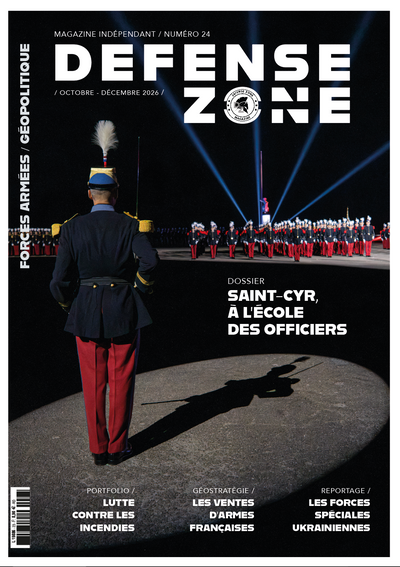
Read about the amphibious helicopter carrier and the Jeanne d’Arc mission in the feature of our latest issue.
You can also subscribe to our magazine and receive our very latest issue, access exclusive content and benefit from our partners’ equipment and gear offers. Go to the Premium section.