DÉFENSE ZONE

First appearing in its original form between the 16th and 18th centuries, the municipal police has evolved considerably since and today is the third component of internal security. With nearly 24,000 officers in 4,500 municipalities and EPCIs (Établissements Publics de Coopération Intercommunale, inter-municipal cooperation bodies) across France, it contributes, as its main mission defines, to improving people’s quality of life.
Text: Romain Martyn / DZ
The history of the municipal police
Under the Ancien Régime, groups of individuals known as “Dizeniers” in Aix-en-Provence and Bordeaux, “Sizeniers” in Toulouse or “Centeniers” in Rouen formed the first kind of community policing. Their emergence, which still cannot be precisely dated for lack of archives, is thought to stem from the growing desire for sovereignty of the towns of the time. Despite their differences, these first municipal police officers shared a few common features that still exist today. In theory, they could only serve after registering with the town hall clerk’s office and swearing loyalty to the town’s magistrate.
Following the French Revolution, the law of 14 December 1789 reorganised and redefined the profession’s missions. Municipal police officers were placed under the authority of mayors. Previously rather vague, their role was now to ensure that residents enjoyed the benefits of good policing, notably cleanliness, public health and safety in streets, public places and public buildings.
With the creation of the Ministry of Police, Napoleon Bonaparte put an end to the municipalities’ independence in this area. The municipal police of the time, although it still existed, had only administrative functions.
The law of 5 April 1884, which for the first time defined the democratic structure of municipalities, marked a new turning point in the history of the municipal police. It was then that police stations were created, headed by commissioners appointed by the president, or by the prefect for municipalities with fewer than 6,000 inhabitants. Mayors retained the power to recruit officers and hierarchical authority over the commissioners (even though their postings and career advancement depended on the State).

Between the wars, police commissioners in the big cities, wanting to have State civil servants like themselves under their command, called, through the mayors, for their municipal police to be nationalised. Later, this demand was taken up by the Vichy regime in a 1941 law. The municipal police forces of towns with more than 10,000 inhabitants then came under State control; the authoritarian regime wanted to assert its existence and effectiveness vis-à-vis the occupier, and so it created the national police.
On 15 April 1999, a new law strengthened the municipal police forces and created a specific status for their officers, who until then had been local government employees like any others. More recently, the Global Security Law brought new upheavals. The law of 25 May 2021 notably provides for the creation of a municipal police force in Paris, ending the Parisian exception that had lasted since 1795. In addition, the creation of dog units was secured and the municipal police’s scope of action was broadened. It should be noted that a large part of this broadening was struck down by the Constitutional Council, as was the case, for example, with the use of drones.
How the municipal police is organised
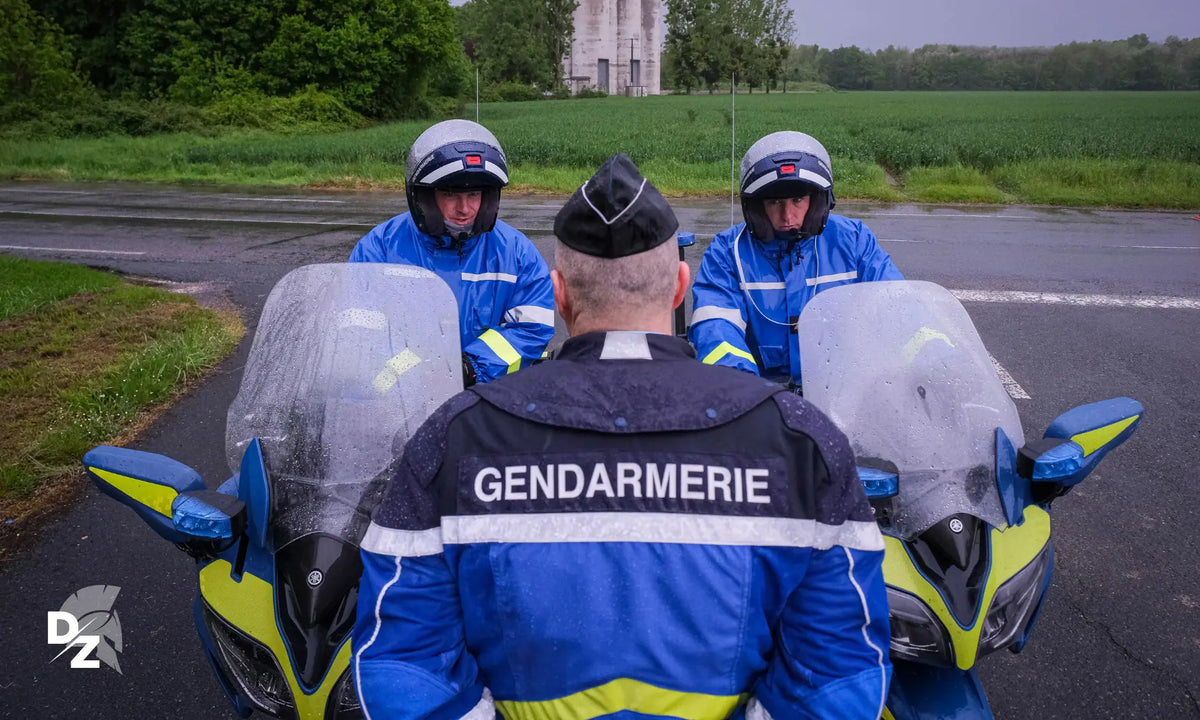
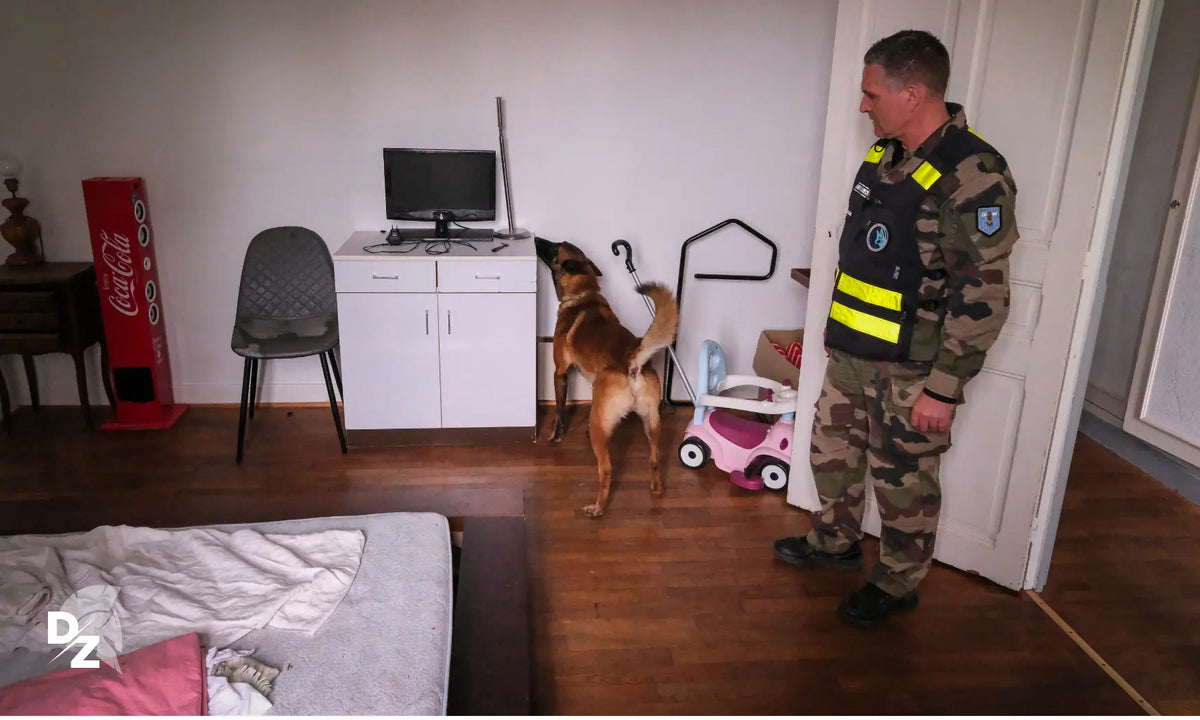
To date, municipal police officers remain under the authority of mayors, although the Ministry of the Interior retains a right of oversight. In particular, it has the power to launch a general inspection to carry out checks. The organisation of the municipal police can vary from one municipality to another, but it is generally divided into units defined by their respective specialities. There are, for example, motorcycle, dog, mounted and bicycle units…
Alongside the units, the hierarchy is defined by several job frameworks corresponding to different grades.
Municipal police officers (category C):
- Gardien stagiaire (trainee officer)
- Gardien brigadier (officer)
- Brigadier (refers to gardiens brigadiers with more than 4 years’ seniority)
- Brigadier-chef principal (senior sergeant)
Municipal police heads of department (category B):
- Chef de service (head of department)
- Chef de service principal, 2nd class
- Chef de service principal, 1st class
Municipal police directors (category A):
- Directeur de Police municipale (municipal police director)
- Directeur principal de Police municipale (principal municipal police director)
The missions of municipal police officers
The municipal police is responsible for various administrative and judicial missions. Its administrative missions are preventive and are governed by Article L. 2212-2 of the General Code of Local Authorities.
Municipal police officers carry out surveillance patrols to ensure the safety of people and property. To prevent any trouble, they monitor public events such as markets and festivities. They also look after public health by checking street cleaning and waste collection and by combating fly-tipping. Finally, they intervene in the event of brawls, neighbour disputes or any act likely to disturb public peace. Their proximity and their coverage of the town regularly make them the first responders, so they are, de facto, the main point of contact for triggering rescue and assistance measures in the event of an accident or natural disaster.
The other side of the municipal police’s missions falls under judicial policing; these missions are repressive and are governed by Article L 511-1 para. 2 et seq. of the Internal Security Code.
Officers are responsible for enforcing municipal by-laws and draw up reports in the event of offences. They can fine offenders under Book VI of the Criminal Code, which covers, for example, dangerous animals roaming free or night-time noise. When securing a public event or a municipal building, and with the person’s consent, a municipal police officer may search a bag or carry out a security pat-down.
Municipal police officers also act as assistant judicial police officers, supporting the judicial police officers. To this end, they record traffic offences in official reports and have a duty to gather any information that may help identify the perpetrators of offences and crimes they witness.
Municipal police resources and equipment
To carry out their duties, municipal police officers are provided with various resources and equipment.
For personal protection, officers have a bulletproof vest, a helmet and high-visibility clothing, for night-time roadside checks, for example.
Incapacitating spray and the baton are their basic weapons. When the mayor has requested authorisation from the prefect, officers may carry a firearm. Formerly equipped with a .38 Special revolver, they now have the most widespread model in French internal security: the Sig-Sauer SP 2022 in 9mm Parabellum. This replacement followed a request made by the unions in the aftermath of the Nice attack. The government officially authorised municipal police officers to use 9mm calibre in a decree dated 29 November 2016. When a municipality opts for non-lethal weapons, officers are often equipped with a Taser-type electroshock weapon. The municipal police uses a wide range of vehicles depending on the terrain it covers, from three-wheeled scooters in town to 4x4s in the mountains. The town of Mandelieu recently acquired an amphibious tracked vehicle to intervene more easily during the increasingly frequent floods in the region.
How to become a municipal police officer
There are 3 job frameworks for municipal police officers, each with a different training path. Municipal police officers (category C) must pass the municipal police officer (gardien) competitive exam. Divided into 4 parts, this exam aims to assess the candidate’s reasoning skills through a written test and psychometric tests. Physical tests and an oral interview then follow. Successful candidates undergo initial training provided by the National Centre for Local Government Service (CNFPT), consisting of:
- 76 days of theory classes
- 45 days of practical placement under the responsibility of a tutor.
At the end of the practical placement, a teaching committee assesses the candidate’s knowledge and awards, or does not award, the certificate of completion. This panel consists of a magistrate, a director, a municipal police head of department and a clinical psychologist.
Another competitive exam allows candidates to apply directly for the grade of municipal police head of department. Officers can sit an internal exam. Initial training varies in length depending on the candidate’s experience: 180 days after the external exam, 120 days after the internal exam and 80 days for internal promotions. Future heads of department must also complete a “service project” which they present to a panel.
Finally, a last competitive exam, open to holders of a three-year degree (bac +3), leads to the post of municipal police director. This is followed by a one-year period during which the new director alternates theory classes with the CNFPT and practical training in the employing authority.
At the end of their training, officers receive approval from the public prosecutor and the prefect of the department. As in the 18th century, they must then take an oath before the district court or regional court (tribunal d’instance or tribunal de grande instance) of the area to which they are attached.
Continuing training
Training is not limited to joining the municipal police but continues throughout one’s career. Municipal police officers complete at least 10 days of training every 5 years in order to keep up to date with social, legal and cultural developments. For those in management or supervisory posts, the training session takes place every 3 years.
Weapons training
If the mayor requests it from the prefect, municipal police officers may be equipped with a handgun. This of course requires additional training at a specialised shooting range or at the nearest national police school. Lasting 45 hours for category 4 weapons (revolvers and semi-automatic pistols), 3 hours for less-lethal launchers and 18 hours for category 6 weapons (batons, defensive sticks, etc.), the training is followed by a series of assessments and, if successful, national certification.
How much does a municipal police officer earn?
Municipal police officers’ pay depends on several factors. Grade and step determine the basic index-linked salary. Allowances, which depend for example on the number of dependent children, place of residence or number of overtime hours, are added to the basic salary. Excluding allowances, a gardien brigadier at step 1 earns just over 1,500 euros gross a month. A principal municipal police director at the end of his career can expect just over 3,100 euros gross a month.
To subscribe to our magazine, receive the next print issues, access exclusive content and benefit from our partners’ offers on gear and equipment, click on this link or directly on the image below