DÉFENSE ZONE
In Gramat, the Gendarmerie now trains dogs capable of finding digital storage devices hidden during criminal investigations. A still-rare speciality that illustrates how investigative methods are adapting to the era of digital evidence.
Snatch, detector of hidden memories
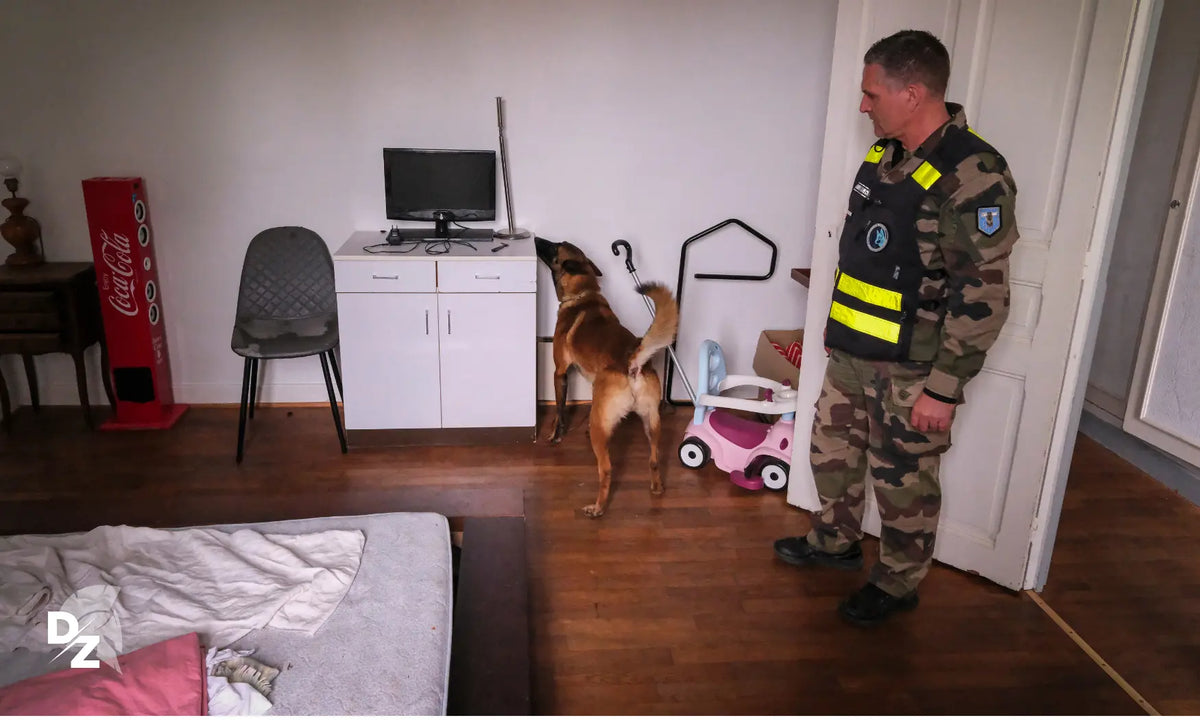
In a house that looks like any other, the rooms are cluttered with everyday objects. Clothes piled on a chair, drawers half open, a few pieces of furniture arranged in no apparent order. Yet nothing here is left to chance: this house serves as a training ground for the Gendarmerie’s dog teams. In the middle of the living room, a dog sets off. His name is Snatch. Nose to the ground, he methodically inspects the room before stopping dead in front of a pile of clothes. Under the fabric, the gendarmes find a tablet. A few minutes later, the dog will also flag a hidden phone, a pen fitted with a spy camera, then a USB stick and an SD card hidden in a piece of furniture.
Digital evidence at the heart of modern investigations
At first sight, nothing distinguishes these everyday objects. Yet Snatch does not get it wrong. Like a handful of other dogs in France, he is trained for a still-rare mission: detecting digital storage devices. A recent speciality developed at the Gendarmerie’s National Dog Training Centre, based in Gramat in the Lot. “Modern investigations rely more and more on digital evidence. The aim is therefore to help investigators find storage devices that are sometimes tiny or very well hidden”, explains Colonel Pascal Segui, commander of the centre.
Read the rest of this article by Fred Marie in Défense Zone #22.
To find out more
Discover our books on the Gendarmerie and our investigation into training in the Gendarmerie — and follow our news.