DÉFENSE ZONE

When people think of the French education system, the image that generally comes to mind is that of conventional state and private schools, filled with pupils and students of all ages. But at the heart of the French educational landscape lies a specific niche, often little known to the general public: the Defence high schools, more often called military high schools (lycées militaires).
Military high schools are not just educational institutions. They embody a unique fusion of academic education and military training, offering hundreds of pupils a complete education that covers both the national curriculum and specific teaching focused on discipline, rigour and military values.

Far from the stereotypical image of strict schools steeped in iron discipline, these high schools are melting pots of training that can prepare young people for military careers, but also for careers in many civilian fields. Of course, the particular supervision in these establishments places the emphasis on self-discipline, responsibility and camaraderie, with the aim of giving pupils human qualities that will serve them throughout their adult lives.
The origins of military high schools
The history of military high schools goes back to the 17th century with the creation of the “Enfants de Troupe” (children of the troops). Originally, an enfant de troupe was the son of an NCO or soldier who followed the army, without any formal military training.

In 1766, Louis XV ordered that posts be reserved for these children in every company or squadron. In 1786, the first military school for these children was created. Bonaparte made the term “Enfant de troupe” official in 1800, and if their soldier father died, they became wards of the Nation (pupilles de la Nation). These children, often orphans or from military families, were recruited to be trained as soldiers. But over time, the need to educate them became increasingly important, until academic education was incorporated while still preparing pupils for military careers. In 1875, a school dedicated to them opened in Rambouillet, followed by five others in 1884. These schools became military colleges in 1974 and then military high schools in 1982.
Despite these changes, the term “Enfant de Troupe” lives on. The Association of Former Enfants de Troupe, founded in 1910, continues to bring together former pupils and keeps the duty of remembrance alive.
An overview of the military high schools
The six high schools are spread across France, each with its own history and traditions.

As establishments of general education and upbringing, they have a dual purpose:
- For secondary education: support for families, mainly intended for the families of personnel of the Ministry of the Armed Forces, and more particularly those of career or contract service personnel, in compensation for the constraints and demands of military life;
- For preparatory classes and BTS (higher technician diplomas): support for the recruitment of officers, NCOs and civilian staff of the Ministry of the Armed Forces.
Saint-Cyr military high school:
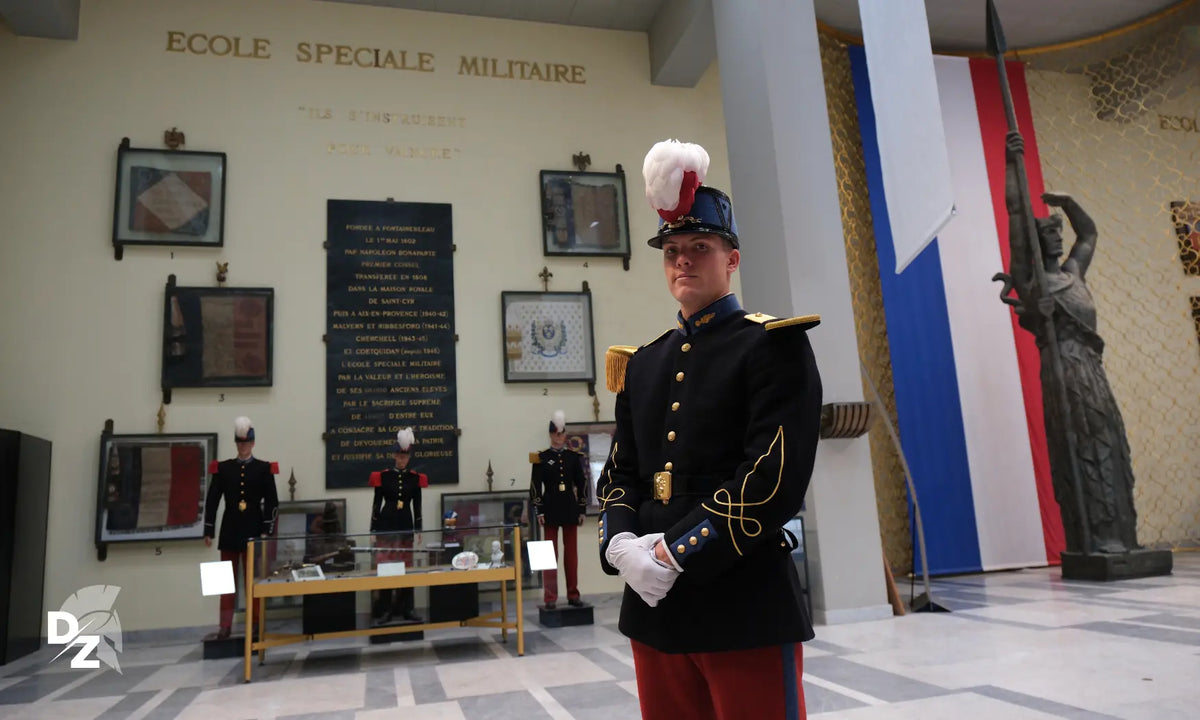
Louis XIV, influenced by Madame de Maintenon, created the Maison Royale de Saint-Louis at Saint-Cyr in 1684 to educate the daughters of soldiers who had died or were unable to support them. The establishment opened in 1686. With the Revolution, it was turned into a military hospital in 1792. In 1800, it became the Prytanée militaire de Saint-Cyr, intended to educate the children of soldiers killed in action. Napoleon moved it to La Flèche in 1808 and established the Imperial Special Military School at Saint-Cyr to train officers. In 1959, de Gaulle considered restoring the Saint-Cyr tradition. Thus, in 1966, the Saint-Cyr Military College was inaugurated, receiving its colours in 1972. It was renamed Saint-Cyr Military High School in 1983.
- Location: Saint-Cyr-l’École, Île-de-France.
- Level of education: high school and preparatory classes.

Aix-en-Provence military high school:
The Aix-en-Provence military high school stems from the merger of the military schools of Rambouillet and Saint-Hippolyte-du-Fort in 1934, which then formed the Épinal school. Because of the general mobilisation of 1939, the school moved from Épinal to Niort. The German occupation in 1940 forced the establishment to move several times, via Confolens, Chomerac and Montélimar. In 1946, the school settled in Aix-en-Provence, taking the name of Aix-en-Provence military preparatory school. It was renamed a military college in 1974, then Aix-en-Provence military high school in 1983. The LMA has colours decorated with the Legion of Honour and several Croix de Guerre.
- Location: Aix-en-Provence, Provence-Alpes-Côte d’Azur.
- Level of education: lower secondary school (collège), high school and preparatory classes.

Autun military high school:
Originally a 17th-century seminary, this building was turned in the 19th century into a cavalry military preparatory school for the Enfants de troupe. The cloister, also from the 17th century, was a major seminary founded in 1675 by the Bishop of Autun, Monseigneur de Roquette. The architect Daniel Guittard drew up the plans, and the gardens, now gone, were by Le Nôtre. To save money, the bishop used stones from the Roman theatre, making this building one of the finest seminaries in France at the time. After the Revolution of 1789, the seminary was looted and served as a prison. In 1813, it was returned to the bishop and became a minor seminary.
- Location: Autun, Bourgogne-Franche-Comté.
- Level of education: lower secondary school (collège), high school and preparatory classes.

To find out more: the pay of an army officer.
Prytanée national militaire, La Flèche:
The Prytanée National Militaire, established in La Flèche in 1808 on the orders of Napoleon I, occupies the premises of a college founded in 1604 by Henri IV and run by the Jesuits. This college’s mission was to educate young people in the sciences and in values. The Prytanée prepares pupils for the Saint-Cyr and Saint-Germain schools. Admitted between the ages of 8 and 12, pupils study there until the age of 18 before pursuing a military career. Their training includes languages, mathematics, history, dancing, fencing and military drill. Many former pupils have distinguished themselves in combat, notably during the First World War, with 721 “brutions” killed. In 2004, the Prytanée celebrated two major anniversaries and was praised by the Minister of National Education. Since its foundation, the Prytanée has remained a symbol of French excellence, with the motto “Noblesse oblige. Bahut aussi” (Noblesse oblige. So does the school).
- Location: La Flèche, Pays de la Loire.
- Level of education: lower secondary school (collège), high school and preparatory classes.

Brest Naval High School:
Created in 1966, the naval college officially took the name “Lycée Naval” in 1980. Three years later, the high school became co-educational for its secondary classes. The institution naturally prepares many students for careers in the French Navy.
- Location: Brest, Brittany.
- Level of education: high school and preparatory classes.

École des pupilles de l’Air:
The school was created in 1941, when it was still in the unoccupied zone. Today it bears the name of Jacques Lorenzi, its first pupil to die for France, during the liberation of Paris in 1944, at the age of 15.
Until, the school was based in Grenoble before moving to Montbonnot-Saint-Martin, about ten kilometres from the capital of the Isère.
- Location: Montbonnot-Saint-Martin, Auvergne-Rhône-Alpes.
- Level of education: lower secondary school (collège) and high school, preparatory classes

What makes military high schools special
The curricula comply with those set by the Ministry of National Education, and each military high school has preparatory classes enabling students to prepare for the entrance exams of the Grandes Écoles, military ones in particular, but also BTS courses such as the one in cyber defence offered by the Saint-Cyr-l’École military high school.

On the other hand, supervision by professionals from the Ministry of the Armed Forces provides unique additional training. Strict discipline contributes to pupils’ personal development while instilling values such as respect, honour and integrity. In military high schools, pupils are boarders (with a few rare exceptions). This feature helps offset the constraints of military life (parents’ frequent postings, deployments on operations) by offering a stable and secure environment. It also lets pupils experience the constraints and benefits of community life, which can be an advantage for those wishing to take up the profession of arms.

How to get into a military high school?
Admission requirements
Defence high schools are intended for young people of French nationality. Although 70% of places are allocated to the children of service personnel and a maximum of 15% to the children of civilian staff of the Ministry of the Armed Forces and other ministries, 15% of places in secondary education (from seconde, the first year of upper secondary) are reserved for students on means-tested grants, regardless of their parents’ profession, under the “Égalité des Chances” (Equal Opportunities) programme.

This programme also offers preparatory classes for deserving grant holders, giving them a year of upgrading after the baccalauréat before joining a CPGE (preparatory class for the grandes écoles). Admission is based on an application file, with a specific board for each branch of the armed forces.
Selection process
The selection process generally includes written exams, physical tests and interviews. These assessments are carried out by each service. Once the tests have been passed, the files are presented to a selection board, which will decide on the candidates’ ability to succeed in a demanding environment.
Cost and possible grants
Although military high schools charge fees, grants are often available to help families cover school costs. Currently, under the “Égalité des Chances” plan, Defence high schools take in around 15% of grant-holding pupils regardless of their parents’ profession.

In addition, under this plan, they have preparatory classes for higher education, reserved as a priority for deserving grant holders who would like a one-year post-baccalauréat upgrading year before joining a CPGE.
Find out more
For full details on enrolment and admission requirements for Defence high schools, the Ministry of the Armed Forces has published a dedicated web page.
You can also find our interview with the commanding officer of the Aix-en-Provence military high school in the podcast section or on our YouTube channel.
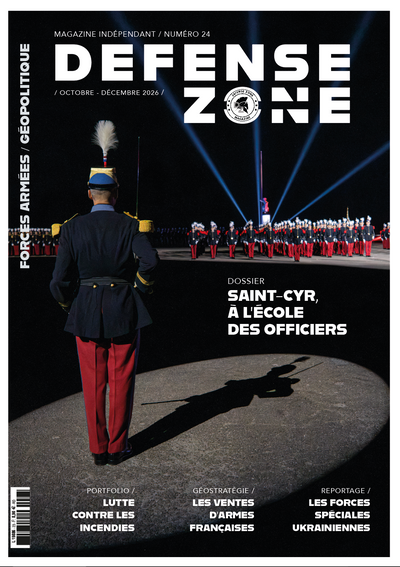
You can subscribe to our magazine and receive our very latest issue, whose feature is devoted to the war in Ukraine, access exclusive content and take advantage of equipment and gear offers from our partners. Head to the Premium section.

Questions fréquentes
Qui peut entrer dans un lycée militaire ?
Les jeunes de nationalité française, en priorité les enfants de militaires (70 % des places), puis les enfants d'agents civils du ministère et de fonctionnaires (15 % au maximum) et les élèves boursiers (15 %, à partir de la seconde).
Un lycée militaire est-il gratuit ?
Non. Les familles paient des frais de pension et de trousseau, fixés par chaque établissement, avec des remises sociales sous condition de ressources.
Faut-il devenir militaire après un lycée militaire ?
Non pour le secondaire. Les classes préparatoires et les BTS ont en revanche pour vocation de préparer aux carrières du ministère des Armées.
Quand déposer un dossier pour la rentrée 2027 ?
Les dates sont fixées par la circulaire d'admission de chaque lycée, publiée au Bulletin officiel des armées et sur le site de l'établissement, en général entre l'hiver et le printemps qui précèdent la rentrée.