DÉFENSE ZONE

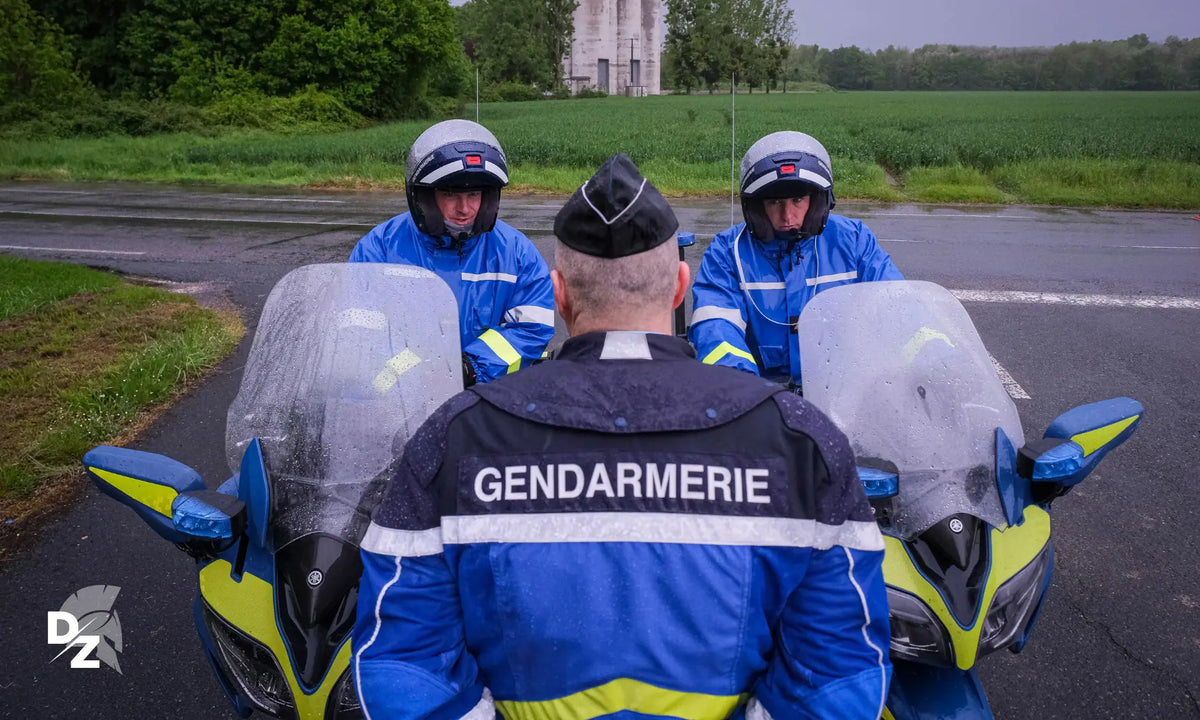
Like any citizen, a service member deployed on an overseas operation (OPEX) or abroad is subject to French and international law, even on an overseas operation. While there is talk today of the judicialisation of the battlefield, it must not hinder soldiers’ action on the ground. To oversee and support the forces’ missions, the provost gendarmerie command, created in 2006, has the task of supporting military command at both tactical and operational level and of providing the judicial dimension for the armed forces and their families.
The provost service: the oldest gendarmerie unit
Although its new organisation is recent, the provost gendarmerie is the oldest unit of the French National Gendarmerie. Its origins go back to the 14th century, when in 1373 an edict of King Charles V gave the Constable’s provost the power to hear “the crimes and misdeeds committed in the armies by men of war. At that time, provost courts followed the armies onto the battlefields to keep order among the soldiers. Little by little, the maréchaussée extended its authority to the civilian population and became sedentary, establishing itself throughout the country. It was this same maréchaussée that, during the Revolution, took the name of Gendarmerie nationale.
What is the provost gendarmerie for?
As we have just seen, the provost gendarmerie has always accompanied military units and taken part in every engagement, in France and abroad. The increase in operations since the 1990s has, de facto, exposed provost officers to a multiplicity of missions, in mainland France, abroad, but also on overseas operations. On operations, the law has taken on an ever more important place, all the more so as overseas operations were changing. Head-on wars between two sides were turning into the “fight against terrorism” against adversaries with little regard for international rules. As a former Chief of Staff of the French Army put it, “our action must respect the law and regulations, even against adversaries who do not respect it”.

Today provost officers accompany service members in a context where theatres of operations are subject to very strong judicial scrutiny, with the creation of international tribunals (ICTs), but also the International Criminal Court and the European Court of Justice. These bodies try both military personnel and civilians, ensuring that the use of force by armed forces is regulated. These courts complement national bodies; in France, the military section of the Paris Tribunal de grande instance (TGI, High Court) is responsible for investigating cases concerning French service members on overseas operations.
Finally, public opinion was calling for greater transparency in the handling of legal cases involving service members. Since provost officers are not subject to the chain of command during an investigation, they guarantee impartiality and make it impossible for any authority to conceal an offence or crime.
The provost gendarmerie’s missions
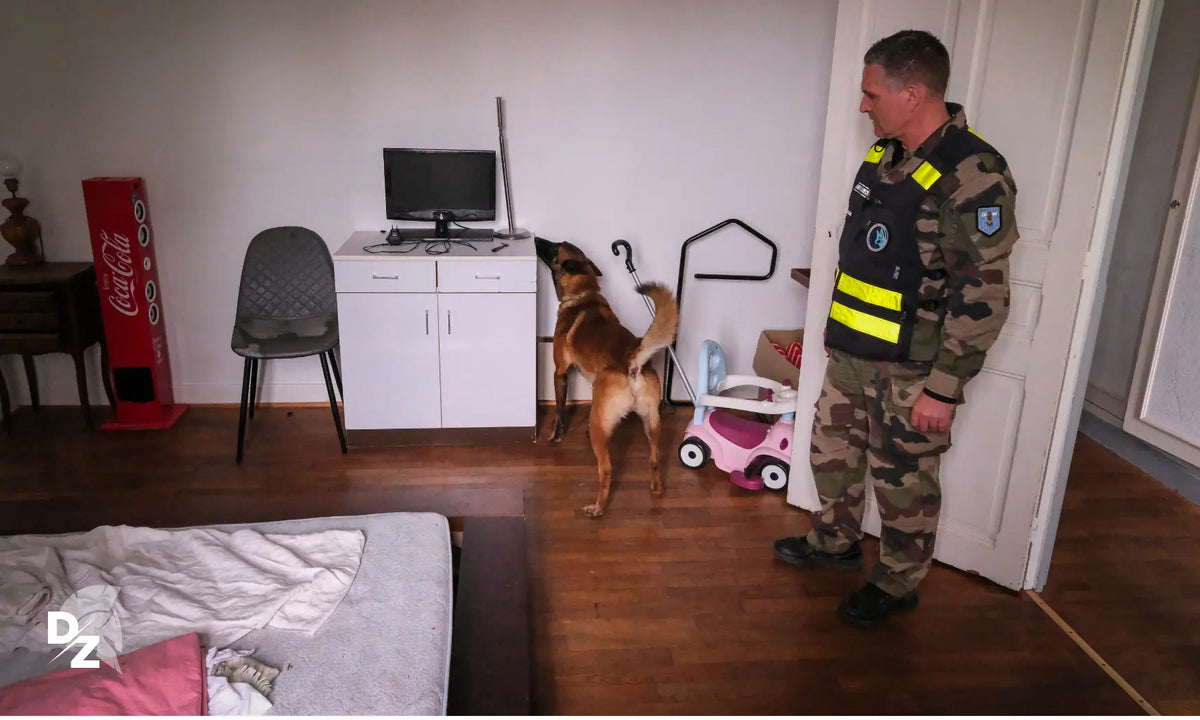
The provost service’s missions are many and varied. First, it handles criminal investigation work, seeking out and recording offences that may be committed against the deployed force, but also by service members themselves. It is responsible for conducting investigations, gathering evidence and interviewing witnesses. In this case, provost officers act under the supervision of the TGI specialised in military cases. This institution succeeded the Paris armed forces tribunal on 1 January 2012. The provost gendarmerie’s support also extends to the families of French service members stationed abroad. In complex cases, provost officers can call on the support of the provost investigation unit in Maison-Alfort.
Even though, within military premises, it is the role of the chain of command to enforce disciplinary regulations, provost officers also carry out general discipline missions. This mission covers in particular traffic, the security of service members and their facilities, disputes, and the escort of convoys and funds.
The provost unit also provides administrative support to service members and their families: customs formalities, civil registration, and may be called upon to act as an intermediary with the internal security forces.
Fully integrated into its environment, the provost unit contributes to intelligence gathering in the general interest of the force. On overseas operations, it is the preferred point of contact for the J2 (intelligence cell) in matters of public order and general public safety.

The last strand of the deployed provost officers’ work is training. Gendarmes, particularly on overseas operations, are regularly asked by the local internal security forces (FSI) to provide training in judicial and technical fields. This strand has the advantage of forging close ties between the provost unit and the host country’s security forces.
How the provost gendarmerie is organised
Created on 26 June 2013, the provost gendarmerie command (CGP) has been placed under the authority of the overseas gendarmerie command since 1 August 2021.
The provost gendarmerie command
Based in Maison-Alfort (Val-de-Marne, 94), the CGP has a core staff of 18 gendarmes. As the provost service’s organic command, it is in charge of the provost investigation unit (BRP), the call for volunteers and their training before deployment abroad or on overseas operations. It is also responsible for relations with the judicial chain, in the person of the Public Prosecutor at the Paris Judicial Court, and with the operational chain of command. On operations, the Chief of the Defence Staff is the military authority employing the provost gendarmerie for non-judicial missions. Ultimately, the provost unit is placed under a threefold subordination: to the provost command, to the military authority employing it, and to the judicial authority specialised in military cases.

How the provost service is organised on operations
Positioned as close as possible to the military force, the provost units are placed under the authority of a provost detachment commander. This officer is the direct point of contact for the military authority and its adviser (CONSGEND). In Operation Barkhane, for example, the CONGEND is placed directly alongside the force commander and supervises the three provost units deployed.
Each unit is commanded by a senior NCO, a major or an adjudant-chef (chief warrant officer). He is supported by a deputy. Other provost officers complete the team, which consists of at least three people.
Where the provost gendarmerie is deployed
Provost gendarmerie deployments take two forms:
Ad hoc provost detachments that accompany forces on overseas operations. These detachments are currently found in Lebanon, Mali, the Central African Republic, Jordan and Chad.
Permanent provost detachments in Germany, Djibouti, the United Arab Emirates, Gabon, Côte d’Ivoire and Senegal.
Who are the provost officers?
Apart from CGP and BRP personnel, provost officers are gendarmes drawn from territorial units (brigades). To be eligible to join the provost service, candidates must be a criminal investigation officer (officier de police judiciaire), be a volunteer and have completed the training before being deployed. When deployed, the gendarmes are designated as armed forces criminal investigation officers by the Principal State Prosecutor’s Office at the Paris Court of Appeal.

Each year, around a hundred candidates are selected to be placed at the disposal of the provost gendarmerie command, i.e. 1 successful candidate for every 9 applicants.
Training provost officers
While the fundamentals of the mission do not differ radically from some of the missions carried out in mainland France, working in degraded conditions and in a particular environment requires tough, well-trained men and women who are ready to be deployed for several months.

Twice a year, the provost gendarmerie command organises advanced training courses for future provost officers. The courses are built around three areas:
- Technical: criminal investigation within the armed forces
- Tactical: shooting to French Army standards, combat first aid, armoured vehicle driving, communications, map reading and counter-IED.
- Knowledge of the armed forces and theatres of operations.
Afterwards, the provost detachments are integrated into pre-deployment training with the units they will accompany on deployment. This period allows better integration into the military environment and greater cohesion with the units.
To subscribe to our magazine, receive the next print issues, access exclusive content and benefit from equipment and gear offers from our partners, click on this link or directly on the image below