DÉFENSE ZONE

In France, members of parachute units share a common insignia: the parachutist badge (brevet)
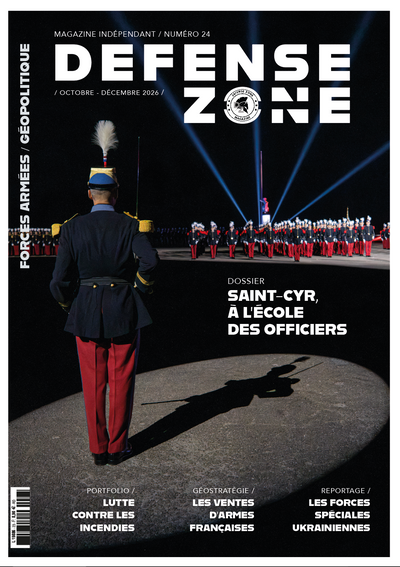
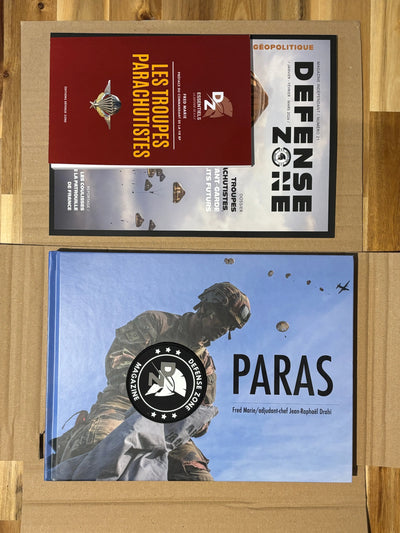
A true symbol of cohesion, it is awarded to French and foreign soldiers who have jumped from a French Air and Space Force tactical aircraft. It is a compulsory step for serving in the prestigious 11th Parachute Brigade, to which we devoted the main feature of the first print issue of Défense Zone.
History of parachutist badges
The first French parachutist badges were awarded at the end of the Second World War by parachute training centres. In 1947, they were brought together within a single entity: the airborne troops training school. In 1963, after several names, the school officially became the ETAP: the airborne troops school (École des troupes aéroportées) once again. It has been based in Pau since 1953.

The missions of the ETAP
Reporting to the 11th Parachute Brigade (11e BP), the ETAP’s mission is to provide individual and collective training for paratroopers from all three services (land, air, sea) and for the Gendarmerie. In total, nearly 40 different training courses are delivered to 4,000 trainees, for a total of around 44,000 jumps.

Types of parachutist badges
There are several types of parachutist badges. They fall into three main categories:
- Initial and preliminary training
- Application training
- Specialist training
Initial and preliminary badges
Initial badges are not worn only by members of parachute units. Young women and men, or military personnel from all backgrounds, may already have jumped from an aircraft and obtained one of the three badges below.

-
The parachute military preparation badge (BPMP)

Until the end of conscription, it was awarded after a two-week training period and four jumps. Since 2007 it has been reserved for pupils at military high schools and preparatory classes, and for candidates enlisting in a special forces unit (PMP-FS) or an airborne (TAP) unit (depending on places available). The insignia is officially approved and may therefore be worn on military uniform.
-
The military parachuting initiation badge (BIPM)

Created in 1980 for military personnel not assigned to an airborne (TAP) unit but who had made at least four jumps. Holders of the BPMP could wear the badge after supervising a second preparation period as an assistant instructor. Abolished in 1994, it may still be worn.
Further reading: the commando paratroopers (GCP).
-
The military parachuting badge

Created on 1 June 1946, it is now worn by more than 700,000 service personnel. To obtain it, you must complete a two-week course and six jumps. Four are made in so-called “clean” conditions (without weapons or pack), one is a night jump without equipment and the last is made with weapon and equipment container (technical jump). Today it is possible to qualify after five jumps, including one technical jump.
Application badge
Launched in 2016 and officially approved on 18 May 2017, this badge is intended for leaders of airborne (TAP) units, from section commander up to commanding officer.

-
The airborne troops leader badge

Lasting 4 weeks, it certifies the qualifications of an airborne (TAP) section or platoon commander. Depending on the course completed, the holder may be responsible for the drop zone (ZMT), act as aircraft commander of the stick or as operational dispatcher.
Specialist badges
These badges are intended for experienced paratroopers who already hold the airborne troops leader badge.

-
The parachute instructor badge (BMP)

Awarded to non-commissioned officers who have served in a parachute unit for several years, it qualifies personnel to train young trainees for the BPM, to run jump sessions or to act as dispatcher, depending on their qualification on the aircraft used. The instructor is also qualified to make free-fall jumps with delayed manual opening and is regarded as a subject-matter expert within their unit. Qualified officers become the “third dimension” advisers in their respective units.
-
The military free-fall parachutist badge (BCO)

These free-fall specialists are qualified to make delayed-opening jumps from altitudes of 1,200 up to 6,500 metres. Members of the commando paratroopers group hold the BCO and are also known for their ability to infiltrate under canopy over enemy lines.
-
The delayed-opening free-fall instructor badge (INSCOR)

This badge can only be awarded by the airborne troops school. It allows qualified officers and non-commissioned officers to train instructors and military free-fallers. Today, fewer than 500 experts wear this prestigious insignia.
Find the key information on the 11th Parachute Brigade on our YouTube channel
To read the article on parachutist badge training and other content, you can subscribe to our magazine, receive the next print issues, access exclusive content and benefit from equipment offers from our partners: just click on the image below