DÉFENSE ZONE
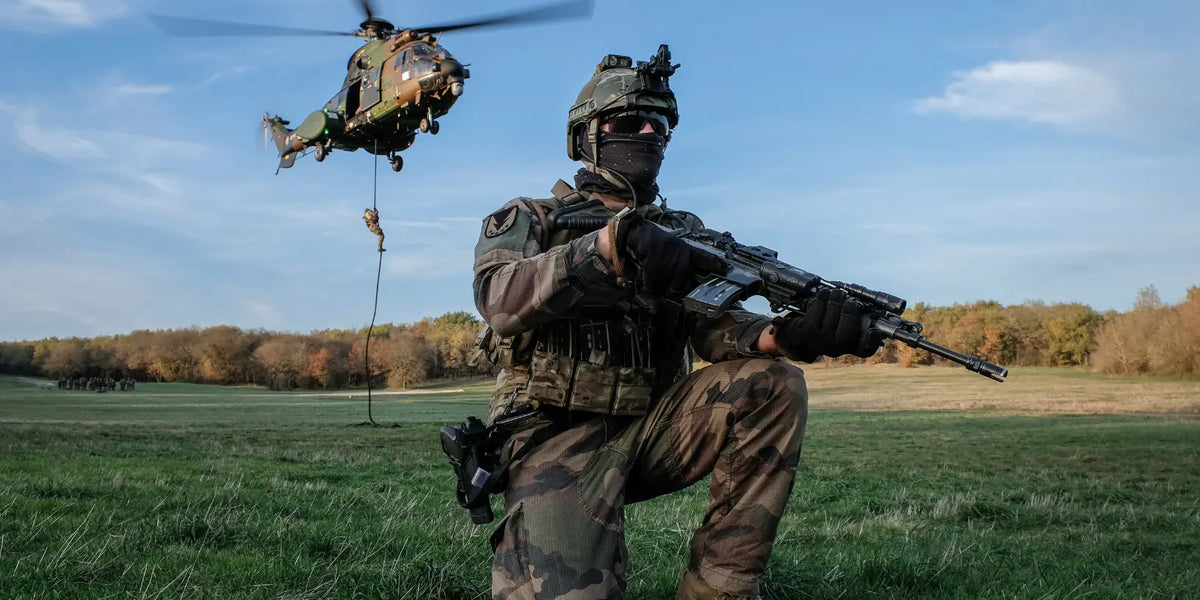
Within the French airborne troops, some units hold a special place because of the nature of their missions and the standards they demand. The commando paratroopers groups, better known by the acronym GCP, are among these specialised units. Their role is to operate ahead of or in support of conventional units, in situations requiring discretion, autonomy and technical expertise.
Often little known to the general public, commando paratroopers are nonetheless an essential link in the manoeuvre of the parachute regiments. Their action is part of a logic of preparing the ground, gathering intelligence and providing direct support to operations.
What is a commando paratrooper?
The commando paratroopers groups are specialised elements embedded in the parachute regiments. They do not come under the Special Operations Command, but belong fully to their parent regiment and act on its behalf.
Their main mission is to operate ahead of the units, in order to reconnoitre the terrain, identify objectives or secure sensitive areas. This ability to act in advance improves situational awareness and reduces the risks for the units committed.
Commando paratroopers can also carry out support missions, particularly in observation, guidance or accompanying units.
The role of the GCP in operations
The missions entrusted to commando paratroopers vary according to the situation, but they rest on a few constant principles: mobility, discretion and autonomy.
They may be tasked with observing an area, confirming information, preparing for the arrival of a unit or scouting ahead of an advance. Their action often makes it possible to avoid committing larger forces prematurely.
In some situations, they may also take part in limited offensive actions, when conditions require it and the objective justifies it.
A demanding selection
Access to the commando paratroopers groups is based on internal selection. Candidates are already experienced soldiers, often paratroopers for several years, and must demonstrate a high physical level, great resilience and strong psychological stability.
Selection includes physical tests, technical tests and practical scenarios designed to assess the ability to work as a team and make decisions under pressure.
Beyond performance, the instructors are above all looking for reliable profiles, able to fit into a small group and maintain high standards over time.
Further reading: French military parachutist badges.
Training commando paratroopers
After selection, candidates follow specific training designed to develop the skills needed for their missions. This training includes modules on shooting, covert movement, communications, observation and intervention techniques suited to varied environments.
Training also focuses on navigation, self-sufficiency in isolated terrain and coordination with the supported units. Commandos must be able to move with full equipment, sometimes over long distances, in demanding conditions.
Training is progressive and is then extended through regular exercises, which are essential for maintaining skills.

Integration within the parachute regiments
The commando paratroopers groups are not independent units. They are embedded in the parachute regiments, where they provide a complementary capability.
This integration makes coordination easier and allows a thorough knowledge of the regiment’s modes of action. The commandos also regularly take part in collective exercises and training.
Their presence strengthens the regiment’s ability to conduct complex operations, by giving it elements able to act ahead or in support.
The qualities needed to become a GCP commando
The job requires sound physical fitness, but also great rigour and a strong ability to adapt. Patience, observation skills and self-control are particularly important qualities in this type of mission.
Cohesion is also a decisive factor. The commando paratroopers groups work in small teams, where mutual trust is essential.
The place of the GCP within the airborne troops
Commando paratroopers occupy an intermediate position between conventional units and the special forces. Their standards are high, but their mission remains focused on supporting the parachute regiments.
This specific feature explains their importance in the overall manoeuvre. They make operations more precise and effective, while retaining a structure integrated into the regiment.
Recognised operational experience
The commando paratroopers groups have been deployed on many overseas operations, where their reconnaissance and observation skills have been particularly useful. Their ability to move discreetly and pass on reliable information is a major asset.
Lessons learned from these deployments contribute to the development of methods and the continuous improvement of training.
Go further: books and photographs on the airborne troops
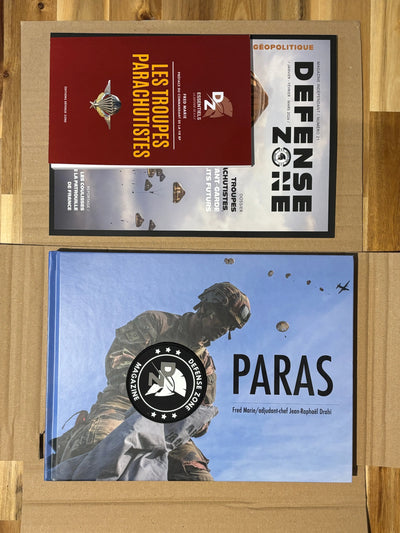
If this subject interests you and you would like to learn more about the history, the units and the reality on the ground, you can discover the book Les troupes parachutistes (The airborne troops), which offers a complete, illustrated overview of this world.
You can also browse the collection of posters devoted to the parachute brigade, which showcases the aesthetics and intensity of these units through images taken in the field.

Read more: Special forces missions: understanding their role in the field