DÉFENSE ZONE

Following the wave of terrorist attacks that struck France in 2015 and 2016, the President of the Republic, François Hollande, announced the re-establishment of the National Guard. Created on 13 October 2016, it brings together all the first-tier operational reserves of the Ministries of the Armed Forces and the Interior.
History of the National Guard
The history of the National Guard goes back to 1789, when the citizens’ militias of every French commune were brought together and placed under the authority of the Marquis de La Fayette. Ten years later, they were written into the constitution, with the role of ensuring citizens’ safety in the communes in peacetime but also, as reinforcements for the regular armies, the military defence of the country in time of war. The National Guard was officially dissolved under the Commune in 1871.
How the National Guard is organised
The two ministers (Armed Forces and Interior) jointly chair the National Guard’s steering committee. It sets the various policies on conduct, recruitment, communication and partnerships. At least once a year, it brings together the Chief of the Defence Staff, the chiefs of staff of the three services, the Secretary General for Administration, the Secretary General of the Ministry of the Interior, the Director General of the French National Police and the Director General of the French Gendarmerie.

Under the authority of the two ministers, a secretary general runs the National Guard’s permanent body. The post is currently held by Air Major General Véronique Batut (as of 10 January 2022).
Force preparation and employment are the responsibility of each of the operational chains concerned (Army, Air, Navy, French Gendarmerie, French National Police, armed forces services)
The National Guard’s missions
While the employment of operational reservists depends directly on each service, department or ministry, the National Guard’s mission is to drive a common policy for the commitment of its personnel. It is tasked with increasing the reserves’ contribution to the security of the French people, providing opportunities for young people who wish to serve and, through communication campaigns among other things, fostering national cohesion and developing the resilience of the French population.
The components of the National Guard
The National Guard currently numbers around 77,000 reservists across all ministries and services. 7,000 of them are deployed in the field every day, whether in mainland France, on short missions in the overseas territories or abroad, or on overseas operations. The long-term goal is a reserve of 85,000 volunteers (9,250 on duty every day), including 40,000 for the armed forces and the gendarmerie and 5,000 for the police.

Today the average age of the reserve is 35 years, but it has tended to fall in recent years. 60% of reservists are in work, 20% are students, 15% are retired (often former service personnel) and 5% are unemployed.
Reservists carry out an average of 37 days of activity a year.
The military reserves
Made up of French citizens from civilian life, with or without military experience, and of former service personnel, it offers a commitment to serve in the reserve (ESR). This paid contract lasts from one to five years and is renewable. These men and women receive specific training and exercises so that they can provide temporary reinforcement to the armed forces for a few dozen days a year. They are given the same missions as regular personnel, in operational or support roles, in units or headquarters, in France and on overseas operations.
French Army reservists
The French Army’s operational reserve numbers around 22,000 men and women. Every day, some 2,400 of them serve in their units, including 600 on homeland protection.

French Air and Space Force reservists
Of the 47,000 personnel of the French Air and Space Force, around 5,700 are reservists (12% of the workforce)
French Navy reservists
The Navy today has around 42,000 sailors. 16% of them, or 6,000 personnel, serve in the operational reserve. Half of them come from civilian life (with no military experience); the other half are former regular sailors.

French Military Health Service reservists
The French Military Health Service (SSA) has nearly 15,000 personnel, including 5,000 civilians, plus 3,000 operational reservists, nearly 20% of its total workforce. Mostly from the healthcare sector, these reservists reinforce the armed forces’ medical centres, hospitals and other SSA establishments.

The other services of the Ministry of the Armed Forces
Operational reservists are also found in four major services of the Ministry of the Armed Forces.

- The French Defence Procurement Agency (DGA), which has around a hundred reserve officers from the armament engineering corps. They provide technical and scientific expertise in the DGA’s various fields of competence.
- The Defence Infrastructure Service (SID), which is responsible for construction, building maintenance, and the administrative and technical management of property and energy.
- The Armed Forces Commissariat Service (SCA), where nearly 500 reserve commissaries serve in units, headquarters or services, bringing their skills in finance, audit, law, logistics, project management, procurement, information systems and management control. The SCA is also responsible for managing the 80 reserve chaplains. In all, the SCA employs more than 1,400 reservists.
- The Operational Energy Service (SEO). 200 reservists serve there in petroleum support and support functions, but also in the protection and defence of sites and units deployed in the field.
French Gendarmerie reservists
Formerly assigned to the reserve platoons of the departmental gendarmerie or to the reserve squadrons of the mobile gendarmerie, reservists are now assigned to territorial reserve companies (CRT) and directly employed to reinforce gendarmerie units, often close to home, or in command structures. They contribute directly to the safety of property and people, but can also be deployed to respond to natural or man-made disasters, as when Hurricane Irma hit the French West Indies.

French Gendarmerie reservists currently make up a force of 30,660 people (for 100,000 regular gendarmes).
The French National Police civil reserve
Created in 2003, the French National Police volunteer civil reserve was, at its creation, made up solely of retired members of the National Police’s active corps. On 16 March 2011, the civil reserve was opened to all volunteer citizens aged 18 to 65. Since 21 July 2016, it has also been open to former security assistants, on terms comparable to those for retired police officers. Today they number 7,100 officers, 900 of whom are on duty every day in police stations and headquarters.

How to become a reservist
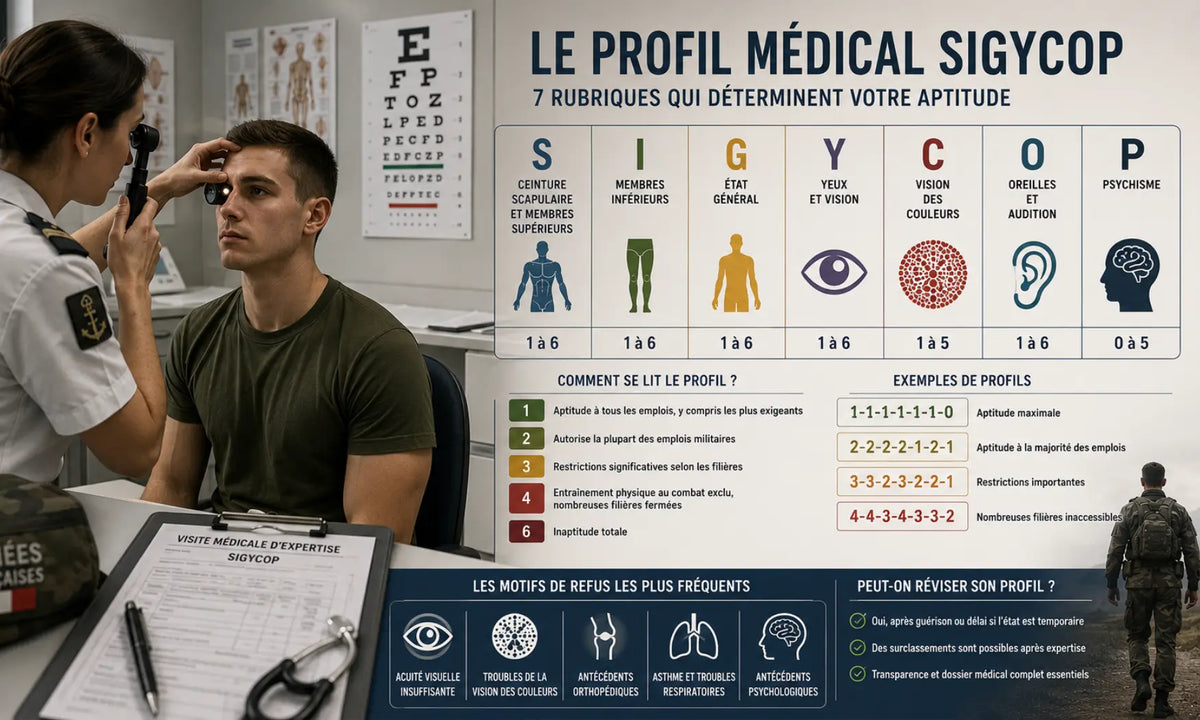
Recruitment processes vary between services and ministries. In every case, the candidate will have to go through an interview process, a medical examination and basic training. The posting to a unit or service is decided in advance according to the candidate’s wishes and the places available.
Recruitment in the armed forces
In the armed forces, candidates must go to an armed forces information and recruitment centre (CIRFA). Initial contact can be made directly on the ROC online portal.

Candidates must be volunteers, aged at least 17, of French nationality, up to date with their national service obligations (JDC, Defence and Citizenship Day) and must never have been sentenced to loss of civic rights, to a ban on holding public office or to a criminal penalty.
After an interview and a medical examination, the future reservist completes an initial reservist training course (FMIR) lasting 12 to 15 days. At the end, the candidate signs a contract with a previously chosen entity.
Recruitment in the French Gendarmerie
Reservists are recruited all year round via the Minotaur portal. Candidates are then directed to one of the departmental reserve cells.
The basic requirements are the same as for the armed forces.
The candidate must then take psychometric tests (interview and medical examination), a 12-hour distance-learning course, a 15-day gendarmerie military preparation course and additional training as an assistant judicial police officer (APJA), and be certified fit to take part in military activities.
Recruitment in the French National Police
The basic rules (fitness, enjoyment of civic rights) apply in the same way as in the armed forces to join the police volunteer civil reserve. Candidates must be between 18 and 65. Applications are made directly on the French National Police website. The candidate then has a recruitment interview and a medical examination. If the tests are passed, they follow a 10-day course at a national police school (ENP). The commitment to serve in the reserve is an annual contract of up to 90 paid days, renewed automatically, up to a limit of 5 years. After that, a new contract may be signed. This commitment rises to a maximum of 150 days a year for retired police officers or former security assistants (ADS), or even 210 days for retired police officers on a mission abroad. Former ADS must have served at least 3 years as an ADS to be eligible.
How much does a reservist earn?
A reservist’s pay depends on several factors: the ministry they serve, their rank, and their family and geographical situation. In addition, certain allowances (field, mission and/or meal allowances) are added to the basic pay. In the armed forces, a private earns on average €54 a day, compared with €59 for a sergeant and €79 for a second lieutenant. In the gendarmerie, a new reservist earns €53 net a day. Auxiliary and first-class reservists of the French National Police receive between €50 and €88 a day in the regions and between €55 and €95 a day in Île-de-France.

National Guard reservists enjoy certain benefits, such as a possible contribution of up to €1,000 towards a category B driving licence, a specific study allowance of €1,200, a €250 loyalty bonus, access to certain private security activities, and recognition of students’ service as part of their higher education.
To subscribe to our magazine, receive the next print issues and benefit from our partners’ offers on gear and equipment, click directly on the image below in our Premium area