DÉFENSE ZONE

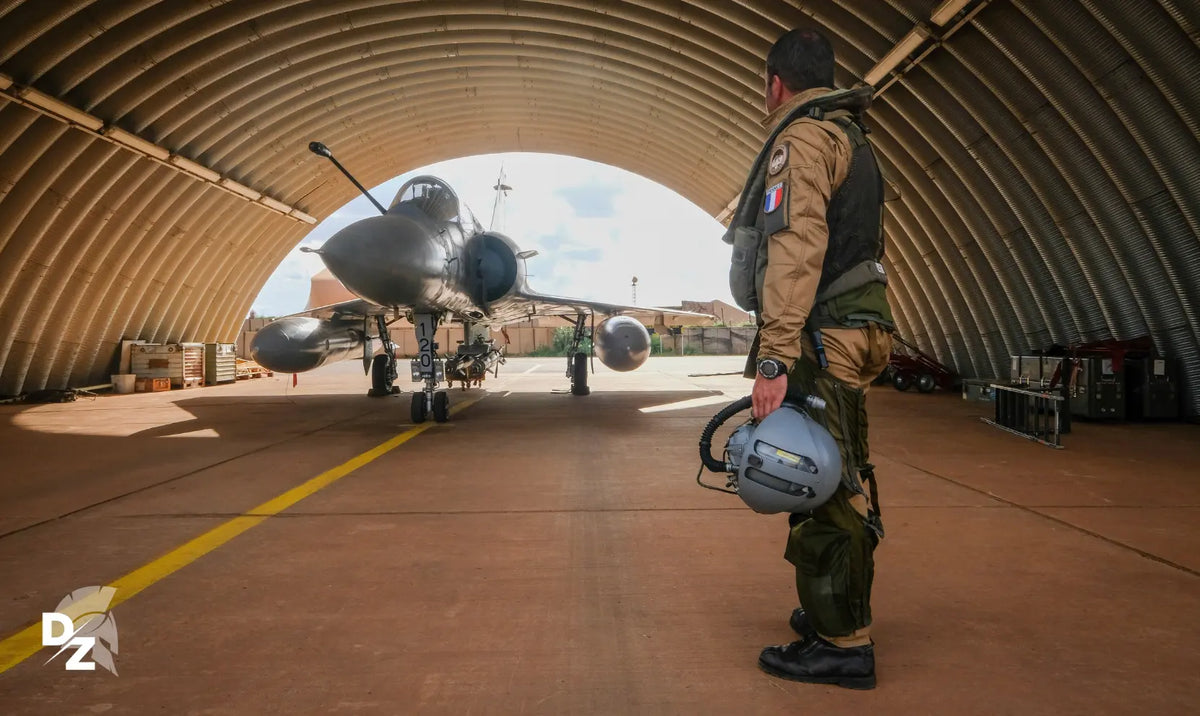
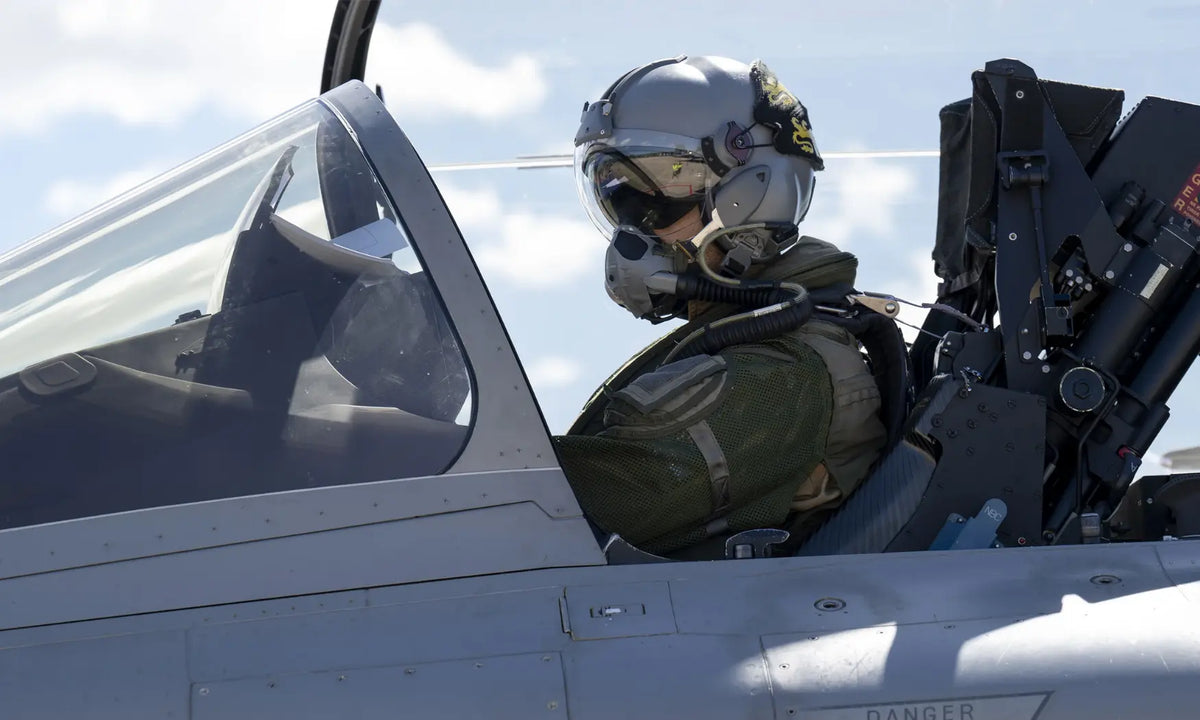
“It takes a whole army to keep our aircraft flying.” This slogan, used by the French Air and Space Force in its 2013 recruitment campaign, still holds true more than ten years later. The organisation of an air base is indeed far more complex than one might think. Many units, both operational and support, work behind the scenes so that the flying units (whose best-known speciality is, of course, the fighter pilot) can carry out their protection, surveillance, intervention and deterrence missions.
Definitions
Air base
An air base is a military site from which the operational missions of the French Air and Space Force are prepared and carried out, whether permanent (protection, deterrence, intervention) or temporary. France has 21 air bases in mainland France, two in the overseas territories and four abroad, a total of 27 air bases.

Defence base
A defence base (BDD) is a geographical area that brings together several entities of the French Ministry of the Armed Forces: air bases, attached air elements, air detachments, but also regiments, naval bases and so on. In addition to these “operational” entities, the defence base also includes a defence base support group (GSBDD), specialised support bodies (information networks, fuel, infrastructure…) and a defence base commander. Within a defence base, general administration and support are pooled. This pooling, trialled in January 2009 and in force across the whole country since January 2011, reduces running costs. France has 60 defence bases, 51 in mainland France and 9 overseas.

Command
The base commander and their deputy
An air base is led by the base commander (C1), who is sometimes also the commander of the defence base. He is the local representative of the Chief of Staff of the French Air and Space Force. Under Article R3324-11 of the French Defence Code, the base commander is “responsible for the use of resources and the administration of personnel.” He also ensures that missions are properly carried out, and is responsible for the protection and security of personnel, equipment, installations and sensitive information. He is supported in this task by the deputy commander (C2), who can stand in for him when he is absent and to whom he can entrust major responsibilities. As base security officer, the deputy commander is notably in charge of implementing the measures and resources that protect the air base.
The other commanders
Under the responsibility of the base commander, unit commanders each handle the day-to-day running of their unit and advise the base commander. His main subordinates are thus the head of the Support Interface and Activity Management Office (BISMA), the head of the Human Resources Office (BRH), the head of the activity support group (GAA), the wing commanders and the commanders of operational units.
The command support division
The command support division or office (BAC) reports directly to the base command. It notably includes the private office, whose head runs the base commander’s secretariat, manages information and carries out communication actions. This unit comprises several entities: the communication service (internal or local), the photo or multimedia service (producing photo, video and graphic content) and the general mail service (exchanges of letters and documents between the various services and units of the military site).

The command support division is also responsible for human resources and the language resources centre.
The functional staff
Several divisions exist within an air base to guarantee the security of its personnel, equipment, information and installations, but also of its sometimes sensitive activities.
The security and protection division
The security and protection division (PSP) comprises two main entities: the Air Gendarmerie brigade (BGA) and the security and protection coordination office (BCSP).
The Air Gendarmerie brigade has an administrative, judicial and military police mission. It protects the personnel, equipment and installations of the French Air and Space Force all year round, and responds to accidents on the air base (notably when aircraft are involved, but also road accidents, for example). On some bases, the Air Gendarmerie may be specialised: motorised brigade, mounted brigade or investigation section.

The head of the security and protection coordination office (BCSP) plans and coordinates all actions related to the protection of the base, in direct liaison with the bodies responsible for it (Air Gendarmerie brigade, protection squadron, ground-based air defence squadron, fire safety and rescue squadron…). The BCSP includes an internal service cell (CSI), a base security cell (CSB), a command duty cell, and a base IT systems security officer (the cyber defence point of contact).
The risk management division
The missions of the risk management division (PMR) are mainly risk prevention and management, whether these risks concern people (occupational safety, technological risks, road safety…), fire or the environment (preserving biodiversity…). This division is made up of a risk management office (BMR), a nuclear safety office (BSN), many specialists (occupational health and safety, radiation protection, pyrotechnic safety…), a weapons officer (OA) and a base flight safety officer (OSAB). The OSAB is notably responsible for the base’s flight safety plan, the flight safety technical committee and the training of flight safety correspondents within the operational units.
The support interface and activity management division
The support interface and activity management office (BISMA) has two main missions. The first is to gather and analyse the needs of the air base in terms of support (common support, information systems and infrastructure), then to plan, fund, draft and monitor local service contracts. The second is to check the compliance of installations and procedures in order to guarantee the airworthiness of aircraft. The BISMA comprises a budget management section (divided into a performance cell and a finance/contracts cell), a quality assurance section and a support coordination section (information and communication systems correspondent, infrastructure specialist…).
The activity support group
Many responsibilities fall to the commander of the activity support group (GAA). He must ensure that all the means supporting the air base’s operational activity are in place and available (airfield platform, communications, wildlife hazard control…), that flight control and air traffic are properly managed, and that the base can receive visiting aircraft (exercises, air shows, emergency landings…); he is also responsible for the base’s weapons and CBRN functions, and more. Many units make up the GAA:
- The protection squadron (EP): Air Force riflemen (fusiliers de l’Air) or air parachute commandos (CPA 10, 20, 30) are responsible for protecting and defending the air base, in France and abroad.

- The equipment and environment support squadron (ESME): its technicians keep the air base’s equipment (notably vehicles) in operational condition.
- The air traffic services squadron (ESCA): it is in charge of air traffic control and flight information, but also includes the weather service and the wildlife hazard prevention service.

- The air information and communication systems squadron (ESICAéro): it is in charge of deploying air communication, navigation and surveillance resources (radar, radio, landing aid systems…) and of their proper operation (checking radio coverage, for example).
- The fire safety and rescue squadron (ESIS): Air Force firefighters carry out the usual firefighting missions (first aid, rescue, fires…) but specialise in the aviation environment (aircraft fires or accidents, etc.).

- The military air terminal (EAM): it is responsible for the transit and reception of visiting aircraft.
- The flight control directorate (DM)
- The aeronautical technical supply support squadron (ESRTA)
- The logistics coordination office (BCL)
The flying units
The flying units are organised into wings, then subdivided into squadrons and possibly flights. The aircraft on air bases vary; to find out more about the missions entrusted to them (which we will not cover here), see our article on the aircraft of the French Air and Space Force.
Wings
In the French Air and Space Force, wings (escadres) are the equivalent of regiments in the French Army, although the term is gradually being replaced by squadron. A wing brings together units, equipment and personnel under a single mission. There are currently eleven wings: five fighter wings, one strategic air-to-air refuelling and transport wing, two transport wings, one airborne command and control wing, one deployable air command and control wing and one ground-based air defence wing.

Squadrons
Formerly called “groups”, squadrons took this name for the sake of standardisation with France’s NATO allies. Each has a number and a name.

There are several types of squadron, depending on the mission they must carry out: 12 fighter squadrons, two drone squadrons, two air-to-air refuelling squadrons, 15 transport squadrons, two conversion squadrons, one airborne electronic squadron, four helicopter squadrons and six training squadrons.
In addition, the eight aeronautical technical support squadrons (ESTA) are essential to the flying units, as their mechanics maintain the aircraft.
Other Air Force units
Among the other units that can be found on an air base are:
- The Armed Forces Information and Recruitment Centre (CIRFA): its purpose is to inform and recruit new recruits for the armed forces
- The French Air and Space Force Reserve Information and Training Centre (CIIRAA): led by a base deputy reserve officer (ORAB) supported by a base deputy reserve non-commissioned officer (SORAB), the CIIRAA aims to recruit and train the air base’s operational reservists.
- The departmental military delegate (DMD): he is the link between the prefecture and the armed forces, and steps in, for example, when an emergency plan is activated.
- The ground-based air defence squadron (EDSA): in France and abroad, it ensures air security through its mastery of the 3rd dimension and counters various threats (missiles, drones, aircraft…)

- The explosive ordnance intervention, neutralisation, removal and disposal group (GRIN)
- The military satellite observation centre (CMOS)
The GSBDD
The defence base support group is an essential entity which, as its name suggests, manages all the elements attached to the defence base. It is responsible for everything that falls outside the core business of the units it supports. Since 2014, the GSBDD has been under the authority of the French Armed Forces Commissariat Service (SCA).
The personnel administration service (SAP) comprises a military personnel office in charge of the reception, administration and pay of service members, an honours office (assessments, awards and decorations for personnel), a training office, a civilian personnel office (around 5,000 in the French Air and Space Force) and a manpower cell.
The base life management service (SGBV) has a logistics resources office (transport, fuel support, housing, stores and workshops…) and a financial resources office (purchasing and treasury).
Finally, the life support service (SSV) is made up of public administrative establishments (messes, clubs), the joint housing office and accommodation/hospitality.
Local support players
Finally, other entities may be located and operate on an air base without reporting directly to it (or to the defence base):
- The armed forces fuel depot (SEA)
- The armed forces medical centre (CMA)
- The Defence infrastructure service unit (SID)
- The joint infrastructure networks and information systems centre (DIRISI)
- The main ammunition depot (SIMu)
You can subscribe to our magazine and receive our latest issue, access exclusive content and benefit from equipment and gear offers from our partners.