DÉFENSE ZONE

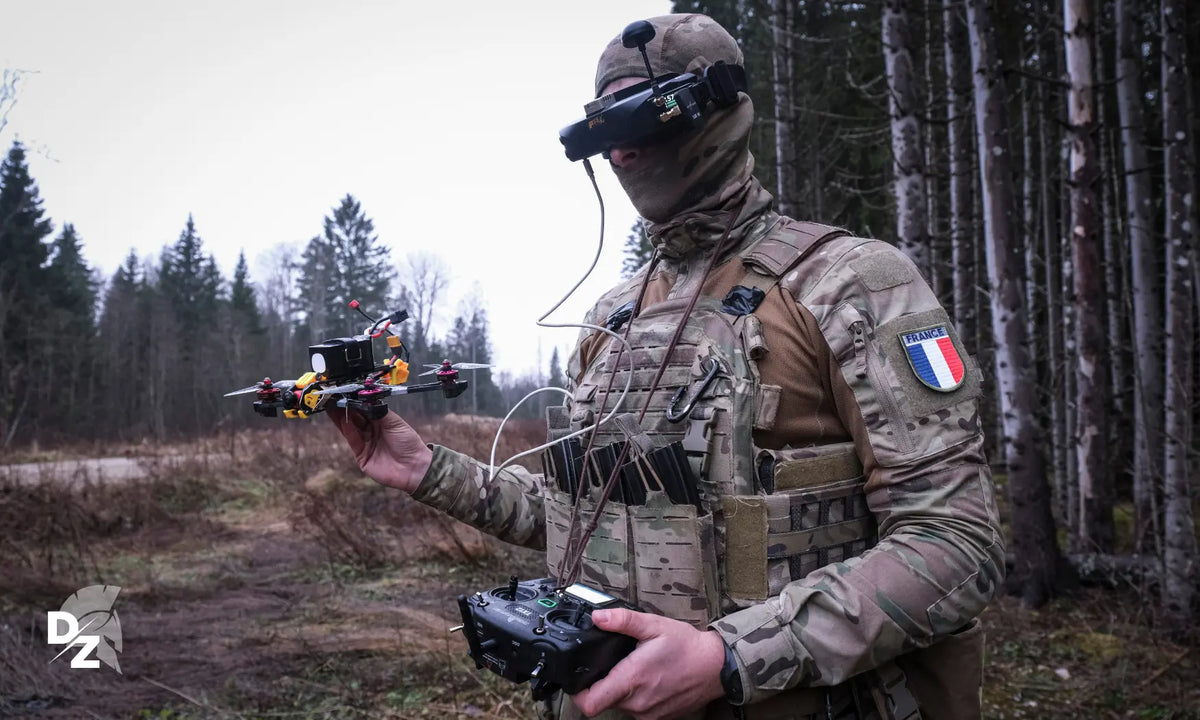
A few kilometres from the front, the daily life of Ukrainian soldiers illustrates a radical transformation of the battlefield: the war has become a drone war. From the front line to the headquarters, these ubiquitous machines are upending doctrine, tactics and industry, heralding an era of combat in which automation is redefining modern warfare.
Text and photos (unless otherwise stated): David Taché
All seems peaceful in this Ukrainian village north of Kharkiv, a few kilometres from the front and from Russia. On this July night in 2025, the façades of charred houses, remnants of recent strikes, line empty, silent streets. Overhead, the steady drone of Russian UAVs is a reminder that the country has been at war for more than three years. Yet behind the carefully blacked-out windows of an ordinary-looking house lies a stabilization point — a field hospital tasked with stabilising the wounded before their transfer to the nearest military hospital. Inside, the medical staff are busy around a soldier who has just been brought in.
Less than an hour earlier, a drone struck the vehicle carrying Sergei, 22, to his position. His body is riddled with shrapnel and covered in hydrogel foam, now ubiquitous in individual first-aid kits, to hydrate his severe burns. Though he remains stoic, the pain is written on his battered face. Alyssa, a combat nurse, gently removes the shreds of burnt flesh. Her movements are mechanical, exhaustion etched on her features. “For the past year, the vast majority of wounds have come from drones. The whole sky is full of these stupid ‘birds’,” she says, resigned. Her observation echoes that of many civilians and soldiers: the conflict has changed in nature and become a drone war. In one year, their exponential proliferation has upset the balance on the battlefield, triggered an innovation race and imposed new challenges, from the front line to the headquarters...
Read the rest in Défense Zone Mag #20, on newsstands now