DÉFENSE ZONE
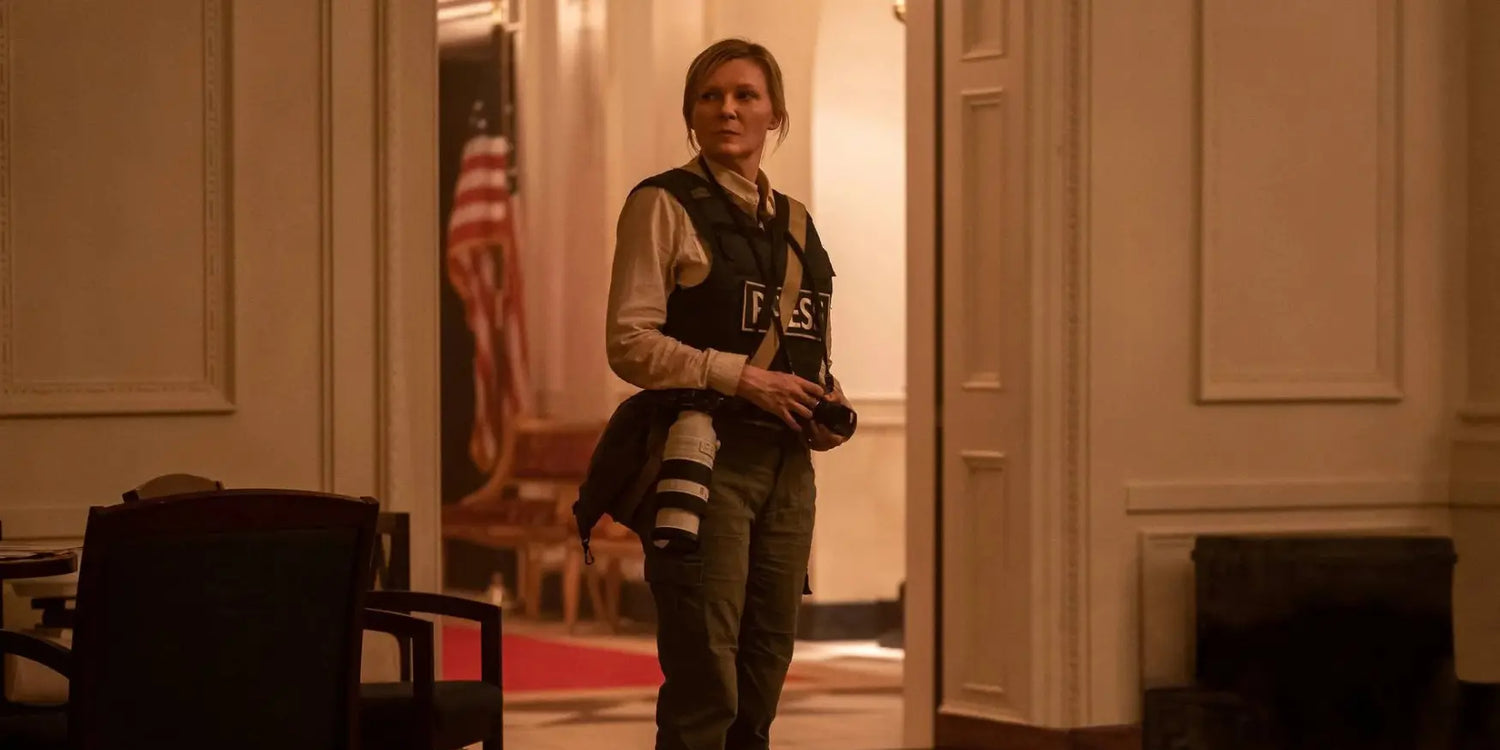
The history of war reporting is, in reality, the history of a twofold movement. On the one hand, war changes, becomes mechanised, globalised, then digital. On the other, the means of telling the story of war change: the printed press, the telegraph, photography, radio, television, satellite, social networks. Between the two, one player remains central: the reporter, tasked with documenting facts in a space saturated with propaganda, censorship, emotion and violence.
Understanding this history helps to grasp what war journalism is today: a discipline rooted in the field, but also a constant battle over evidence, access and narrative.
Before the “war reporter”: when war was told without being observed
Before the appearance of correspondents identified as such, war was mostly recounted by indirect witnesses: letters, officers’ accounts, court chronicles, political pamphlets. Information travelled slowly; it was filtered, often ideologically coloured, and rarely verifiable. Battles became stories more than observed facts, because the public had no access to direct sources and because the authorities naturally controlled how the narrative was spread.
This context explains an essential point: war reporting was not born of a simple “desire to tell”, but of technical and political progress. It required newspapers capable of publishing quickly, fast transmission networks, and a public demand for facts rather than official accounts. It was at that moment that war journalism became a democratic issue: who describes the war, on whose behalf, and with what evidence.

The Crimean War and the birth of the modern correspondent
The Crimean War (1853-1856) is often regarded as a founding moment of war reporting. British newspapers in particular sent correspondents to cover a conflict that had gripped public opinion. The novelty lay not only in writing from the theatre of operations, but in publishing information that could contradict the official account, notably on logistics, living conditions, military management and losses.
At the same time, photography entered the history of war. Technical constraints still prevented action from being captured in the strict sense, but the image began to document the places, faces, camps and landscapes of war. This stage was decisive: public opinion discovered that war was not just a heroic tale, but a concrete world, dirty, exhausting, sometimes absurd.

The industrial turning point: the First World War, censorship and the making of the narrative
The First World War marked a change of scale. War became industrial, long and massive, and information became a strategic issue. States understood that the morale of their populations, national cohesion, acceptance of sacrifice and international perception depended largely on how the war was told.
Reporting developed, but under control. Correspondents were supervised, their movements restricted, images filtered, letters monitored, publications constrained. This period taught a lasting lesson: modern war produces a permanent tension between information and control. The journalist has to negotiate access, understand censorship, identify blind spots, and work with material that is sometimes incomplete.
Visually, the 1914-18 war also imposed a form: trenches, mud, waiting, mass destruction. Photography became a tool of memory, but also a tool of the State. Images were selected, captioned, sometimes staged. This does not mean they were all fake; it means they were chosen, and choosing an image is already a political act.

The Second World War: radio, newsreels and the rise of the image
The Second World War accelerated the media transformation. Radio became a central instrument: it made it possible to inform quickly and to mobilise, but also to manipulate. Newsreels, shown in cinemas, gave the public images “from the front”, often under tight control. Embedded journalists and film-makers played a major role in how the conflict was perceived, but their work was generally part of official set-ups.
In parallel, photojournalism became structured. Agencies became more professional, and illustrated magazines became powerful players. The public now understood war through visual sequences and personal stories. This period established a model that would shape what followed: the image was no longer just an extra; it became evidence, a shock, a symbol, sometimes a tipping point in public opinion.
The Cold War and decolonisation: the age of multiple fronts
After 1945, war changed shape. Direct confrontation between the great powers was limited, but conflicts shifted elsewhere: wars of decolonisation, civil wars, peripheral conflicts, clandestine operations. For journalism, this meant more fragmented, less readable and sometimes more dangerous terrain, because front lines were blurred, the players many, and access less institutionalised.
This period also saw new ethical tensions emerge: how to cover mass violence, how to document atrocities, how to protect witnesses, how to report on conflicts where propaganda is everywhere. In several wars of decolonisation, information became a battlefield in its own right. The authorities tried to control the narrative, insurgent movements produced their own communication, and journalists were sometimes accused of being the tools of one side or the other.
Vietnam: the war that transformed the relationship between images and public opinion
Vietnam is often presented as a turning point, not because journalists there were “free” in any absolute sense, but because media coverage became massive and daily. Television images entered people’s homes. War became visible in domestic routine. Photojournalism produced icons, and some photographs became international political symbols.
This period consolidated the idea that images can influence public opinion, and therefore potentially influence political strategy. It also triggered a reaction from institutions: controlling communication became a strategic component in its own right. The logical next step would appear in other conflicts: war would no longer just be reported, it would be scripted, framed, sometimes “managed” as a narrative aimed at public opinion.
From Lebanon to the Balkans: the era of live coverage, targeted risks and grey zones
From the 1980s and 1990s, several trends took hold. First, war journalism became more mobile and more responsive, with correspondents moving quickly and news channels seeking images around the clock. Second, the risks shifted: journalists were no longer exposed only to “collateral” dangers; they could become targets, particularly in civil wars and conflicts where kidnapping became a weapon.
The Balkans also illustrated the complexity of narratives: competing propaganda, manipulation of witnesses, use of the media as instruments of psychological warfare. Journalists then had to strengthen their verification methods, understand the logic of ethnic cleansing and document crimes, sometimes in conjunction with investigators and NGOs. War reporting became, in part, a work of evidence and archiving, not just a news story.
From 9/11 to the wars in Iraq and Afghanistan: embedding, security, strategic communication
After 2001, war journalism entered a phase of security professionalisation. “Hostile environment” training courses spread, insurance became central, and newsrooms drew up protocols. Embedding became widespread: it allowed unprecedented access to certain units, but it also raised a structural question, always the same: what can you see when you see “through” an armed force?
At the same time, strategic communication grew stronger. Armed forces produced images, press releases, briefings, footage. Armed groups did the same. War was told in near real time by players with an interest in imposing their narrative. Journalists therefore no longer worked only against censorship; they worked in the midst of permanent narrative competition.
Digital technology and social networks: war in real time, evidence up for debate
With the spread of smartphones, platforms and messaging apps, war has become a stream. Videos circulate before being verified. Images appear without context. Narratives spread through algorithms. This does not kill reporting, but it changes its role: the journalist also becomes a fact-checker, a provider of context, a critical filter amid the noise.
This period has given rise to new methods. Geolocating images, analysing videos, studying shadows, terrain and buildings, using archives and satellite images, comparing open sources: all this has become an extension of the field. Modern war reporting therefore often plays out on two stages at once: the road, and the screen.
What is changing today: hybrid threats and the targeting of journalists
Recent conflicts highlight concrete changes. Drones are altering the notion of a “rear area”. Digital interception makes communications more dangerous. Attacks on civilian infrastructure and living spaces can indirectly affect press teams. Smear campaigns on social networks may aim to discredit a journalist or a media outlet, sometimes in a coordinated way.
In this context, war reporting rests on a threefold requirement. A requirement of method, because speed breeds mistakes. A requirement of security, because the threat goes beyond the strictly ballistic. A requirement of transparency, because the public increasingly asks: how do you know this, and what allows you to say so?
Conclusion: a history of techniques, but above all a history of access and truth
The history of war reporting is not a series of individual epics. It is the history of a permanent tension between two forces. The first is that of institutions and armed actors seeking to control what is visible, sayable and memorable. The second is that of investigation, observation, cross-checking, and the will to produce facts that can be shared.
The modern war reporter inherits this history. He or she works in a world where images are everywhere, but where evidence is contested. Where access is often conditional, but where open sources open new doors. Where speed is prized, but where rigour remains the only protection against error and manipulation.

Resources to go further
In our online bookshop, we have listed the best books on war reporting.
We also have a book on the profession of war reporter, in the DZ Essentials collection (with a foreword by Patrick Chauvel).
Finally, if you would like to train, here is a complete video Masterclass on war reporting.