DÉFENSE ZONE

Heir to the British SAS, the 1st Marine Infantry Parachute Regiment (1er RPIMa) is a parachute unit attached to the French Army Special Forces Command (COMFST). These soldiers, stationed in Bayonne, are specialised in unconventional action in crisis situations. Their aim is to achieve precise effects on the enemy (capture, neutralisation, destruction, extraction, etc.) or to gather intelligence ahead of operations. Organised into special action sticks (SAS), the men of the 1er RPIMa are experts in conducting high-end air-land operations, fully autonomously or in coordination with other units.
History
The 1er RPIMa has an unusual history. It is the only French unit affiliated with the SAS name. Its famous motto, “Qui ose gagne”, is in fact inherited from the translation of that of the British Special Air Service, “Who dares wins”. In 1940, a French air infantry company was created alongside the British parachute units. Captain Bergé’s company was the only French unit placed under direct foreign command. This SAS lineage gives the 1er RPIMa an atypical history today, spanning foreign armies, the air force, and metropolitan, colonial and parachute infantry.
The regiment would change its name many times. It took the name 1er RPIMa in the early 1960s and was permanently integrated into special operations in 1973.
Organisation of the 1er RPIMa
At the 1er RPIMa, although operators share common training, each company has developed mastery of a specific skill set. The high operational demand, particularly since Afghanistan and today in Africa, has required the regiment to have a unit specialised in counter-terrorism and hostage rescue operations (CTLO) in each company.
- 1st SAS Company: specialised in the third dimension (notably very high-altitude jumps) and underwater or surface action in inland waters
- 2nd SAS Company: made up of team members hardened to extreme environments such as mountains and jungle
- 3rd SAS Company and its SAS motorised patrols (PATSAS): responsible for deep reconnaissance and destruction thanks to very long endurance, while bringing significant firepower
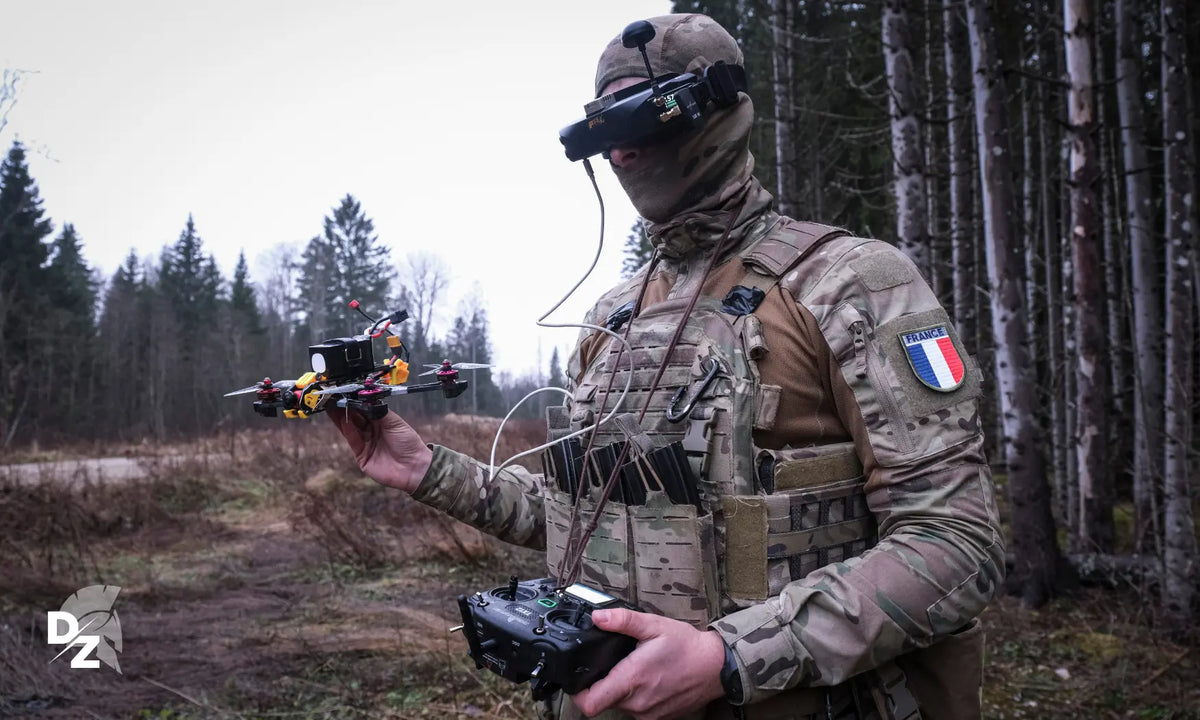
- 4th SAS Company: the specialist in reconnaissance, acquisition and autonomous action with a very small footprint in urban areas. It also includes the close protection specialists (bodyguards), CTLO operators and drone operators.
- The training company provides initial training as well as the SAS training courses. The specialised training cell runs advanced courses: sniper, counter-terrorism, close protection, etc.
- The command and logistics company is the regiment’s support unit. Its personnel are specifically trained to support the action sticks on operations.
The specific nature of the 1er RPIMa operators’ missions requires the regiment to provide its own training. Like the other French Army special forces units, it receives young recruits after their initial Army special forces training (the 3-month FI-FST); the future commandos will have to complete a full year of training in total. Once completed, the RAPAS course (airborne reconnaissance and special action) marks the soldiers’ entry into the regiment.
Missions of the 1er RPIMa
Constantly deployed in many theatres, the 1er RPIMa is able to provide, at very short notice, detachments capable of carrying out counter-terrorism and hostage rescue (CTLO), capture of high-value targets (HVT) and objective destruction, but also training for foreign units or protection of senior officials or priority sites (bodyguards / GDC). Able to train and provide their own operational support logistics specialists, the Bayonne detachments can mount operations almost autonomously (excluding transport and deployment assets).

The special action stick patrols (PATSAS) often operate alone in the field for several days or even several weeks to assess and secure an environment, while remaining able to carry out “hard-hitting” actions.
For several years, the men of the 1er RPIMa have regularly been integrated into other Special Operations Command detachments, such as during the ARES mission in Afghanistan or, more recently, within the Sabre detachment based in Burkina Faso or the Takuba mission, intended to train and accompany Malian special units.
The equipment of the 1er RPIMa
The diversity of the missions assigned to the Bayonne commandos requires the regiment to equip itself with a wide range of materiel.
Weapons
For handguns, there are Glock 17 and HK USP pistols, while long guns range from the HK 416-A5 to the M4, via the HK417, the SIG MCX, the FN P90, the HK MP5 and the Benelli M3 and M4 shotguns. Heavy machine guns are mainly supplied by the Belgian company FN Herstal, with Minimi, Evolys and MAG, but there are also Browning M2 12.7 mm and a few AANF1 in 7.62 mm. Some vehicles and boats can also be fitted with a Minigun rotary machine gun in 7.62 mm.

Snipers mainly use PGM Hécate II and Ultima Ratio, HK MSG 90, Sako TRG 42 or Cades 40 rifles.
The 1er RPIMa armourers, regarded as true specialists in their field, are regularly approached to evaluate weapons offered by various manufacturers, who can thus test their equipment and validate it in extremely demanding operational conditions.
Vehicles
The commandos of the 1st Marine Infantry Parachute Regiment use several types of vehicle depending on their missions.
To find out more: the best special forces in the world.
The main vehicles are:
The special patrol vehicle (VPS) 2, a 3-tonne 4x4 for deep patrols able to carry at least 3 commandos, with powerful armament including 7.62 mm and 12.7 mm machine guns, and able to carry a 7.62 mm M134 Dillon Minigun rotary machine gun or a 40 mm HK GMG grenade launcher.

The special forces heavy vehicle (PLFS) Sherpa. Weighing 11 tonnes, it uses the same type of armament as the VPS 2 but can be fitted with a 20 mm cannon and carry Milan or MMP missiles.
The armoured Land Rover Discovery 3, intended mainly for escorting and protecting senior officials. The Discovery is gradually being replaced by the Forteresse 200 SUV from the company Centigon. This vehicle, built on a Toyota Land Cruiser 200 base, weighs more than 3.6 tonnes and has STANAG 4569 level 2 armour, which allows it to withstand a lateral blast of 15 kg of TNT at 2 metres. And its floor can withstand the simultaneous explosion of two DM51 grenades.

The commandos also use Polaris Sportsman MV850 quad bikes. This vehicle can carry up to 270 kg, including 180 on the rear platform. The Polaris is also fitted with a mount for a 7.62 mm MAG 58 machine gun.

For several years, Special Operations Command has been testing the use of motorcycles for its various units. Recently, electric models have been undergoing trials for greater discretion and better range.

For river operations, the 1st Company uses the Styx, a rigid-hull boat more than 8 metres long with 200 hp. The Styx can carry up to 12 men and be armed with several machine guns in 7.62 mm and 12.7 mm, a minigun and a 40 mm grenade launcher.

The main deployments of the 1er RPIMa
Although most of the 1er RPIMa’s operations, like all those of the COS, are at the very least very discreet, or even secret, commandos from the “1er” can be found in all the major deployments of French Army operations. Since the 1990s, the Bayonne commandos have been present in the first Gulf War, the former Yugoslavia, Africa, Afghanistan and, more recently, Mali, within Operation Sabre and the Takuba mission.

To find out more
You can listen to our podcast with warrant officer (adjudant) Marc-Antoine, now an instructor at the COMFST and a former 1er RPIMa commando.
Going further: books, masterclasses, photo posters
To extend your reading, we offer several resources on our website.
First, you can find a series of masterclasses focusing on joining special units and coaching: Défense Zone masterclass: special forces.
Next, for books, we have listed the best books on special forces in our online Bookshop. We have also published a very comprehensive book on the subject in our DZ Essentials collection.
Finally, if you would like to decorate your home with special forces photos, see our special forces photo poster collection.