DÉFENSE ZONE
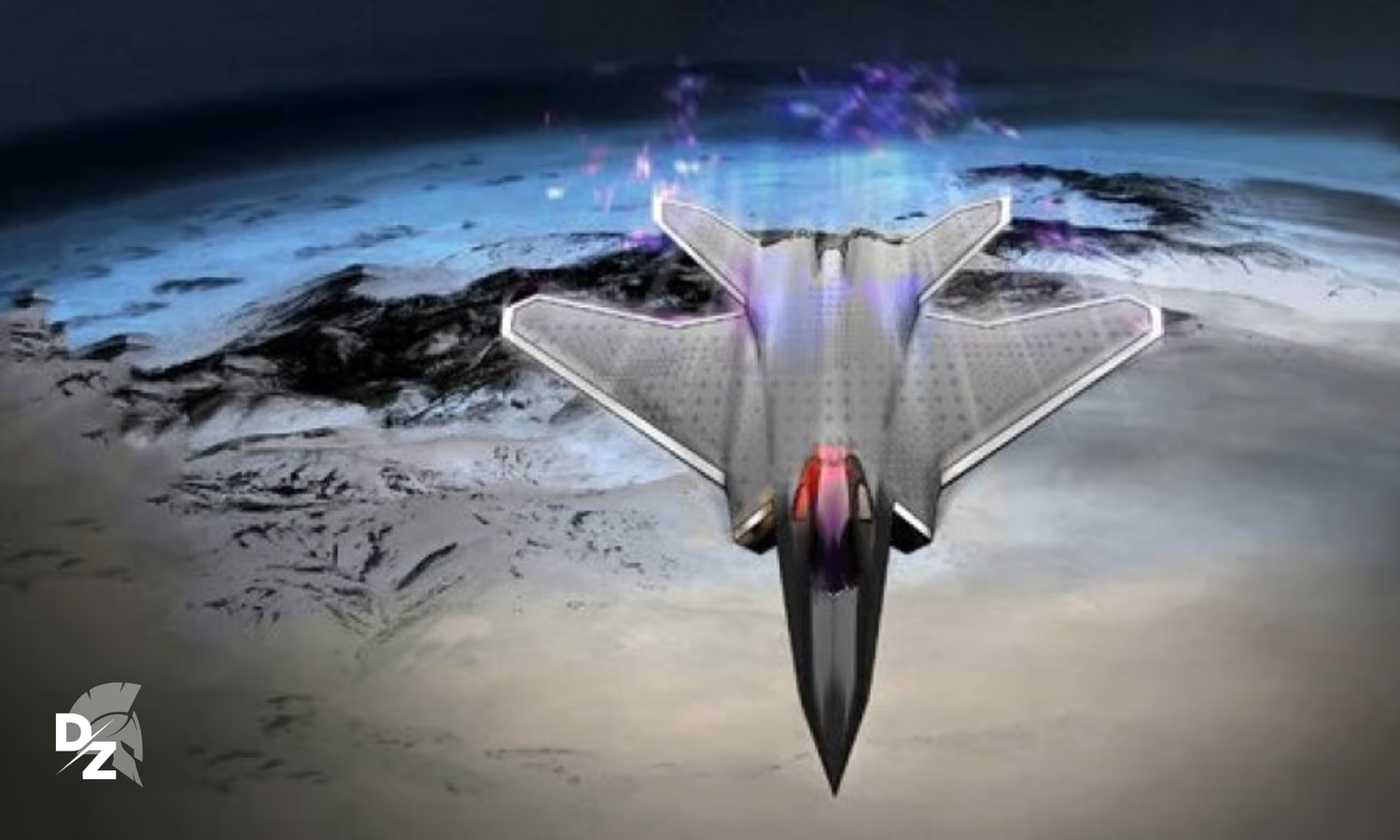
The key points. On 8 June 2026, Paris and Berlin formally agreed to abandon the “combat aircraft” strand of SCAF (Système de combat aérien du futur, the Future Combat Air System), the Franco-German-Spanish programme meant to replace the Rafale and the Eurofighter by around 2040. The cause: an industrial disagreement between Dassault Aviation and Airbus over leadership of the project that was never resolved. As a result, France finds itself alone facing the question of its successor to the Rafale, with two projects now in the foreground — the Rafale F5 standard as a transition solution, and a national 6th-generation fighter to be brought forward by 2040, at an estimated cost of nearly 100 billion euros.
What was SCAF?
Launched in 2017 by Emmanuel Macron and Angela Merkel, then joined by Spain in 2019, SCAF was not just an aircraft. It was a system of systems: a new-generation fighter (the NGF, New Generation Fighter), accompanying drones (the “remote carriers”), and a “combat cloud” tasked with linking everything together in real time. The programme, organised around seven technology pillars, was due to come to fruition around 2040 to replace both the French Rafale and the German and Spanish Eurofighter. Its total cost was estimated at more than 100 billion euros.
On paper, SCAF embodied the ambition of European air sovereignty. In practice, for nearly eight years it stumbled over a simple question: who is in charge?
Why was SCAF abandoned?
On 8 June 2026, the German government confirmed that Chancellor Friedrich Merz and President Emmanuel Macron had reached the shared conclusion that they should stop trying to build a joint combat aircraft. The reason is not technological but industrial and political.
At the heart of the dispute was industrial governance. Dassault Aviation, drawing on decades of experience with the Rafale, claimed design authority (design authority) and a share of the workload of up to around 80% on the fighter. Airbus, which represented German and Spanish industrial interests, refused this imbalance. Dassault’s CEO, Éric Trappier, for his part kept insisting that a “co-leader” organisation could not work for designing a combat aircraft. With no agreement in sight, the two states preferred to cut their losses rather than let the programme get bogged down any further.

What survives of the programme
At this stage, the abandonment concerns only the piloted aircraft. Paris and Berlin have said they want to continue certain common building blocks, notably a drone system and a shared data network — two of the seven original pillars. The exact scope of this residual cooperation remains to be clarified, however, and will need to be confirmed by formal commitments. It would be premature to see it as a guaranteed “mini-SCAF”.
The Rafale’s successor: France’s options
Without Germany or Spain to share the bill, France must fund the replacement of its fighter on its own. Estimates converge on an order of magnitude of 100 billion euros to see a national programme through. Two horizons are emerging.
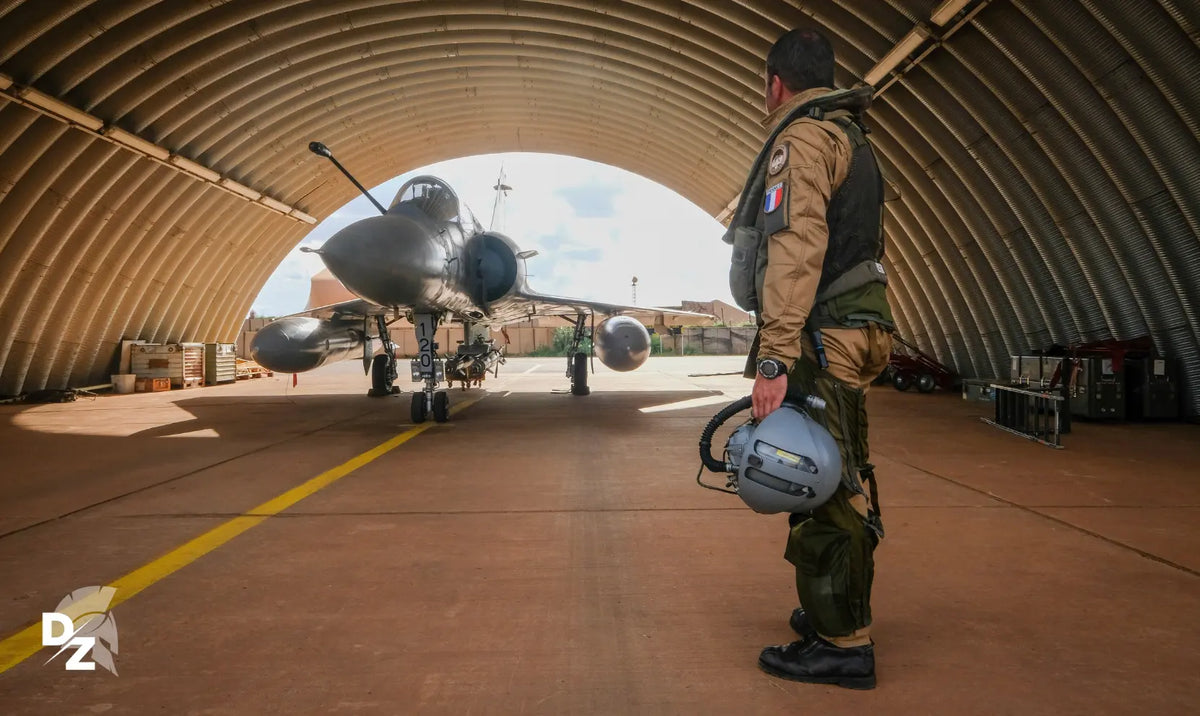
In the short and medium term, France is relying on the continuous upgrading of the Rafale (see below). In the longer term, the stated objective is to fly a French 6th-generation fighter demonstrator by 2035, in order to have a successor to the Rafale by around 2040. A particularly sensitive deadline: the upper limit is set at around 2045, the date by which the airborne nuclear component of French deterrence, currently provided by the Rafale and the ASMP-A missile, and in future by the planned ASN4G hypersonic missile, will absolutely have to be renewed.
In other words, the Rafale’s successor is not just a capability issue: it is directly linked to the credibility of French nuclear deterrence, of which the Rafale is today the airborne delivery platform.
The Rafale F5, the transition solution
Pending an entirely new fighter, the bridge to 2040 is called the Rafale F5. This standard, expected around 2030 with entry into service targeted for around 2035 in both the French Air and Space Force and French Naval Aviation, is meant to “multiply” the aircraft’s capabilities: enhanced electronic warfare, connectivity, and carriage of the future ASN4G hypersonic missile for deterrence.
Above all, the Rafale F5 will be accompanied by a stealth combat drone (UCAV), a direct descendant of Dassault’s nEUROn demonstrator — a break from current armed drones such as the Reaper. The launch of this drone’s development was announced on 8 October 2024 by the Minister of the Armed Forces, Sébastien Lecornu, with availability envisaged around 2033. Designed for collaborative combat, with stealth and an internal weapons bay, this French-style “loyal wingman” foreshadows the concepts that SCAF was supposed to deliver — without waiting for a joint European programme.
What about the allies?
The abandonment of SCAF reshuffles the cards in Europe. Germany has several options for the post-Eurofighter era: moving closer to the British-Italian-Japanese GCAP programme (Global Combat Air Programme), which is aiming for entry into service around 2035, relying more on the American F-35, or building a new coalition. Spain, long the most committed to SCAF, must also redefine its path. Across the continent, the Franco-German failure leaves at least two competing poles side by side — a French axis and GCAP — where Europe had hoped for a unifying project.
What to watch
Several signals will determine the credibility of the French route in the coming months: the actual launch (and funding) of a national 6th-generation demonstrator; the real content of the residual cooperation with Berlin on drones and the combat cloud; whether or not the timetable for the Rafale F5 and its stealth drone is kept; and possible substitute partnerships, in Europe or through exports, to share the costs. On this last point, France can draw on the momentum of its arms exports, the Rafale having established itself in recent years as a major commercial success.
Frequently asked questions
Has SCAF been abandoned completely?
The “piloted combat aircraft” strand (the NGF) has been abandoned since June 2026. Paris and Berlin have mentioned continuing certain building blocks, notably a drone system and a data network, but their scope remains to be confirmed.
Who will replace the Rafale?
In the short term, the Rafale itself, brought up to the F5 standard around 2030–2035 and backed by a combat drone. In the long term, a national 6th-generation fighter, with a demonstrator targeted for 2035 and an operational successor expected by around 2040.
Why were France and Germany unable to agree?
The disagreement was about industrial governance: Dassault demanded design leadership of the fighter, while Airbus rejected a split it considered unbalanced.
How much would a “100% French” successor to the Rafale cost?
Estimates converge on an order of magnitude of around 100 billion euros — a planning objective, not spending that has already been committed.
What is GCAP?
The Global Combat Air Programme brings together the United Kingdom, Italy and Japan around a 6th-generation fighter aiming for entry into service around 2035. It is the main competing programme in Europe and Asia.
Further reading
Find all our coverage of defence, geopolitics and weapons news on the Défense Zone News blog. And to (re)discover the aircraft at the heart of this story, the book Dassault Rafale, by Frédéric Lert (in French), available in our shop, traces the history, missions and capabilities of Dassault Aviation’s fighter.
Sources: German government and official statements (8 June 2026), French Ministry of the Armed Forces / Dassault Aviation.