DÉFENSE ZONE

The 11th Parachute Brigade (11e BP) is one of the French Army’s main rapid-reaction forces. Able to be deployed quickly to a theatre of operations, it brings together several regiments with complementary skills: infantry, armoured cavalry, engineers, artillery and support. This organisation makes it possible to deploy a complete, self-sufficient force that can adapt to very varied situations.
Understanding the structure of the brigade and the role of its regiments gives a better grasp of the reality of the airborne troops, often reduced to the single image of the parachute jump, when in fact their missions cover the full spectrum of land operations.
A combined-arms brigade designed for rapid intervention
The 11th Parachute Brigade is based on a simple principle: bringing together units able to act together from the very first hours of an operation. Its regiments do not specialise solely in parachuting, but in conducting complete operations, from reconnaissance to fire support, including gap crossing, mine clearance and intelligence.
The brigade headquarters is located in Toulouse, while the regiments are spread across several garrisons in the south and south-west of France. This geographical dispersion does not prevent strong cohesion, maintained through regular exercises and a shared culture.

The parachute infantry regiments
The 1st Parachute Chasseur Regiment (1er RCP)
The 1er RCP, based in Pamiers, is one of the oldest French parachute regiments. Heir to units formed during the Second World War, it has a long tradition of deployments, particularly in Africa, the Middle East and the Balkans.
A light infantry regiment, it is trained in assault, reconnaissance and combat in urban or rural areas. Its ability to be deployed quickly means it is frequently committed to overseas operations.
The 2nd Foreign Parachute Regiment (2e REP)
Stationed in Calvi, Corsica, the 2e REP is the only parachute regiment of the French Foreign Legion. It has a solid reputation built on numerous and often demanding deployments, particularly in Africa and the Sahel.
The regiment stands out for its particularly intensive training, a strong culture of cohesion and the ability to intervene at very short notice. Its companies have varied specialities, including mountain, amphibious and desert combat.
The 3rd Marine Infantry Parachute Regiment (3e RPIMa)
Based in Carcassonne, the 3e RPIMa belongs to the troupes de marine (French marine troops) and has a tradition of overseas deployment. Its missions include infantry combat, securing sensitive areas and stabilisation operations.
The regiment regularly takes part in joint exercises and overseas deployments, where its adaptability is particularly sought after.
The 8th Marine Infantry Parachute Regiment (8e RPIMa)
Based in Castres, the 8e RPIMa is one of the best-known regiments of the airborne troops. It has been deployed in many contemporary conflicts and retains a strong operational identity.
The regiment emphasises physical preparation, combat in varied terrain and the ability to operate independently. It is one of the pillars of the French parachute infantry.
The parachute cavalry regiment
The 1st Parachute Hussar Regiment (1er RHP)
The 1er RHP, based in Tarbes, provides the brigade with an armoured and reconnaissance capability. Equipped with light armoured vehicles, it carries out scouting, intelligence and screening missions.
The presence of a cavalry regiment within a parachute brigade illustrates the combined-arms logic: the infantry does not fight alone, but is supported by advanced mobility and observation assets.
The parachute engineer regiment
The 17th Parachute Engineer Regiment (17e RGP)
Based in Montauban, the 17e RGP is responsible for the technical missions essential to manoeuvre: route opening, mine clearance, gap crossing, terrain preparation and operational search.
The regiment also has specialists able to intervene in very specific situations, particularly to neutralise explosive devices or reconnoitre routes in high-risk areas.
The parachute engineers play a role that is often discreet but essential, enabling units to advance, protect themselves and exploit the terrain.
The parachute artillery regiment
The 35th Parachute Artillery Regiment (35e RAP)
Based in Tarbes, the 35e RAP provides the brigade’s fire support. Its missions include observation, fire coordination and the operation of artillery pieces suited to airborne operations.
Fire support is a decisive element in modern operations, making it possible to neutralise enemy positions or protect units engaged in contact.
Command and support units
Beyond the combat regiments, the brigade has command, signals and logistical support units. These structures coordinate operations, manage communications and provide resupply.
Without these units, no sustained deployment would be possible. Their role is therefore essential, even if it is less visible than that of the combat units.
An organisation designed for operational coherence
The diversity of its regiments allows the brigade to form battlegroups tailored to each mission. Depending on requirements, some units are committed on their own, while others operate together in a combined-arms set-up.
This modularity is one of the main strengths of the French airborne troops. It enables them to intervene in high-intensity operations as well as in stabilisation or presence missions.
Traditions and identity of the parachute regiments
Each regiment has its own traditions, emblems and history. These elements contribute to cohesion and to passing on military values. Ceremonies, insignia and mottoes all form part of the paratroopers’ collective identity.
Beyond the symbols, this shared culture strengthens the esprit de corps that is indispensable in units called upon to operate in often demanding conditions.
Go further: books and photographs on the airborne troops
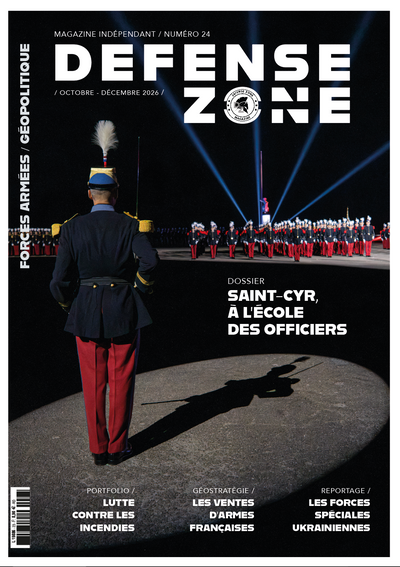
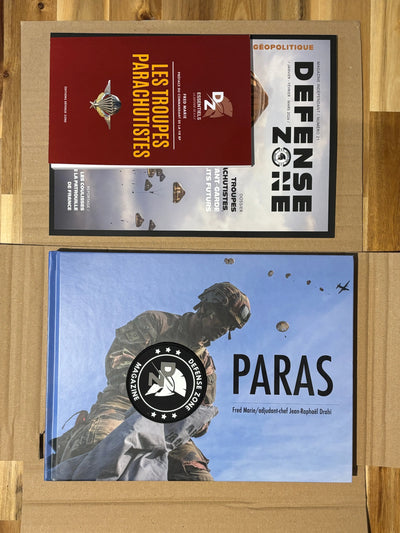
If this subject interests you and you would like to learn more about the history, the units and the reality on the ground, you can discover the book Les troupes parachutistes (The airborne troops), which offers a complete, illustrated overview of this world.
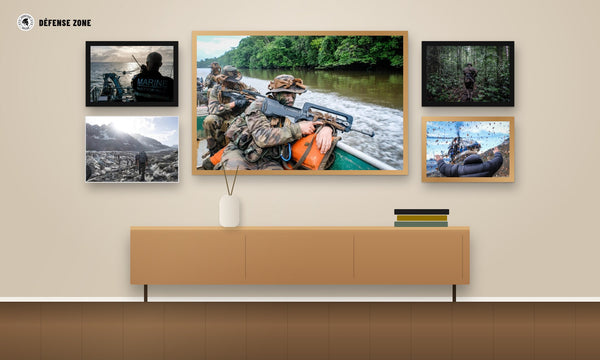
You can also browse the collection of posters devoted to the parachute brigade, which showcases the aesthetics and intensity of these units through images taken in the field.