DÉFENSE ZONE
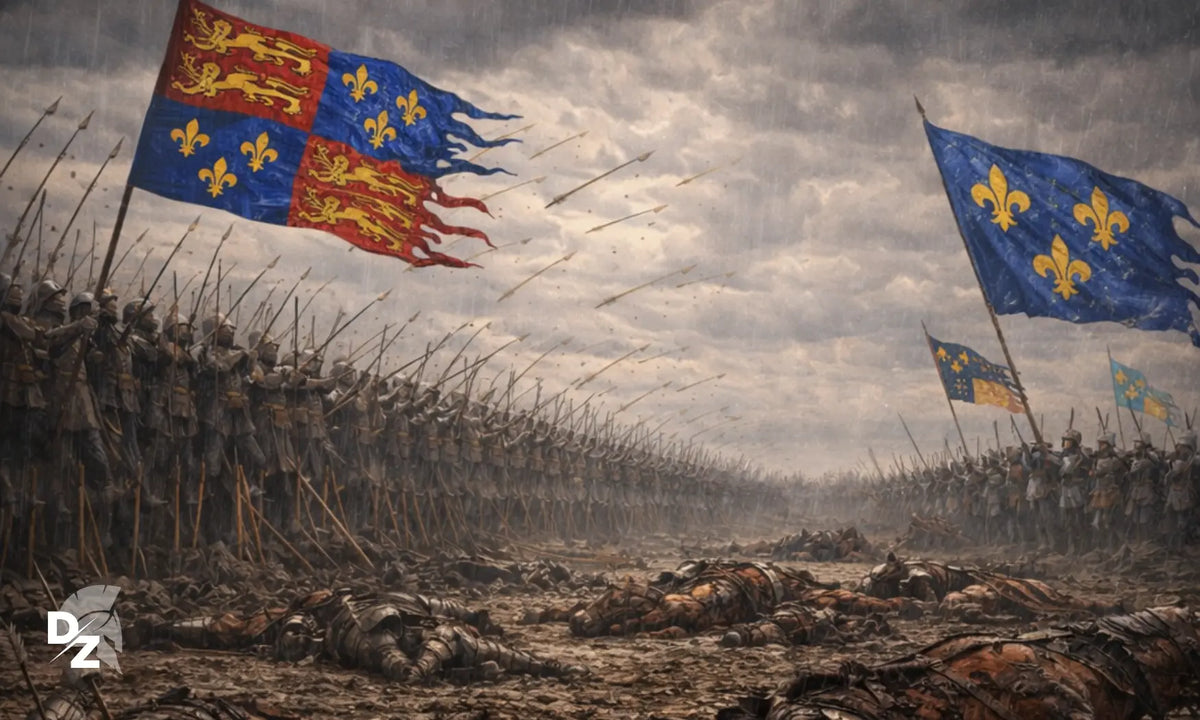
More than a mere episode of the Hundred Years’ War, the Battle of Agincourt raises questions about French strategic culture and its relationship with deception in the art of war, even today. Revisiting this clash helps us understand how certain heroic representations can influence military choices and, at times, lead to ignoring the realities of the battlefield.
Moving beyond naivety in the face of hybrid threats
In their 2025 parliamentary information report on putting the new “Influence” strategic function into operation, MPs Natalia Pouzyreff and Marie Récalde stressed France’s determination to move beyond naivety in the face of new hybrid threats. Combining conventional kinetic attacks, cyberattacks, information warfare, propaganda or subversion, hybrid operations play on cognitive perceptions by relying on deception. By speaking of “naivety”, these two parliamentarians imply that French strategic culture has for too long regarded deception as an unworthy mode of operation — at the risk of ignoring or underestimating the adversary’s deception, and of denying itself deception as an offensive mode of operation. What is really the case?
25 October 1415: a textbook case
The Battle of Agincourt offers an illuminating example of what panache “French-style” can be. A key moment in the Hundred Years’ War, it took place on 25 October 1415, as the army of King Henry V of England was trying to reach Calais to re-embark. The French army’s objective was to block him at Agincourt. It is a textbook case in tactics, because it shows how far the quest for heroic victory can give rise to a denial of reality and stifle a pragmatic view of how to conduct the battle…
Read the rest of this article by Hyacinthe-Bernard Ibert in Défense Zone #22.
Further reading
Discover Qui ruse gagne ! (Who deceives, wins!) by Patrick Manificat and our strategy books — and follow our news.