DÉFENSE ZONE
With the success of the ARTUS demonstrator, the European Defence Agency (EDA) has just completed a project to develop a fleet of unmanned ground vehicles.
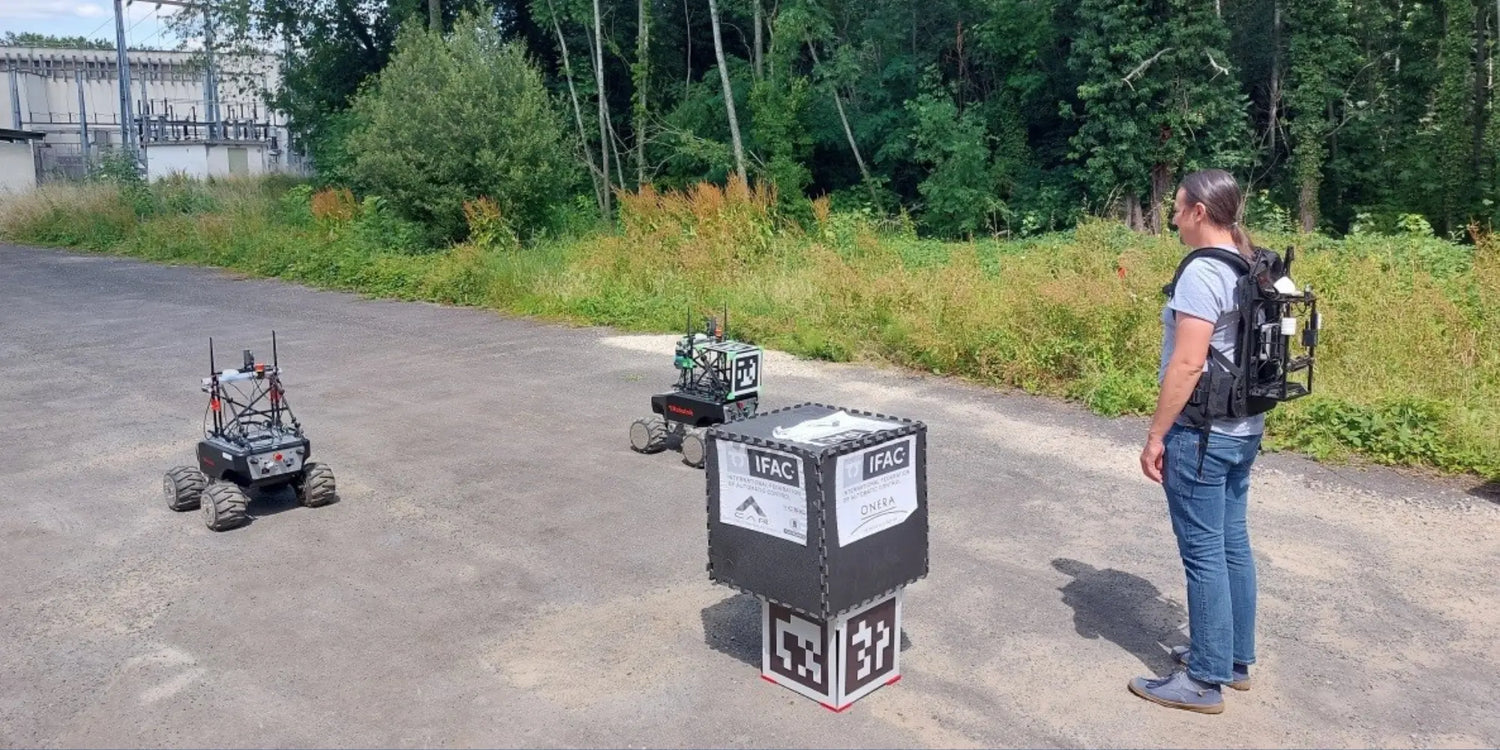
The ARTUS project (Autonomous Rough-terrain Transport Unmanned Ground Vehicles Swarm) has just resulted in a demonstrator for a small swarm of autonomous, smart vehicles designed to support infantry platoons on their missions. Whether for transport or observation missions, a swarm can increase the troops’ capacity for action by supporting them in hostile environments, particularly in mountainous or wooded terrain, raising their level of protection and allowing the unit greater mobility.
The completion of the ARTUS project comes as the European defence community meets in Brussels for the European Defence Innovation Days, held from 30 May to 1 June 2023. This project is an “example of the collaborative role of industry and the EDA in developing new technologies for the benefit of EU armed forces”, the EDA said with satisfaction in its press release.
The implementation of ARTUS, a project selected under a 2019 call for proposals for the European Union’s Preparatory Action on Defence Research (PADR), began in February 2021 and ended in January 2023. It had a budget of 1.5 million euros.
The system uses two autonomous ground robots fitted with a computer, enabling interaction between a geolocated operator and the swarm through a battle management system and a fleet navigation algorithm.
The guidance algorithm guarantees certain constraints in both the autonomous and the supervised movement of a swarm of robots, either following a predefined path or being managed by a geolocated operator or a remotely operated robot.
With the ability to avoid obstacles as well as collisions with other robots, a single operator can manage the entire swarm by defining the desired path or collective movement behaviour, for example during transport or observation missions. The swarm can continue the mission even if one of the robots loses its communication or mobility capabilities.
The ARTUS consortium was led by Fraunhofer-Gesellschaft (Germany) and also included ONERA (France), Diehl Defence (Germany) and CharismaTec (Austria).
You can subscribe to our magazine and receive our latest issue, whose main feature is devoted to the Special Operations Command, access exclusive content and take advantage of offers on equipment and gear from our partners. Head to the Premium section.

This text comes from a press release that our editorial team found interesting. If you are a company in the defence and security sector, feel free to send us yours at this address: contact@defense-zone.com.