DÉFENSE ZONE

French airborne troops have their origins in experiments conducted before the Second World War, but it was the conflict itself that gave real impetus to airborne thinking. The idea at the time was simple and revolutionary: use aircraft to deliver soldiers rapidly behind the lines, seize a key point and throw the enemy into disarray.
After 1945, French parachute units were committed to major conflicts, notably in Indochina and then in Algeria. These campaigns had a lasting influence on the units’ doctrine and identity. The experience gained in harsh environments, far from rear bases, helped forge a culture of hardiness and self-reliance that remains a defining feature of airborne troops today.
Through successive reorganisations of the French Army, the units were grouped together and restructured to form the 11th Parachute Brigade in its current form, capable of rapidly deploying a coherent, well-structured combined arms force.
The operational jump: constraints and realities
Military parachuting is a complex technical operation that demands rigorous preparation. Before each jump, a series of procedures is applied: parachute checks, equipment inspection, weather briefing, planning of approach routes and coordination with aircrews.
The static-line jump is the basis for inserting troops on the ground. It allows large numbers of personnel to be dropped rapidly with a high level of safety, even in demanding operational conditions. Other techniques exist for particular missions, notably in specialised units, but they meet specific needs and remain the exception in the routine employment of conventional airborne troops.
Once on the ground, the priority is immediate reorganisation: regrouping, recovering equipment, securing the area and preparing the manoeuvre. It is often in these first minutes that the success of the operation is decided.

The qualities expected of a military paratrooper
Being a paratrooper demands particular physical and mental qualities. Endurance, resistance to fatigue, the ability to operate in demanding environments and the ability to work as a team are essential.
Beyond the physical aspect, rigour and discipline are central. Parachuting is an activity that leaves no room for improvisation. Every action is codified, every procedure is rehearsed, and every potential error must be anticipated.
Cohesion is also a decisive factor. Parachute units rely on close-knit teams, able to act quickly and remain effective in degraded situations.
Airborne troops today: between heritage and adaptation
Contemporary conflicts have profoundly changed the way land forces are employed, but airborne capability remains fully relevant. Modern operations demand responsiveness, mobility and great flexibility of employment, all qualities that characterise parachute units.
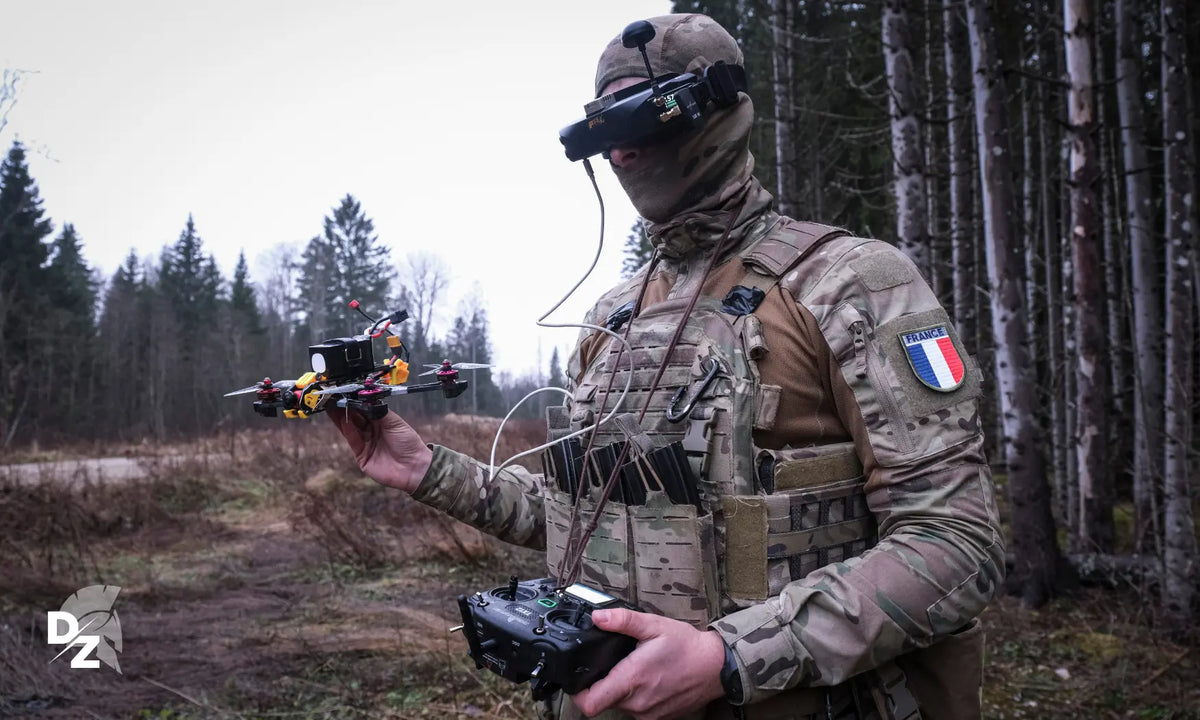
Multinational exercises with allies, training in realistic conditions and the integration of new technologies help keep this capability at the highest level. Drones, digital communications and modern command systems complement traditional skills without replacing them.
The parachute brigade thus remains an operational tool suited to contemporary crises, capable of intervening rapidly in a variety of contexts, whether overseas operations, presence missions or protection deployments.
FAQ: frequently asked questions about military paratroopers
What is the main French parachute unit?
The French Army’s main large parachute formation is the 11th Parachute Brigade. It brings together several infantry, combat support and combat service support regiments that can be deployed rapidly by air.
How many jumps does a military paratrooper make?
The number of jumps varies according to postings, training and periods of activity. Paratroopers regularly carry out training jumps to maintain their qualification and their level of safety.
Do you have to be a paratrooper to join the special forces?
Many special forces units have a parachuting culture, but the two worlds are not the same. The special forces have their own selection and training processes.
What is the difference between a paratrooper and a commando paratrooper?
A commando paratrooper is a paratrooper who has undergone additional selection and training, enabling them to carry out more specialised missions, notably in reconnaissance and deep action.
Do paratroopers still jump on operations today?
Yes, the operational parachuting capability still exists. It is used when the tactical situation requires it and when conditions make insertion by air relevant and effective.
Conclusion
Airborne troops hold a unique place in the French military. Heirs to a rich and sometimes tragic history, they have been able to evolve and remain a modern military tool, capable of intervening rapidly and effectively in a variety of contexts.
Behind the spectacular image of the jump lies a more complex reality: preparation, discipline, training, cohesion and daily demands. Understanding paratroopers means understanding a balance between tradition and adaptation, between heritage and innovation, between regimental culture and operational realities.
Going further with Défense Zone: book and posters
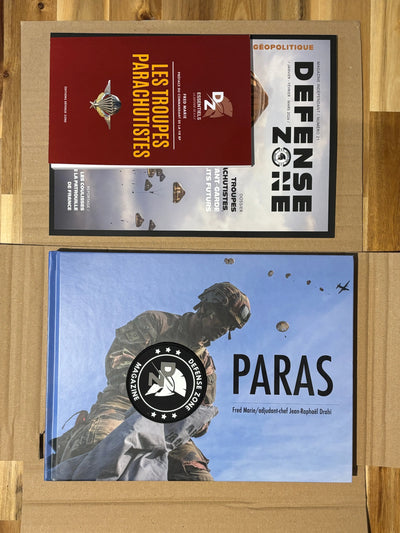
If you are looking for a structured, in-depth read designed as a reference work, the book “Les troupes parachutistes” (Airborne troops), in the DZ Essentials collection, sets out the history, units, doctrine, missions and culture of the paras in a clear continuity, without needless folklore. It is available here: Les troupes parachutistes (print and digital edition).
To illustrate your passion, decorate an office or build a coherent collection around the airborne world, you can also find the dedicated selection of prints and posters on Défense Zone: Parachute brigade poster collection.