DÉFENSE ZONE
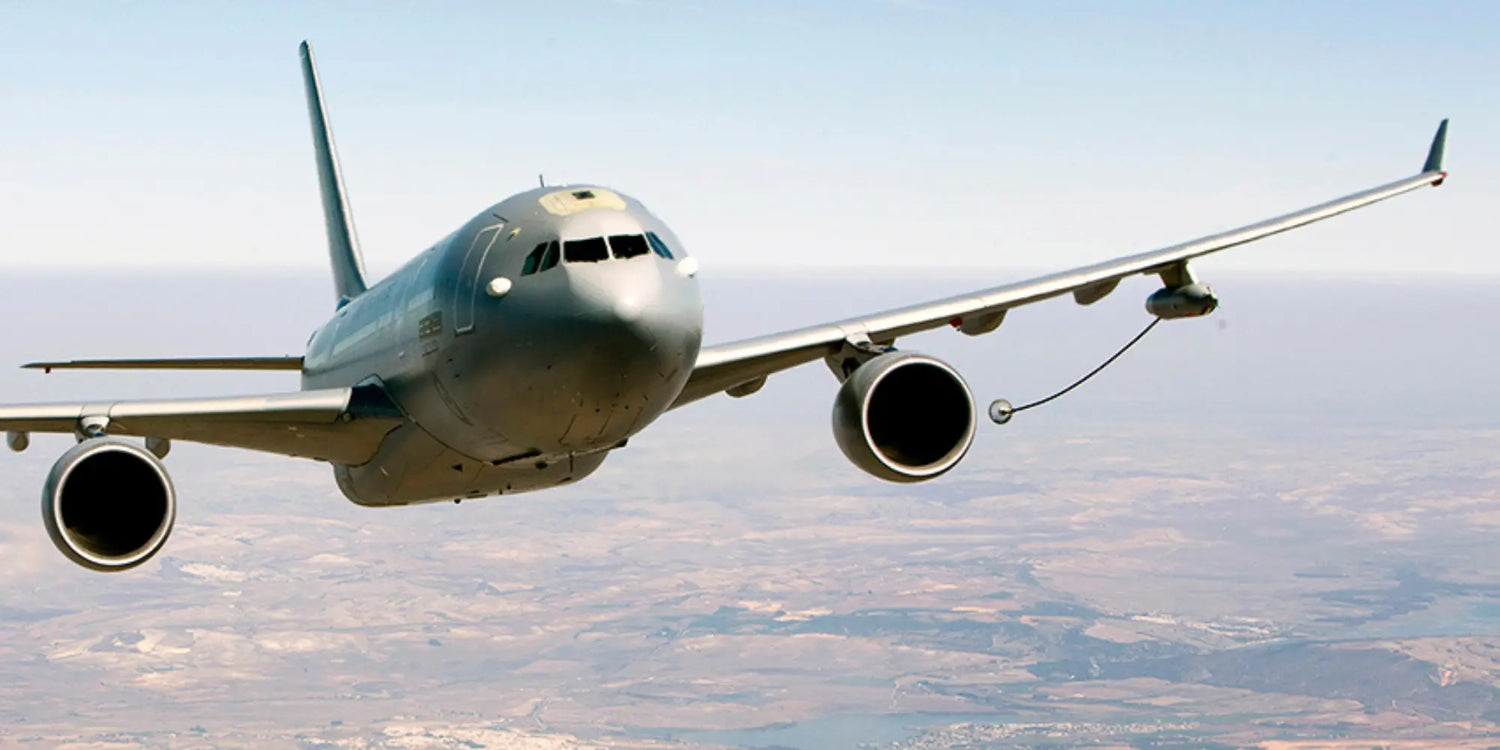
The European Defence Agency (EDA) has launched a new research project, led by Spain in collaboration with Germany, aimed at developing an automatic air-to-air refuelling operation (A3R). The two-year project, with a budget of 4 million euros, will involve an industrial consortium made up of Airbus Defence and Space, GMV, the German Aerospace Center (DLR) and AES Technology. A limited number of flight tests will be carried out in 2024 with an Airbus A330 MRTT and Tornado fighters.
Air-to-air refuelling is one of the main pillars of air mobility and an essential force multiplier. However, it is a complex operation that requires the pilots of tankers and receiver aircraft to operate in close formation, in variable flight conditions, by day and by night, and to perform high-precision manoeuvres to align the refuelling probe and the basket. Although the operation has been simplified by new systems that provide better information to the tanker operator and better operational awareness, the way refuelling is carried out has been the same for 70 years. Although today the success rate of hose-and-drogue contacts is high, the impact of a failed contact is significant, often leading to the mission being cancelled, damage to assets and reduced operational effectiveness. To maximise operational effectiveness, the introduction of innovative automation functions into refuelling systems will provide new ways of better assisting the aircraft during this operation and will increase the success rate of these missions. The feasibility of greater automation of AAR has already been demonstrated by Airbus when it achieved a fully automatic contact with the boom system in 2020, and with the recent certification in 2022 of a fully automatic boom. Launching research into the hose-and-drogue system will prepare air-to-air refuelling aircraft such as the A330 MRTT, the A400M or the C295 to cope with more demanding operations and to be ready for the next generation of unmanned platforms.
The first phase of the project focuses on the technological trade-offs that will be needed to achieve future automation of the operation, such as the levels of automation or assistance to be implemented for manned and/or unmanned platforms. The technologies will then be assessed, prototyped and tested in real scenarios such as flight tests. Several technical gaps remain to be filled, such as sensors, computing capacity and the system’s ability to operate in all weather conditions.
A simulation environment will also be developed to assess the receiver aircraft’s optimal trajectory towards the hose, by analysing the interaction between them. Technological gaps have already been identified with regard to the data link/communication needed between the tanker and the receiver aircraft, and how factors such as latency, integrity or data accuracy could affect it.
As part of the current project, a concept to increase basket stabilisation will be developed and assessed in a wind tunnel.
Finally, the project will also align this technological development with operational needs and explore new ways of carrying out refuelling operations.
You can subscribe to our magazine and receive our latest issue, access exclusive content and benefit from our partners’ offers on gear and equipment.

This text comes from a press release that our editorial team found interesting. If you are a company in the defence and security sector, feel free to send us yours at this address: contact@defense-zone.com