DÉFENSE ZONE
We use them every day without even realising it. Despite the development of satellite programmes, almost the entire global economy and communications still rely on submarine cables. Who controls these major geostrategic assets? Are they well protected?
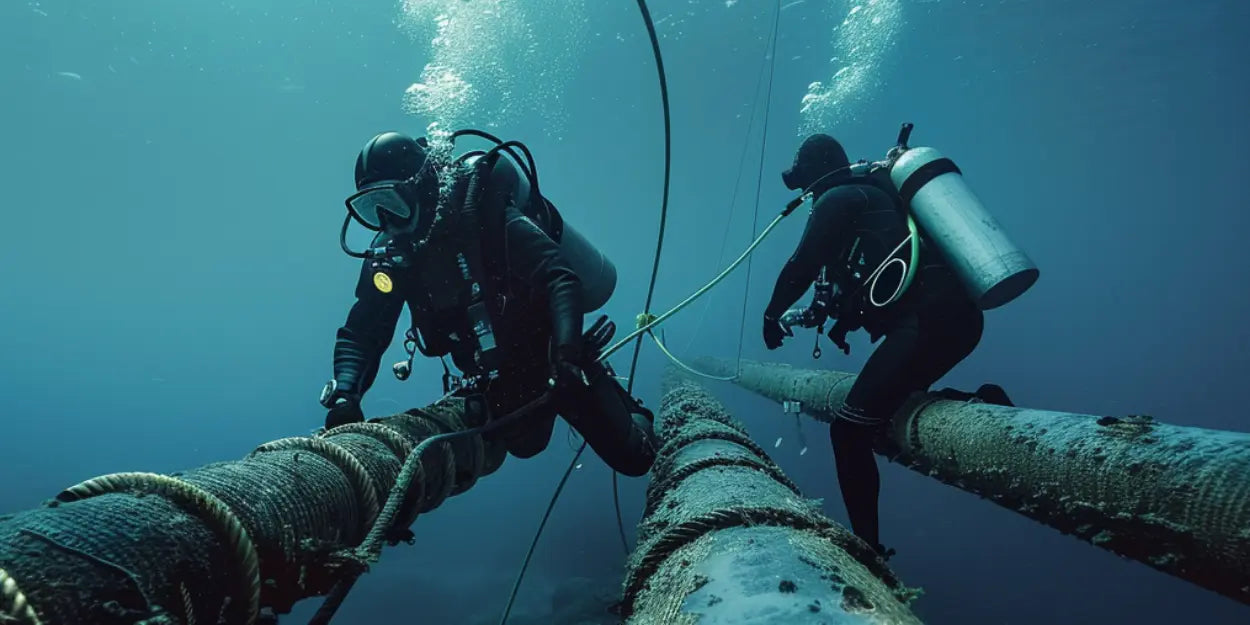
No, this is not the title of Jules Verne’s new novel, but a reality. There are 490 of them, lying on the floor of the world’s seas and oceans. Snakes of steel, plastic and optical fibre around ten centimetres in diameter. In our hyperconnected world, more than 95% of civilian data traffic and part of military data pass through intercontinental cables, the improved descendants of the telegraph network.
Together they form a vast web of 1.3 million km woven across the ocean floor, linking nations to one another. Banking and stock market transactions worth ten trillion dollars (10,000,000,000,000 $) flow through them every day.
Telephony and the internet are heavily dependent on these infrastructures, which, despite the cutting-edge technology used, remain fragile and exposed. They are not systematically buried, their surveillance consists of simple remote monitoring, and the consequences of occasional cuts are far-reaching...
Read the rest in Défense Zone magazine #15, available in our online bookshop and in your Premium subscriber area.