DÉFENSE ZONE
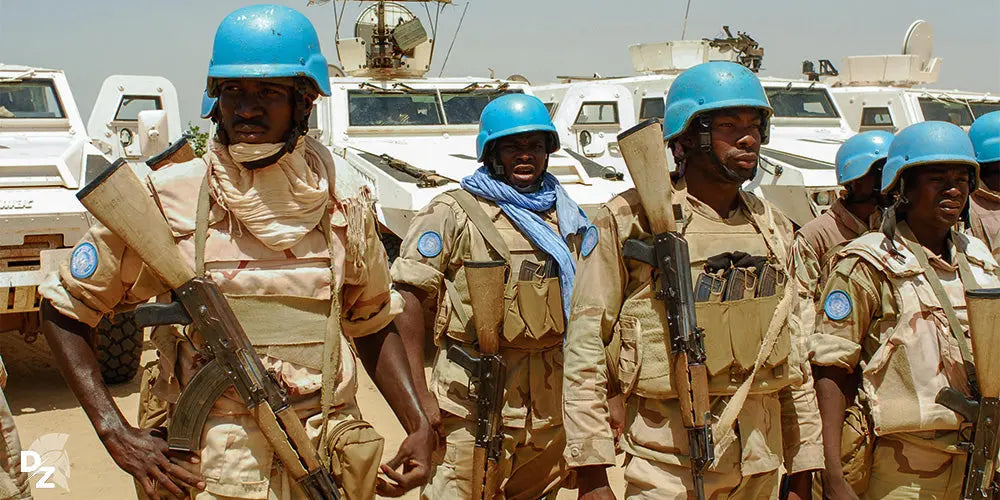
For eight years, several hundred Burkinabè soldiers took turns serving in the United Nations Multidimensional Integrated Stabilization Mission in Mali. A high-risk mission for the armoured patrols of the Badenya battalion stationed in Timbuktu, whose soldiers have already paid the blood price on several occasions.
Falling numbers
The armed forces of Burkina Faso have been engaged in Mali since January 2013. Initially deployed under the banner of the African-led International Support Mission to Mali (AFISMA), they joined MINUSMA in July 2013. In April of the same year, Timbuktu welcomed Badenya, now on its ninth rotation.

“The strength of previous battalions was 850. This has been reduced and we are now down to 650, including 18 women. This reduction in our numbers has led to a new configuration, to which we adapted as quickly as possible in order to succeed in the missions assigned to us,” explains Colonel Gustave Bambara, commander of Badenya 9, deployed to Mali on 23 July 2021.
An extreme environment
The difficulties encountered in the field are many and include technical problems. Equipment wears out quickly, especially vehicles. Badenya has more than thirty Arquus Bastion, Otokar Cobra and OTT M36 armoured vehicles in its fleet. Each model has its strengths and weaknesses: the Cobras are fast, light and less likely to get bogged down, but poorly protected against improvised explosive devices (IEDs). The Bastions, while tougher and able to carry more, suffer from limited off-road mobility. The M36 is the heaviest model. It is particularly robust and withstands IEDs and small-arms fire very well, but these advantages come at a price: when one gets stuck in the sand, its weight often makes it slow and difficult to free.

How the situation has evolved
You can read the rest in issue 5 of Défense Zone by following this link
To subscribe to our magazine, receive the print issues, access exclusive content and benefit from our partners’ gear and equipment offers, click directly on the image below