DÉFENSE ZONE
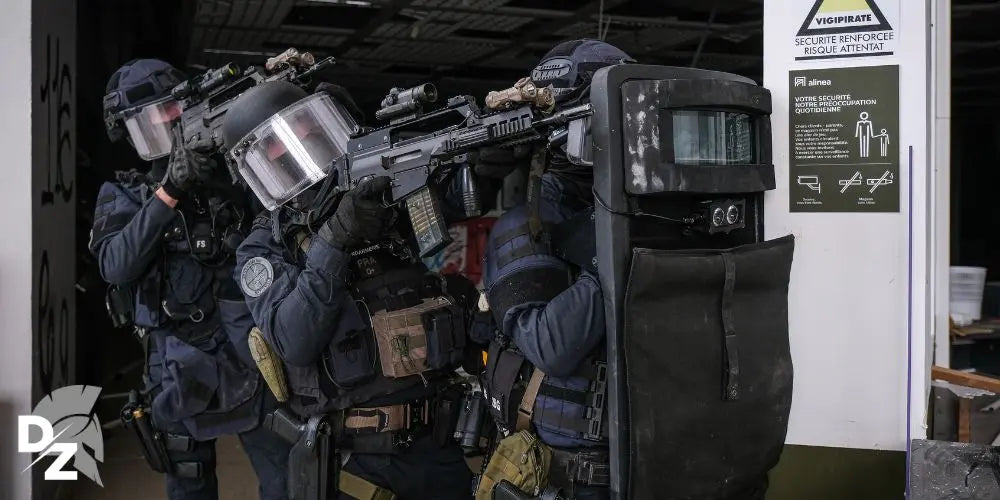
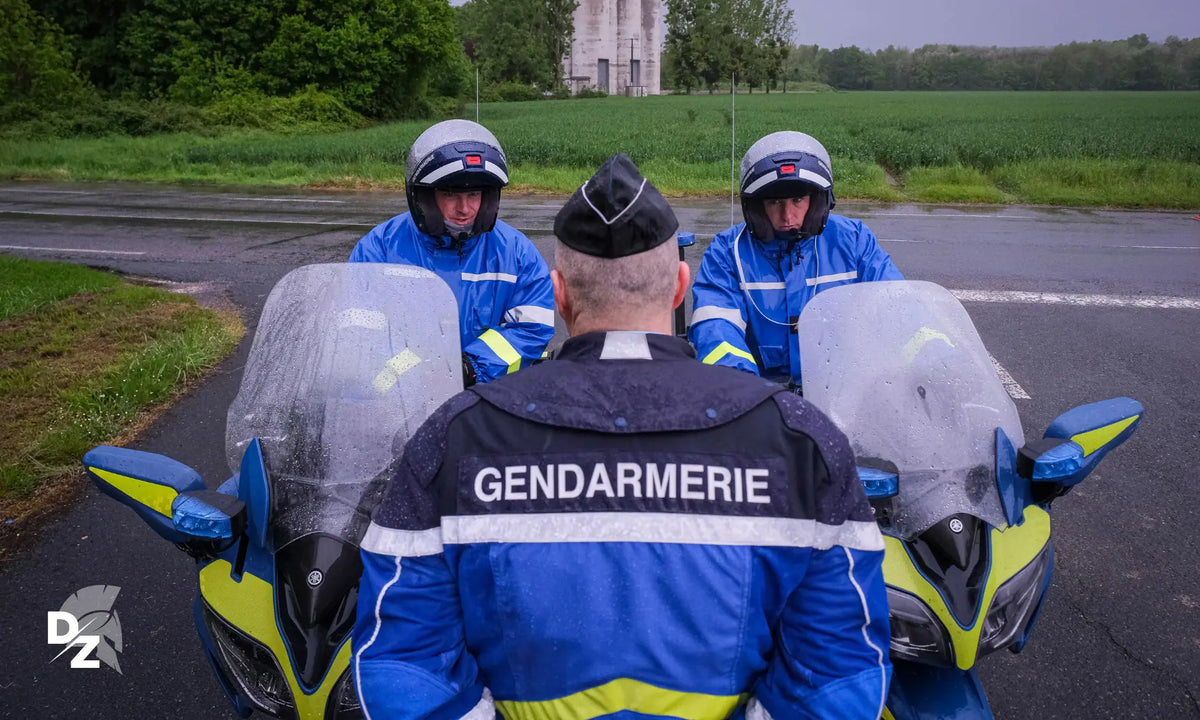
Successors to the second-generation intervention platoons (PI2G) created in 2004, the branches of the National Gendarmerie Intervention Group (AGIGN) were set up in 2016, following the series of terrorist attacks that struck France, and are the regional components of the GIGN, the Gendarmerie’s elite intervention unit.
Locations and organisation of the GIGN branches
Geographical distribution of the AGIGN
The French Gendarmerie has 14 GIGN branches.
Half of them are located in mainland France, in the cities of Toulouse, Orange, Dijon, Nantes, Reims, Tours and Caen.
The other seven are based in the overseas territories (Guadeloupe, Martinique, French Guiana, Réunion, New Caledonia, French Polynesia, Mayotte)
About 600 gendarmes make up these AGIGN.
This distribution makes it possible to cover the whole of French territory and to ensure a rapid response time when an intervention is needed. The AGIGN are in fact the first responders in the overseas territories.

Organisation of the GIGN branches
The GIGN branches are commanded by the Force Antennes (Branches Force), based at Satory near Paris. Each has 32 gendarmes, including three officers.
An AGIGN intervention generally requires an “emergency assault” team, a “support-observation” team, a “breaching” team and a command group comprising a mission commander officer, a team leader and a “scribe” responsible for keeping the timeline of the operation,

AGIGN missions
The GIGN branches carry out a range of criminal investigation and administrative policing missions. When on alert, the gendarmes of these units are permanently available and ready to deploy on an intervention in under 30 minutes.
They take part in tracking down and arresting dangerous individuals wanted by the courts (at home or in open areas), under the authority of the public prosecutor. The gendarmes also intervene in hostage situations, public order disturbances or under the government’s Pirate Mer (counter-terrorism and anti-maritime piracy) and Piratair (aviation security) plans, under the authority of the High Commissioner. They can also escort dangerous prisoners, fight organised crime or terrorism, deliver training and protect VIPs or sensitive sites.
In the overseas territories, AGIGN gendarmes also carry out public order maintenance and restoration missions, as well as missions specific to the region concerned (mountain rescue, the fight against illegal gold mining in French Guiana, etc.). In a particularly serious situation, they must contain and stabilise it to give the central GIGN time to reach the territory from Paris.

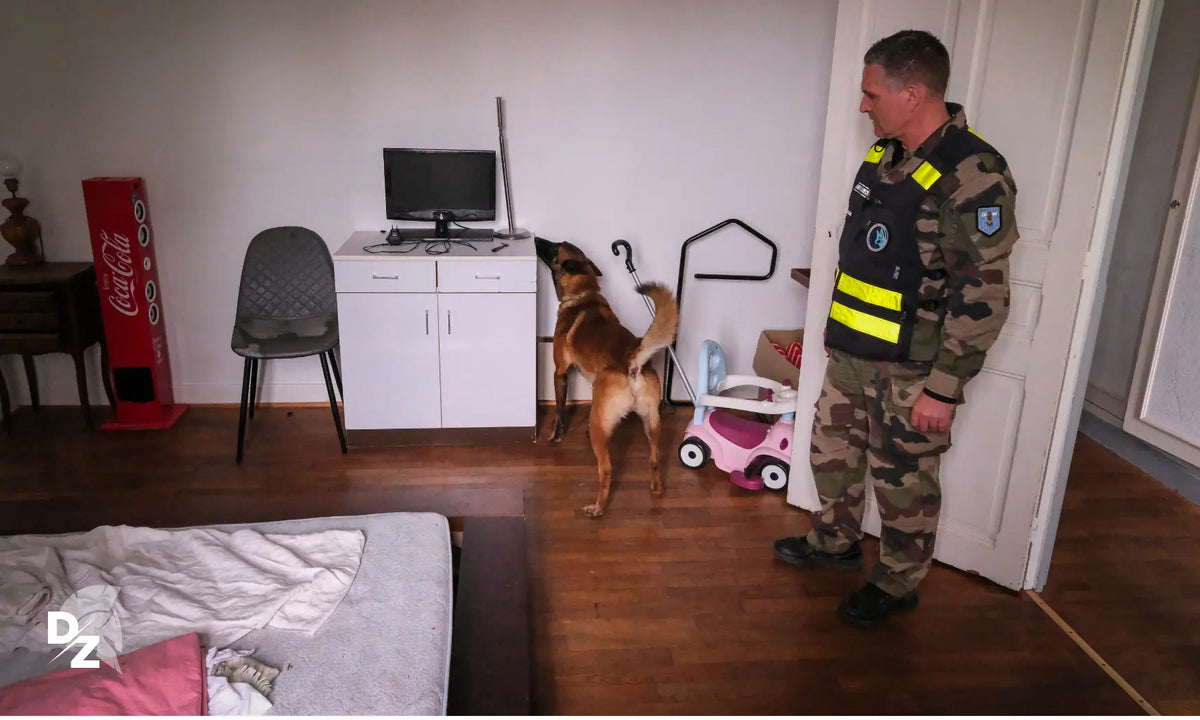
The GIGN branches act autonomously, as reinforcements for the GIGN, or in cooperation with other specialised Gendarmerie units (negotiators, dog teams, etc.) or state services (the prison service’s ERIS teams, the SNCF’s SUGE railway security, etc.)
Unlike the GIGN, these gendarmes do not have rare capabilities such as assault bomb disposal or operational freefall, but they do have special skills (use of explosive breaching, rope access, etc.)
AGIGN equipment
The weapons of the branch gendarmes are as plentiful and varied as those of their GIGN colleagues: pistols (SIG 2022, Glock 19, Glock 26), pump-action shotguns (BPS/SGF, Remington 870, Benelli M4 Super 90), submachine guns (HK UMP, HK MP5, MAS MP5 F), assault rifle (HK G36 KA3), precision rifles (Tikka T3 Tactical, HK417), Flash-Ball and non-lethal weapons (LBD 40, tonfas, various grenades, grenade launchers)
Their kit, including a heavy helmet and a bulletproof vest, weighs more than 25 kg, not counting weapons or shield.
Although equipment does not differ between gendarmes in mainland France and those overseas, the latter do have different vehicles: the Gendarmerie wheeled armoured vehicle (VBRG) and the front-line armoured vehicle (VAB) used for public order, and equipment specific to a given territory (jet skis in French Guiana, etc.)

Training AGIGN gendarmes
Once a year, the GIGN branches issue a call for volunteers to join their units. Candidates must already be gendarmes, be under 34 and be in good physical condition. Some 400 gendarmes answer this call each year, for only about forty places.
Initial training lasts eight weeks, one of which is devoted to combat hardening.
Once in a branch, the gendarme must train continuously, both individually (weight training, combat sports, shooting) and collectively (scenario exercises). He can also take additional modules to gain a specialisation (shooting from vehicles, VBRG driving, sniper, drone pilot, etc.)

Where is the GIGN based? Headquarters, branches and map
The central GIGN is located in the Satory district of Versailles, which is also home to the Force Antennes (Branches Force) that commands the AGIGN. Its training centre is at the Frileuse camp, in Beynes. Around this central echelon, coverage of the territory is organised as follows:
- 7 branches in mainland France: Toulouse, Orange, Dijon, Nantes, Reims, Tours and Caen;
- 7 overseas branches: Guadeloupe, Martinique, French Guiana, Réunion, New Caledonia, French Polynesia and Mayotte;
- 3 technical branches, in Marseille, Bordeaux and Maisons-Alfort, which support criminal investigations.
Each branch covers a vast area: the Toulouse branch, for example, can be deployed across the whole south-west quarter of France, 24 hours a day, within 30 minutes. This network reflects the size of the Gendarmerie’s area, which covers 95% of the territory and half of the population. To find out more about the institution, read our presentation of the Gendarmerie nationale and its units.
From PI2G to AGIGN: a recent history
The branches grew out of the second-generation intervention platoons (PI2G), created from 2004 onwards: the Toulouse platoon was set up that year. After the series of attacks that struck France, these platoons officially became GIGN branches in April 2016. Since August 2021, the 14 branches have been fully integrated into the GIGN.
What is the difference between the GIGN and a GIGN branch?
Branch gendarmes are recruited and trained by the GIGN at Satory, but their training lasts eight weeks, compared with a year for the central echelon. They do not have certain rare capabilities, such as assault bomb disposal or operational parachuting. Overseas, they are first responders: in a serious crisis, they stabilise the situation while waiting for the central GIGN to arrive from Paris. For a comparison with police units, read our article on the differences between the RAID, the GIGN and the BRI.
What age do you have to be to join a GIGN branch?
Candidates must already be gendarmes and be between 24 and 34 years old during their selection week. Each year, around 400 volunteers apply for around forty places. The specialities of a branch (breaching, VIP protection, intelligence, sniping) are covered in our podcast series on the specialities of a GIGN branch.
Also on Défense Zone
- 📰 FOCUS: the Toulouse GIGN branch — a report from inside a branch
- 📰 The GIGN, the French Gendarmerie’s elite unit
- 🖼️ GIGN photo posters — prints from our reports
To subscribe to our magazine and receive our very latest issue, access exclusive content and take advantage of equipment and gear offers from our partners, head to the Premium section or click on the image below: