DÉFENSE ZONE
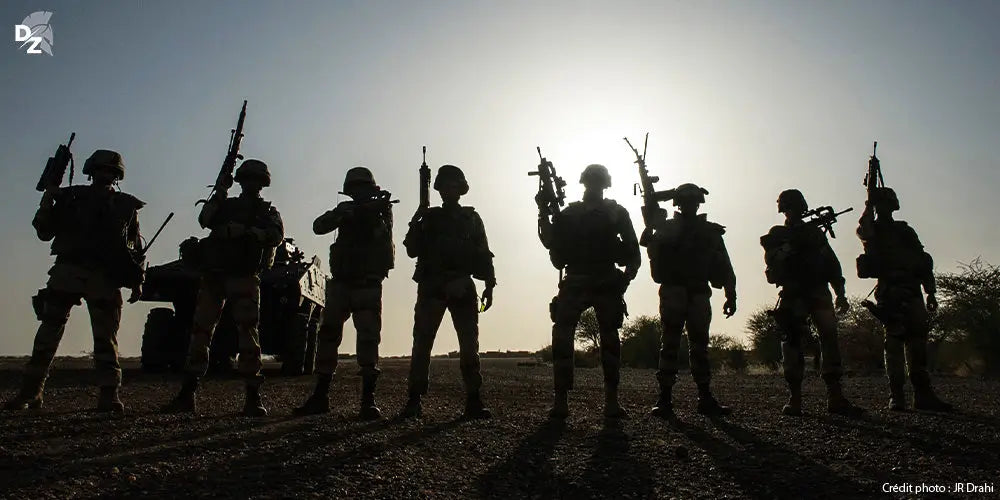
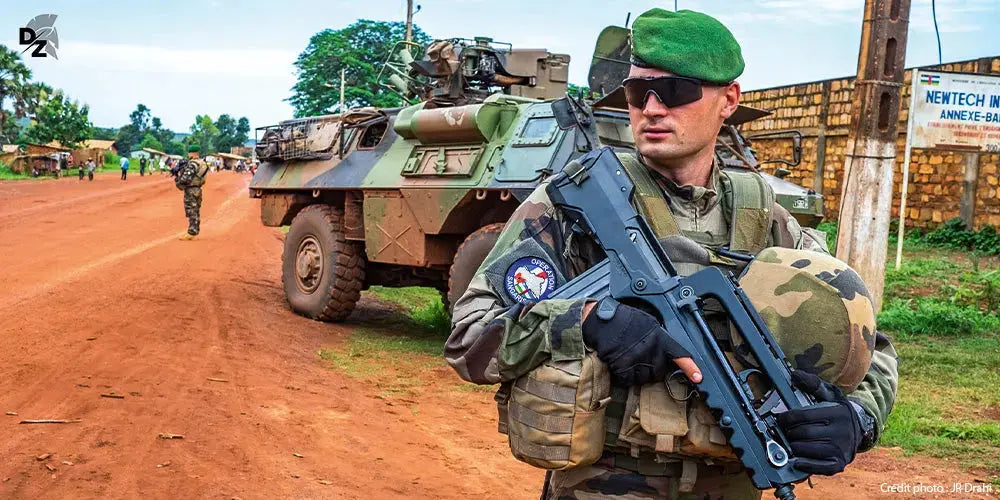
It is called the queen of battles, or the arm of the last 300 metres. Since 1479 and the creation of the Bandes de Picardie, infantrymen have taken part in every battle. Steeped in tradition yet looking to the future, legionnaires, marine infantrymen (marsouins), tirailleurs, light infantry chasseurs, chasseurs alpins, paratroopers and line infantrymen are indispensable architects of victory in theatres of operations.
History of the infantry
The history of the foot soldier is almost as old as that of mankind. First to feed themselves; then, as early as 2,500 BC, armies were waging war in the city-states of Mesopotamia. Later, under the reign of Alexander the Great, foot soldiers formed the core of armies. This organisation was later found in the Roman legions, which were based on sub-groups, the smallest of which comprised 8 men. But the arrival of cavalry undermined these soldiers, whose added value on the battlefield became less and less significant.
The Middle Ages were the dark age of the infantry: the prestige of foot soldiers was in sharp decline. Coming from a lowly social background, they had little human or strategic value compared with heavily armed horsemen drawn from the nobility.
But it was with the birth of modern Europe in the 16th century that the infantry returned to the forefront. The arrival of firearms, combined with pikes, gave foot soldiers a clear advantage over horsemen on the battlefield. The spread of these weapons in the 19th century led to the development of line infantry as the hard core of armies. Emperor Napoleon paid great attention to the training of his infantrymen who, if well trained and organised, could repel cavalry charges.

While the First World War was dominated by artillery, infantrymen played a decisive role in assaults on enemy positions. It was also the great revolution in tactics combining fire and movement with artillery support.
Mechanisation appeared between the two wars, as did portable anti-tank weapons. During the 1939-45 conflict, infantrymen alternated between fighting from vehicles (armoured or not) and long marches over difficult terrain (jungle, mountains). It also demonstrated the need to “hold” ground with men on foot, particularly in urban areas, as at Stalingrad, for example.

Since then, infantry soldiers have remained indispensable to military manoeuvre. The adaptation of their weapons and equipment, and their ability to deploy rapidly and occupy ground, are assets for the command whenever it needs to deploy and occupy ground.
The modern infantry
Since the end of the Second World War, the infantry has modernised considerably. Now largely armoured (apart from the special forces), it is less and less engaged in symmetrical conflicts but regularly faces asymmetric adversaries and insurgent forces. This was the case from the Korean War onwards, in Vietnam and more recently in Afghanistan, Iraq and the Sahel.

Perfectly suited to the missions entrusted to them, infantrymen also keep pace with the technological developments offered to the forces. They are now connected so as to be integrated with all the actors in the battlespace and to allow the chain of command to know their precise position on the ground. In the near future, they will be able to transmit logistic and physiological data such as their general state of health, their remaining water and food supplies or the amount of ammunition they have left.
The missions of the infantry
The infantry’s missions today are very varied. While infantrymen are trained and drilled for direct combat against the enemy, they are also able to control and secure areas retaken from the adversary. As variations on these modes of action, infantry soldiers are found on missions for the United Nations as peacekeepers, or protecting the population on national territory, as in Operation Sentinelle, for example. Able to work in an allied, joint and combined-arms environment, the infantry soldier is characterised above all by an ability to adapt to the environment as well as to the modes of action.

The infantry units of the French Army
Infantry regiments and units are spread across all the French Army’s brigades in metropolitan France and overseas. Their organisation is broadly identical; the biggest difference lies in the main equipment they operate and in their original traditions.
Units stationed in metropolitan France
- 1st Infantry Regiment (1er RI - Sarrebourg). The oldest regiment in France and in Europe, the 1st RI is the heir to the Bandes de Picardie formed in 1479. Over the course of its history it has taken part in France’s great battles. In the 1980s and 90s it was the only infantry regiment with an airmobile role. Today the 1st RI operates the Griffon and is one of the first regiments to have taken part in integrating the Scorpion system.
- 1st Tirailleurs Regiment (1er RTir - Épinal). Heir to the 170th Infantry Regiment, the 1st RTir is a former mechanised unit (on AMX 10 RC) now equipped with the Griffon.
- 16th Chasseurs Battalion (16e BC - Bitche). Formerly stationed in Germany, the 16th BC is today the only unit in the forces to perpetuate the traditions of the chasseurs à pied (light infantry). The regiment is notably equipped with the Griffon.
- 35th Infantry Regiment (35e RI - Belfort). Created in 1604, the “ace of clubs” regiment is one of the oldest units in the French Army. Today its 1,200 “gaillards” (the nickname of the 35th RI’s infantrymen) operate the VAB and the Griffon.
- 92nd Infantry Regiment (92e RI - Clermont-Ferrand). The Auvergne regiment has taken part in some of the most glorious battles of the French Army. At the start of the Second World War it was almost wiped out, before rising from its ashes thanks to the Auvergne maquisards in 1944. The 92nd RI was the first VBCI regiment to enter Mali during Operation Serval in 2013.
- 126th Infantry Regiment (126e RI Brive). Attached to the 9th Marine Infantry Brigade, the “bisons” are specialists in amphibious combat. They currently operate the VAB and the VBCI.
- 1st Parachute Chasseur Regiment (1er RCP - Pamiers). The oldest French parachute regiment, it is the only one of this speciality to have been engaged in the Second World War. In 1983 the regiment lost 55 of its men in the Drakkar bombing in Beirut. It was also one of the hardest-hit units during its tour in Afghanistan in 2011. Today the regiment is mainly equipped with the VAB and will gradually switch to the Serval.
- 3rd Marine Infantry Parachute Regiment (3e RPIMa - Carcassonne). Present on every French Army operation of recent decades, the 3rd RPIMa specialises in vertical assault. Together with other units of the 11th Parachute Brigade, it helps provide the “Guépard” standby force, which can mobilise troops in under 12 hours, round the clock. Since March 2023, the 3rd RPIMa has been the first regiment to be gradually equipped with the Serval.
- 8th Marine Infantry Parachute Regiment (8e RPIMa - Castres). Fully professional since 1970, the “grand 8” is a prestigious French Army unit regularly deployed on overseas operations. On 18 August 2008, in the Uzbin valley in Afghanistan, a unit of the 8th RPIMa was ambushed by the Taliban. 8 soldiers from the regiment lost their lives, as did a legionnaire from the 2nd Foreign Parachute Regiment (2e REP) and a marine infantryman from the RMT. To this day it was the deadliest battle for the French Army since the Algerian War. Today the men of the 8th mainly operate the VAB and will soon be equipped with the Serval.
- 2nd Marine Infantry Regiment (2e RIMa - Le Mans). Specialising in amphibious combat, the 2nd RIMa descends from the sea companies formed by Richelieu. Maintaining close relations with the British Royal Marines, the marsouins of the 2nd are equipped with the Griffon.
- 3rd Marine Infantry Regiment (3e RIMa - Vannes). A regiment with an amphibious role, the 3rd was the first French Army unit to trial and be equipped with Griffon vehicles.
- 21st Marine Infantry Regiment (21e RIMa - Fréjus). A regiment with an amphibious role, now equipped with the Griffon and the VAB, the 21st is responsible for the amphibious combat training centre. It regularly carries out exchanges with the Italian amphibious units of the Lagunari.
- Régiment de marche du Tchad (RMT - Colmar). Formerly a mechanised unit on the AMX 10 P, the RMT was the first unit to rally to Free France in 1940. It landed in Normandy in 1944 and liberated Paris and then Strasbourg, thus honouring the oath taken by General Leclerc in 1941 at Kufra: “Swear not to lay down your arms until our colours, our beautiful colours, fly once again over Strasbourg Cathedral”. Today the regiment is equipped with the VBCI.
- 7th Chasseurs Alpins Battalion (7e BCA - Varces). The “iron and steel” battalion was one of the first chasseur units to specialise in mountain combat, in 1888. Today the men and women of the “7” continue to be deployed regularly on overseas operations. Its exemplary conduct during the “Allobroges” tour in Afghanistan (2011) earned it its latest decoration: the Cross for Military Valour with palm, presented on 11 November 2011 by the President of the Republic in Paris, beneath the Arc de Triomphe.
- 13th Chasseurs Alpins Battalion (13e BCA - Chambery). First a chasseurs à pied battalion in 1853, it settled in Chambéry in 1882 and became an alpine battalion in 1888. It is one of the three battalions of the 27th Mountain Infantry Brigade specialising in combat in extreme environments. It has served in many theatres of operations, notably in Africa, the Balkans, Afghanistan and the Sahel. Its combat companies are now equipped with Griffon vehicles.
- 27th Chasseurs Alpins Battalion (27e BCA - Annecy). The 27th became an alpine chasseurs à pied battalion in 1889. During the First World War, the battalion was engaged in the most difficult sectors, in the Vosges and on the Somme: it lost 1,822 officers, NCOs and chasseurs. During the conflict it received eight citations, six of them in army orders, which earned it the fourragère in the colours of the Légion d’honneur. It was the first chasseur battalion to receive this supreme distinction. The soldiers of the 27th BCA mainly operate the Griffon.
- 2nd Foreign Parachute Regiment (2e REP - Calvi). Attached to the 11th Parachute Brigade, the 2nd REP is the only parachute unit of the French Foreign Legion. Part of the 11th Parachute Brigade’s Guépard standby force, it has distinguished itself in many operations, notably by jumping on Kolwezi in 1978 and more recently on Timbuktu at the launch of Operation Serval in 2013. Each of the REP’s combat companies has an additional speciality (urban, mountain, amphibious and desert warfare, and demolition/sniping).
- 2nd Foreign Infantry Regiment (2e REI - Nîmes). Created in 1841, the 2nd REI is one of the oldest infantry regiments of the Legion. Its legionnaires were among the first in the French Army to trial the digitisation of the battlespace and the integration of the Scorpion combat information system (SICS). Today the regiment is mainly equipped with the VBCI and, more recently, the Griffon.
- 13th Foreign Legion Demi-Brigade (13e DBLE - Larzac camp). Created in 1940 at Sidi-Bel-Abbès, the “13” distinguished itself a few months later in the fighting at Narvik in Norway. The regiment was stationed for a long time in Djibouti (from 1962), before and after the independence of this small country in the Horn of Africa. In July 2011 it left Djiboutian territory for good to settle in Abu Dhabi in the United Arab Emirates. In 2016 the legionnaires returned to France and have been stationed at the Larzac camp ever since. They were among the first soldiers to be equipped with the French Army’s new rifle: the HK416. Its 1,300 green berets regularly take part in French Army operations, notably in Iraq or, more recently, in Operation Résilience on national territory.
Overseas infantry units
Tasked with upholding French sovereignty over the overseas territories and with defence agreements abroad, the units stationed outside metropolitan France carry out many missions. In addition to training, the regiments take part in numerous exercises with the armed forces of neighbouring countries and help train some of their elements. They are also able to reinforce local authorities, ensure the safety of local populations in the event of natural disasters, and evacuate French nationals from their respective sub-regions in a crisis. There are currently nine regiments stationed overseas that still bear the name of infantry unit:
Further reading: the most widespread assault rifles in the world, French Army artillery and the job of a sniper in the French armed forces.
- 2nd Marine Infantry Parachute Regiment (2e RPIMa - Réunion)
- 3rd Foreign Infantry Regiment (French Guiana)
- 6th Marine Infantry Battalion (6e BIMa - Libreville / Gabon)
- 9th Marine Infantry Regiment (9e RIMa - French Guiana)
- 33rd Marine Infantry Regiment (33e RIMa - Martinique)
- 43rd Marine Infantry Battalion (43e BIMa - Republic of Côte d’Ivoire)
- Foreign Legion Detachment in Mayotte (DLEM - Mayotte)
- Pacific Marine Infantry Regiment - New Caledonia (RIMaP NC - Nouméa)
- Pacific Marine Infantry Regiment - Polynesia (RIMaP-P - Thaiti)
Special infantry units
Some units bear the name “infantry” by tradition, or do not have the traditional structure. They include:
- 1st Marine Infantry Regiment (1er RIMa - Angoulême) / Marine Infantry Tank Regiment (RICM - Poitiers). These two regiments of the 9th Marine Infantry Brigade are, despite their names, light armoured cavalry units. Both are equipped with the AMX 10 RC and will soon operate the Serval.
- 132nd Military Dog Infantry Regiment (132e RIC - Suippes). This unit, unique in the armed forces, provides dog support to the forces in general and to infantry units in particular, on overseas and domestic operations. The regiment’s two main missions are detecting and neutralising adversaries and searching for explosives and munitions.
- Urban Warfare Training Centre - 94th Infantry Regiment (CENZUB - 94e RI - SIssone). The CENZUB-94th RI is not an infantry unit, but it has taken over the traditions and holds the colours of the 94th Infantry Regiment, disbanded in 1993. The CENZUB was created in 2004 to provide the French Army with a unique facility dedicated to urban combat. It is built around a combat village for acquiring technical and tactical skills, a combat town of more than 1 km² with a capacity of 5,000 inhabitants, and an urban firing complex. One of its two companies provides the FORAD (opposing force), while the second brings together the instructors and the firing cell.
The main equipment of French infantrymen
The infantryman’s individual and collective equipment is constantly evolving. Since 2004, the Scorpion programme has had a profound impact on French Army units, and on the infantry in particular. Major equipment programmes are under way (assault rifles, armoured vehicles, etc.) and the next step will be the interconnection between the men on the ground, their vehicles and the chain of command.
Individual weapons
Glock 17: the French Army’s new pistol, the Glock 17 Gen 5 FR, has been in service with the infantry since 2020. It replaces the MAC 50 and PAMAS pistols. All three are 9 mm calibre.

HK416: a rifle in 5.56 mm NATO calibre, the HK416 has equipped the infantry since 2019. Fitted with a 30-round magazine, it comes in two versions (short / long).

Minimi: This weapon from the Belgian manufacturer FN Herstal is a light machine gun in 5.56 mm (a 7.62 mm version also exists). Its two very quickly interchangeable barrels allow a high rate of fire. It has three feed modes (belt, soft pouch, 30-round magazine).

SCAR-H PR: Replacing the FRF2, the SCAR-H PR is the French Army’s new semi-automatic precision rifle. Its 7.62 mm round allows precision shots up to 800 metres by day. Since 2021 it has equipped the marksmen of infantry units.

PGM Hecat II: The PGM has equipped the sniper sections of infantry units for more than 15 years. The Hecat II is a 12.7 mm weapon capable of hitting a target at up to 1,800 metres. The PF2 round can pierce 13 mm of armour at 725 metres. Its weight, without additional equipment, is 16.9 kg.

Collective and anti-tank weapons
MAG 58: In 2010, the Belgian MAG 58 machine gun was chosen to replace the AANF1 in the French Army. A 7.62 mm light machine gun, it is used for direct fire against ground targets, both dismounted and vehicle-mounted. Its rate of fire is 650 to 900 rounds per minute, with a range of 1,000 metres dismounted and 1,500 metres on a vehicle.

12.7 machine gun: Designed in 1921 by the American John Browning, this weapon first entered service with the French armed forces in 1932, in the French Navy. This .50 calibre (12.7 mm) heavy machine gun can engage ground targets up to 1,200 metres and air targets (low altitude / low speed) up to 900 metres.

LGI: A close-support weapon for the infantry section, the LGI (individual grenade launcher) can fire up to 675 metres. It uses three types of round (high explosive / smoke / illumination).

AT4-CS: a short-range anti-tank weapon (300 metres), the AT4 CS can be fired from enclosed spaces. It complements the ERYX and MMP missiles.

ERYX missile: Usable from the shoulder or on a tripod, the ERYX anti-tank missile can be fired from enclosed spaces. With a maximum range of 600 metres, it can pierce up to 900 mm of armour.

MMP missile: Gradually replacing the MILAN missile since 2017, the medium-range missile weapon system, also known as AKERON, gives infantry units new anti-tank capabilities. It can be fired from a confined space, has a range of 4,000 metres and can penetrate 3 metres of concrete. The MMP is also the first missile in service able to fire beyond the firer’s direct line of sight, thanks to a camera on the missile that allows the firer to lock on to an indirect target while the munition is in flight.

The main infantry vehicles
Forward armoured vehicle (VAB): Entering service in 1976, the VAB has equipped all infantry units and many other French Army units, in versions adapted to specific uses (engineers, artillery, medical, CBRN, etc.). Its latest version, ULTIMA, was designed pending its replacement by the VBCI and GRIFFON. It is fitted with a remotely operated 12.7 mm turret, two machine-gun mounts with protective shields on the rear hatches, and can carry 8 infantrymen plus two crew members.

Infantry fighting vehicle (VBCI): 630 VBCIs are currently in service with the French Army. It weighs 32 tonnes and can carry 8 infantrymen plus a driver, a vehicle commander and a radio operator/gunner. It is fitted with a 25 mm turret and a 7.62 mm coaxial machine gun.

GRIFFON multi-role armoured vehicle: The VBMR is a six-wheel-drive armoured vehicle developed under the Scorpion programme. Arriving in the forces from 2021, it is gradually replacing the 2,800 VABs in service with the French Army. Heavily armoured, it carries 8 infantrymen, a driver and a gunner (in charge of the remotely operated 12.7 mm turret).

SERVAL light multi-role armoured vehicle: 32 Servals have been in service with the 3rd RPIMa since April 2023 (out of a target of 978 for the French Army by 2030). Like the Griffon, this armoured vehicle is to gradually replace the VAB. It is mainly intended for the two “emergency” brigades, the 11th Parachute Brigade and the 27th Mountain Infantry Brigade. It is fitted with a remotely operated 12.7 mm or 7.62 mm turret and can carry 10 infantrymen, with a range of 600 km. It is the latest of the four new vehicles in the Scorpion programme (Griffon, Jaguar, MEPAC).

To find out more
Subscribe to our magazine to receive the next print issues, access exclusive content and benefit from equipment offers from our partners. Head to the Premium section.

Read more: Engineer units in the French Army
Read more: A new rank insignia for the French Army